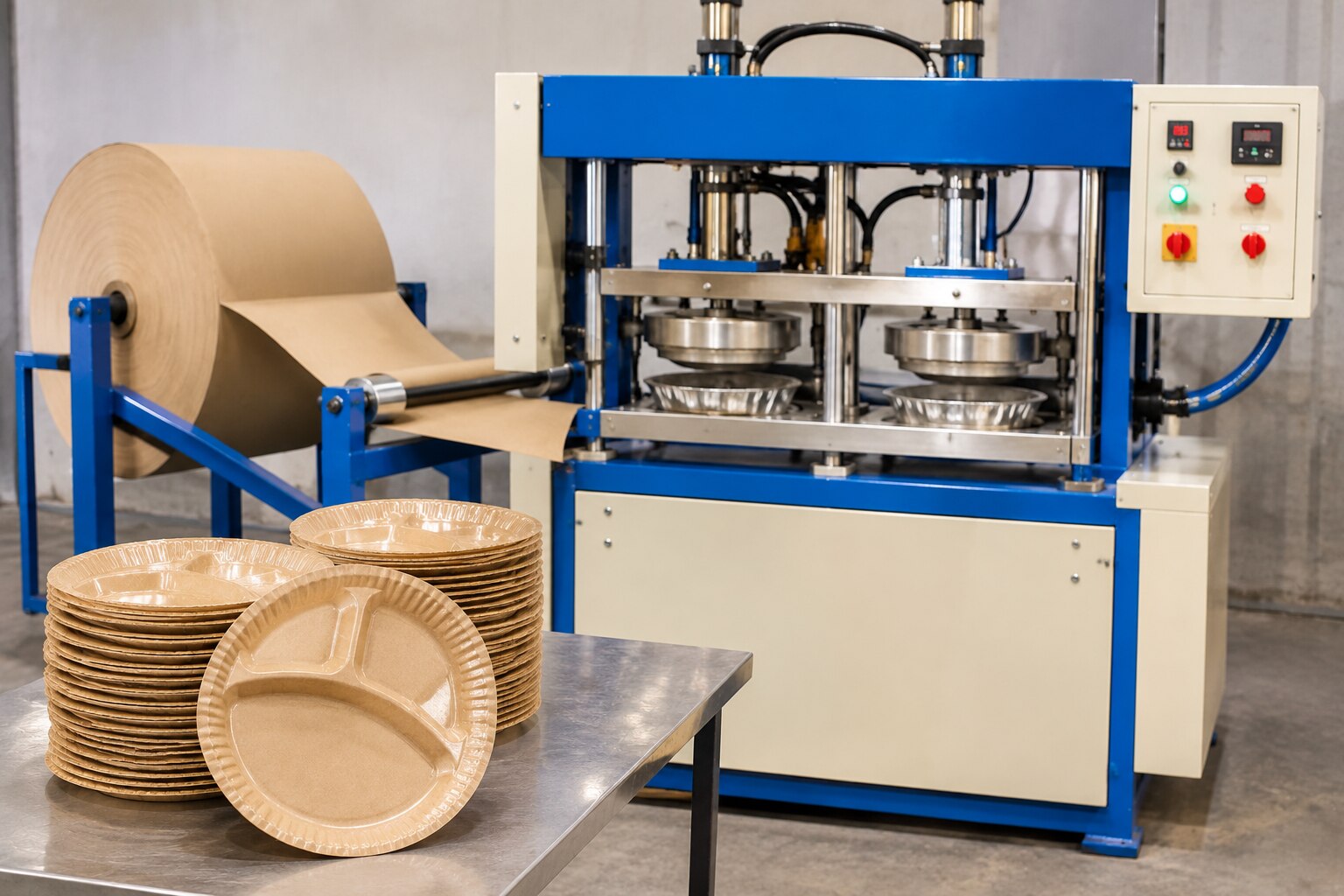
A paper thali is produced through a controlled sequence: material preparation, blank feeding, die forming, ejection, inspection and packing. By following that sequence, you can identify the machine settings, raw-material specifications and production figures that determine whether a thali line delivers usable pieces rather than only fast press cycles.
Key takeaways
- Match blank size and stock thickness to the thali design.
- Check forming dies for depth, compartments and clean edge definition.
- Request trial-run evidence showing output, scrap and rejection rates.
- Inspect release, stacking and packing before comparing machine prices.
How the Paper or Laminated Board Enters the Production Line
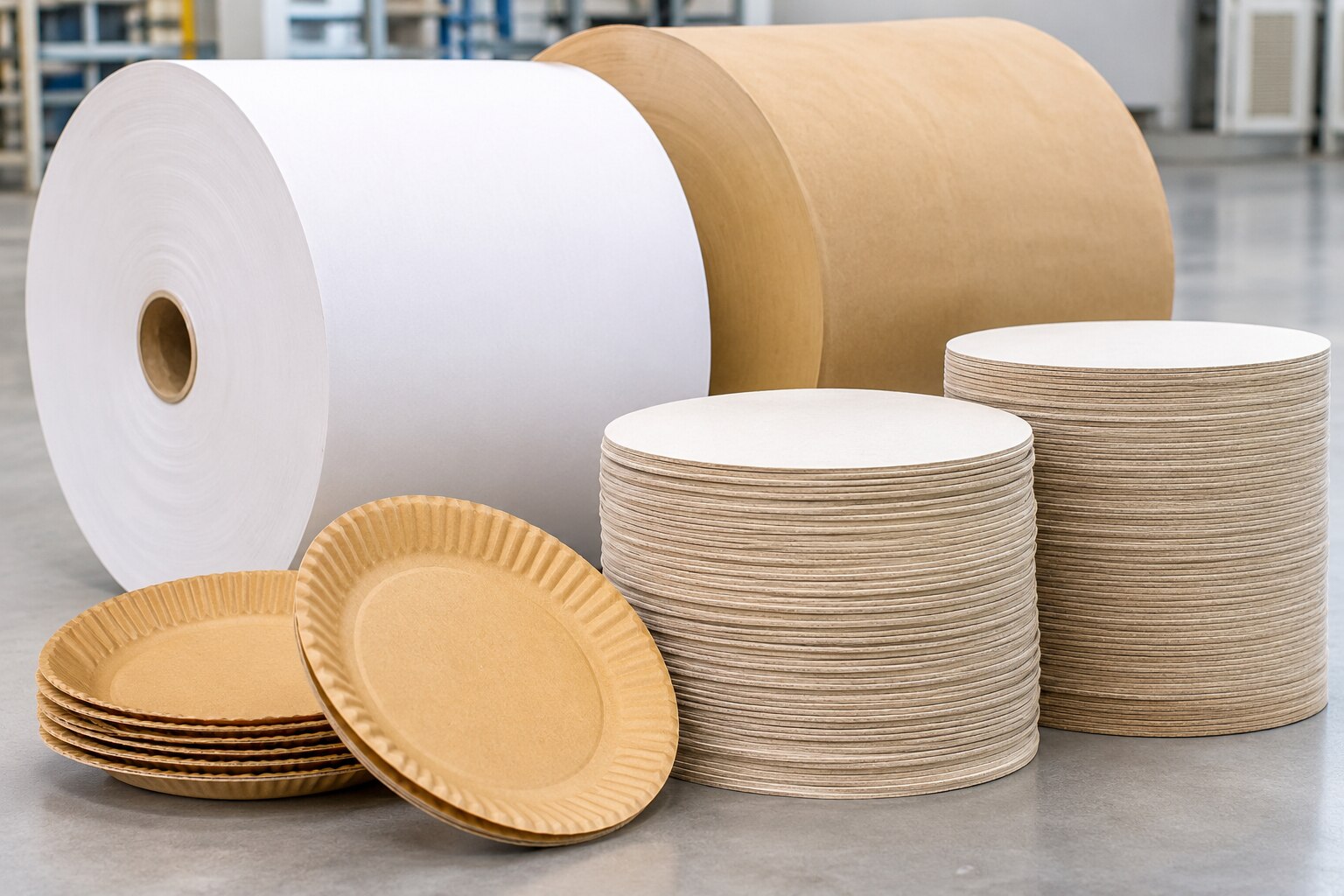
Before forming begins, choose stock that matches the thali’s diameter, depth and compartment layout. The paper thali production process commonly accepts pre-cut blanks, flat sheets or a roll-fed web; each format changes feeding accuracy, labour and scrap handling.
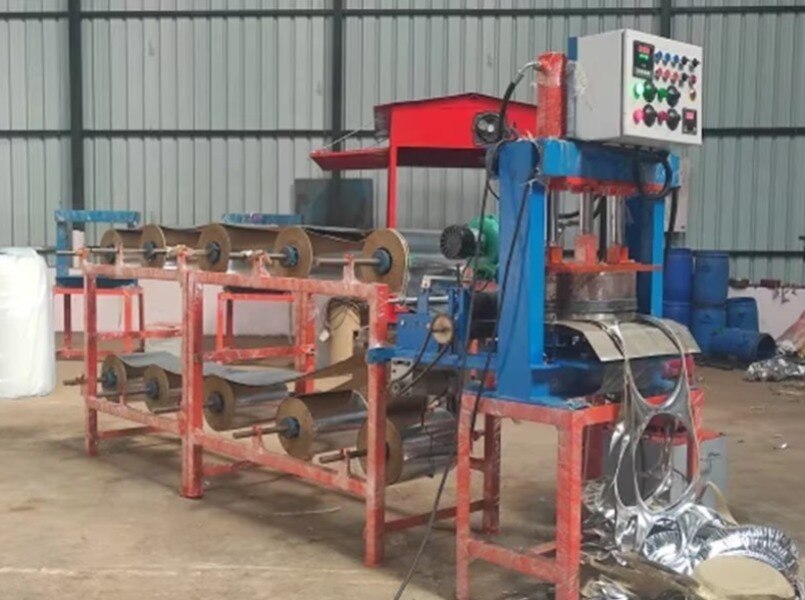
1. Confirm the material format. Pre-cut blanks suit large, shaped or compartmented thalis and make changeovers quicker. Sheets require a separate circle-cutting or blanking machine, while rolls reduce blanking labour but demand controlled web tension, registration and scrap removal.
2. Record paper GSM and board thickness together. A deeper thali or multi-compartment design needs enough bending stiffness to prevent sagging; heavier stock is commonly used than for a shallow snack plate. Do not select GSM without checking the die geometry.
3. Identify the surface construction. PE-coated paperboard can soften under heat and improve folding, but excessive temperature or dwell causes sticking, coating transfer, odour, gloss changes or exposed paper at sharply stretched areas. Record whether the board uses plastic or aluminium lamination.
4. Inspect every batch for a flat surface, consistent moisture, even coating and the correct blank diameter. Roll curl, moisture variation or coating defects cause misfeeds, off-centre forming, rim wrinkles and delamination. Measure blank diameter against the die before loading the line.
Place each blank centrally on the female die, or align the web through the registration guides, before pressing starts. Accurate placement protects the raised rim and compartments; poor alignment creates uneven edges that later resist stripping and can jam the machine.
How Blanks and Forming Dies Determine the Thali Shape
The blank controls how evenly material reaches the centre and rim. Paper thali blank cutting starts with flat, dimensionally stable paper or laminated board; excessive curl, moisture variation or uneven coating causes misfeeds, off-centre forming, wrinkles and delamination.
- A roll-fed web passes through a circle-cutting machine, which controls web tension, registration and scrap removal before producing round blanks. Pre-cut blanks simplify changeovers and suit large, shaped or compartmented thalis.
- The operator or feeder centres each blank on the lower tool using guides, locating pins or a nest. A misplaced blank creates a thin rim on one side and excess material on the other.
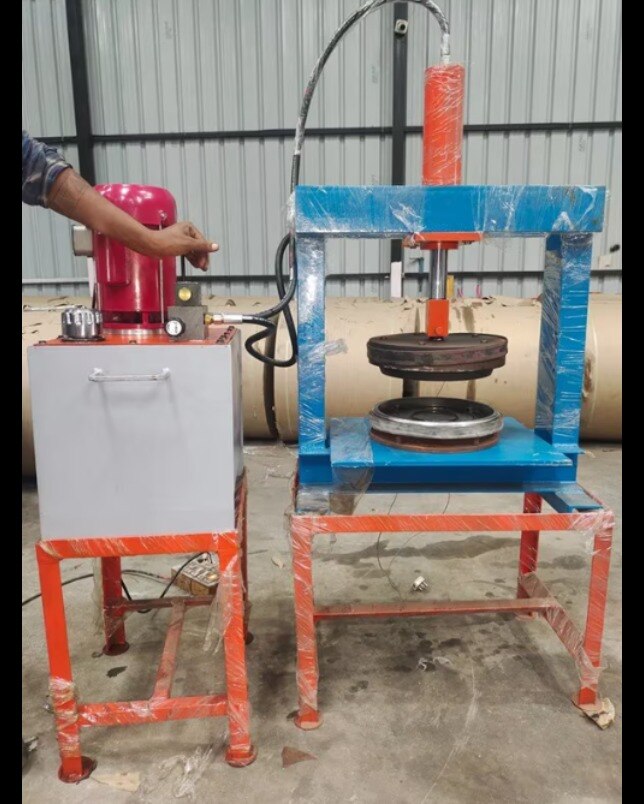
- The paper thali die closes around the blank. Its cavity and punch draw material into the centre, turn the outer edge upward and set the rim radius, bottom flatness, nesting clearance and stack height.
- A compartment thali mould adds raised dividing walls through separate pockets and ridges. Grooves, ribs or patterned surfaces in the tool create wrinkle patterns rather than leaving them to pressure alone.
The die’s geometry decides whether finished pieces nest cleanly. Too little nesting clearance makes thalis stick during counting; excessive clearance produces unstable stacks. The stripper must release the part without marking the rim or pulling laminate apart, because poor timing causes double-stacking, partial ejection and jams.
Inspect die cutting edges, rim radii, stripper faces and alignment parts for wear. As these surfaces wear, blank size and rim shape drift; set sharpening, replacement and alignment limits before defects appear.
What Happens During Heating and Hydraulic Pressing
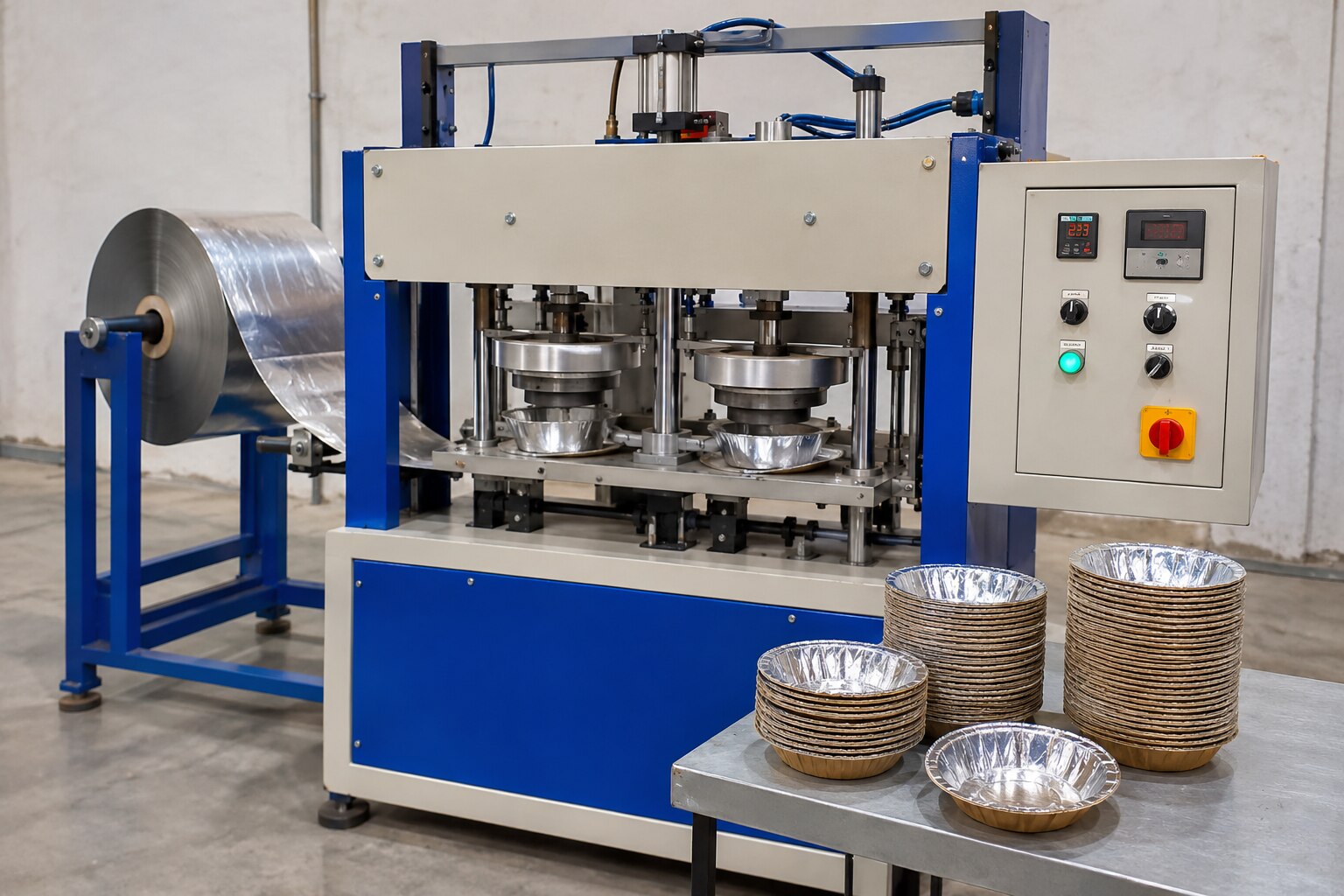
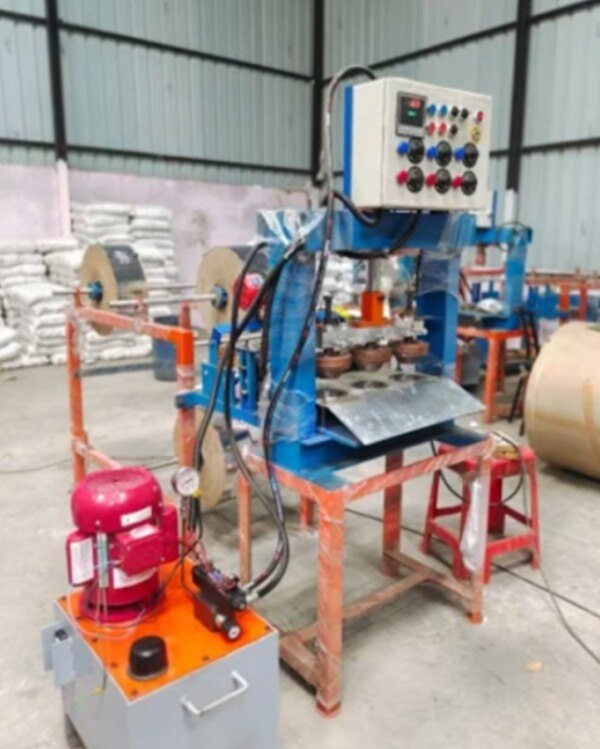
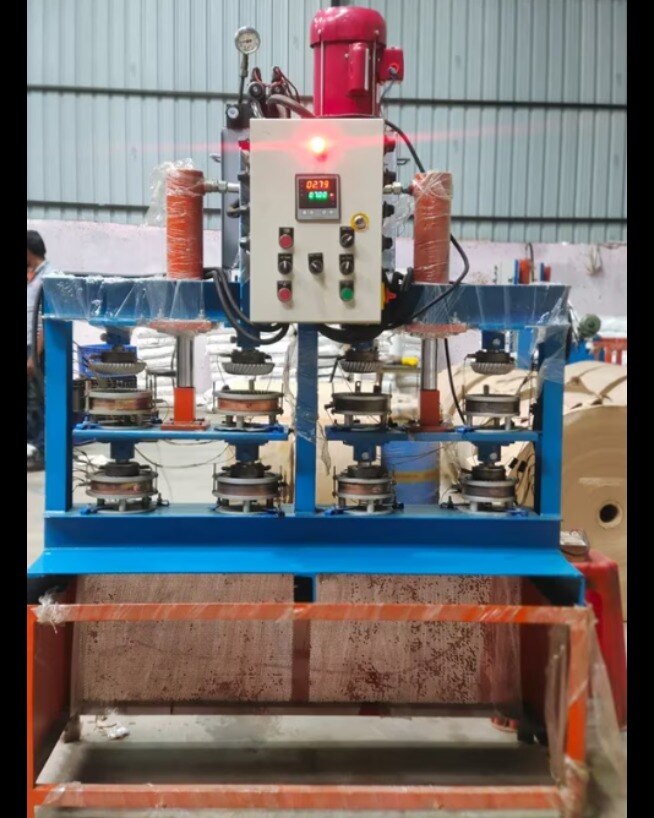
A stable thali comes from matching heat, force, time and depth—not from maximum tonnage. During the hydraulic press cycle, the blank is supported by the die as the hydraulic cylinder closes, forms the centre and raised rim, and holds the shape before release.
Four settings must work together:
- Die temperature: A heated die softens PE or laminated coating enough to conform and bond at folds. Excessive heat can make the surface stick to the tool, transfer coating, create odour or expose paper at sharply stretched areas.
- Hydraulic pressure: Read the actual forming force on the pressure gauge, not just the machine’s rated tonnage. Enough force drives the stock into the rim, compartments and base support; excess force crushes fibres without fixing an off-centre blank or uneven material.
- Dwell time: Holding pressure while heat transfers through the board helps the rim set and reduces spring-back. Too little dwell leaves a soft, distorted edge; too much can overheat the coating and slow output.
- Forming depth: Set depth to match the die profile and stock thickness. Excessive depth stretches the laminate and thins the rim; insufficient depth leaves shallow compartments or an unstable profile.
Large thalis need particular care because their wider unsupported base is prone to oil-canning and rim spring-back. Base support, controlled depth and adequate cooling or dwell work better than simply increasing pressure. Stripping must begin at the correct time, or a good form can still leave rim marks, partial ejection or double-stacking.
How the Machine Releases, Inspects and Packs Finished Thalis
After pressing, the formed thali is ejected, checked, counted and packed. Mould release must separate it without scratching the rim, lifting the laminate or deforming the compartments.
A stripper mechanism pushes the thali from the forming tool at a timed position. Poor timing causes partial ejection, double-stacking, rim distortion and jams, even when the die forms acceptable pieces. The operator removes any part that remains on the tool before the next cycle.
Semi-automatic equipment leaves these tasks to the operator:
- Place each blank or formed thali at the loading and unloading point.
- Remove the pressed thali and stack it in the correct orientation.
- Perform paper thali inspection for rim cracks, loose lamination, wrinkles, uneven bottoms and incomplete compartments.
- Separate rejects, count good pieces and place the stacks into sleeves, bags or cartons.
Automated lines transfer, inspect, count and pack with fewer manual touches.
| Equipment type | Release and handling | Inspection, counting and packing |
|---|---|---|
| Semi-automatic | Stripper ejects the part; operator collects and stacks it | Operator checks defects, counts stacks and seals or cartons them |
| Automated | Stripper and conveyor move parts away from the die | Sensors or programmed handling count good pieces and feed packs or cartons |
Keep the stack height and nesting clearance consistent. Thalis that stick together will defeat automatic counting, while loose nesting causes unstable stacks and package variation. Confirm the machine’s good-piece count, reject handling and pack format at the actual thali size.
How to Compare a Thali Machine Using Real Production Evidence
Choose on verified good-piece output, not the advertised strokes per minute. Ask for a production trial using your paper GSM, coating, blank diameter, die count and operator loading method. Record usable pieces per minute, total pieces per shift, downtime, and the scrap rate separately.
| Measure | Semi-automatic | Fully automatic |
|---|---|---|
| Output | Good thalis per minute with manual loading | Good thalis per minute including feeding, counting and packing |
| Labour | Operators per press and tasks per cycle | Operators for loading, monitoring and packing |
| Changeover | Minutes to replace dies and reset guides | Minutes to change tooling, web settings or recipes |
| Quality | Reject percentage, rim damage and double-stacking | Reject percentage, registration errors and ejection jams |
Request these figures in writing for each thali size:
- Actual good-piece output per hour, not strokes per minute; include the die cavity count, cycle time and planned downtime.
- Labour per shift, including blank loading, finished-piece removal, counting, packing and scrap handling.
- Changeover minutes from the last good piece in one size to the first good piece in the next, including die alignment and heating adjustments.
- Scrap rate by weight and by pieces; ask for the nesting layout and trim calculation because a larger or compartmented blank can waste more board.
- Die maintenance intervals, sharpening limits, replacement parts, alignment checks and lubrication points for cutting edges, rim radii, strippers and guides.
Shivansh Engineering can be asked to demonstrate these figures on the exact die and material you will run. Compare semi-automatic versus fully automatic equipment only after the trial includes release faults, rim distortion and packing interruptions.
Related products
 | Paper Plate Thali Making Machine Hydraulic Paper Thali Making Machine ₹110000 SHIVANSH ENGINEERING is engaged in offering a wide range of Hydraulic Paper Plate Making Machine to our clients. View product → |
 | Thali Making Machine Semi Automatic Thali Making Machine ₹95000 A Semi Automatic Thali Making Machine is an ideal choice for manufacturers who want reliable performance, controlled operation, and cost-effective... View product → |
Frequently asked questions
What stock formats can enter a paper thali production line?
Machines can use pre-cut blanks, flat sheets or roll-fed web. The format affects feeding accuracy, labour requirements and scrap handling.
How do blanks and forming dies affect thali shape?
The blank size must suit the thali diameter, depth and compartment layout. The forming die creates those features, so its dimensions and edge condition control shape accuracy.
What happens during heating and hydraulic pressing?
Heat softens the paper or laminated board for forming, while hydraulic pressure pushes the stock into the die. Correct temperature, pressure and dwell time help produce defined compartments and rims.
How can you compare paper thali machines using production evidence?
Ask for a trial run using your stock and design. Check formed dimensions, edge quality, output rate, scrap, rejected pieces, release performance and packing consistency.
Related products
 | Paper Plate Thali Making Machine Fully Automatic Paper Plate Thali Making Machine ₹340000 If you are planning to start or expand your disposable plate manufacturing business, a Fully Automatic Paper Plate Thali Making Machine is the best... View product → |
 | Automatic Thali Making Machine Semi Automatic Hydraulic 8 Die Wrinkle Paper Plate Machine ₹290000 A Semi Automatic Hydraulic 8 Die Wrinkle Paper Plate Machine is a powerful and efficient manufacturing unit designed for high-volume production of... View product → |
 | Automatic Paper Plate Making Machine Fully Automatic All-in-One Paper Plate Machine ₹340000 The Fully Automatic All-in-One Paper Plate Machine is the ultimate choice for entrepreneurs and manufacturers who want a high-performance,... View product → |
 | Paper Plate Circle Cutting Machine Paper Plate Circle Cutting Machine ₹160000 A Paper Plate Circle Cutting Machine is an essential tool for manufacturers producing paper plates, donas, and disposable tableware. View product → |