A high stroke rate does not guarantee more saleable plates: feeding errors, slow die changes, stacker stoppages, rejected rims and paper variation can erase the advertised advantage. By the end, you will be able to map the automated steps, calculate good plates per shift, compare labour and operating costs, and specify a factory-acceptance test before choosing equipment.
Key takeaways
- Measure good plates per hour, not the machine’s advertised cycle speed.
- Check separator, heater, press, demoulding, counting, and stacking performance together.
- Record misfeeds, rejects, changeovers, and stoppages during a full shift.
- Request supplier test results using your paper, plate sizes, and target output.
What “Fully Automatic” Actually Automates
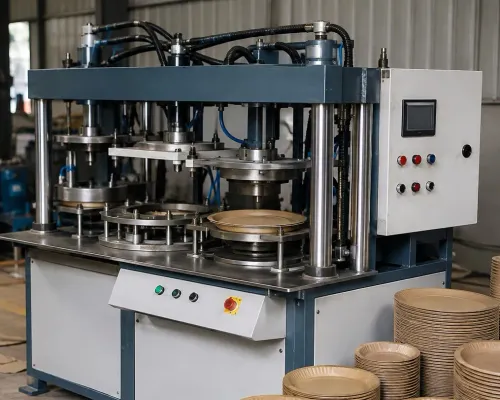
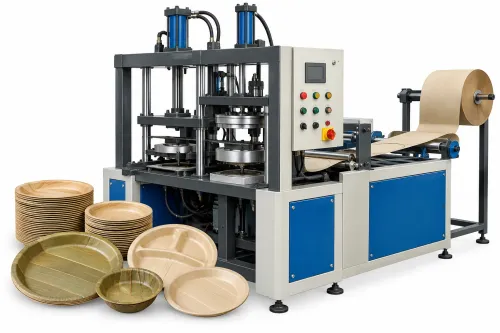
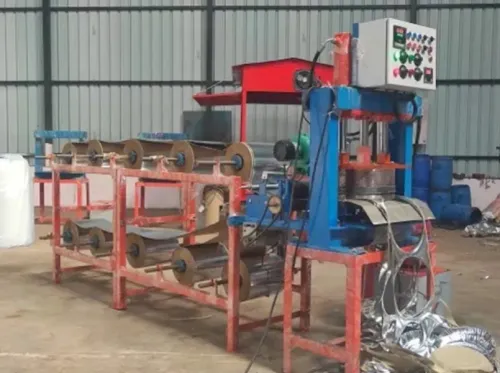
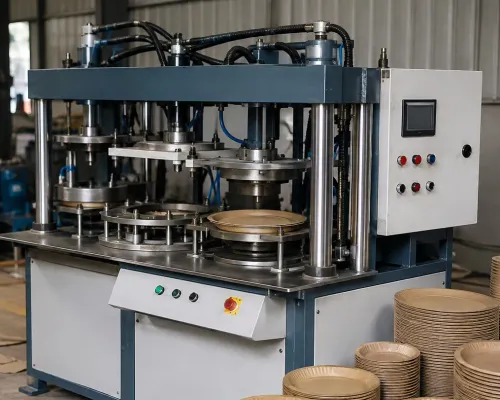
A fully automatic paper plate making machine coordinates the complete material flow: blank separation, automatic paper feeding, heating, pressing and forming, demoulding, counting, and stacking. The line still runs in cycles, so its good output is limited by the slowest synchronized action, such as a misfeeding separator or slow stacker.
| Option | What it automates | What the operator still does |
|---|---|---|
| Fully automatic | Feeds blanks, heats material, presses and forms plates, strips them, counts pieces, and builds stacks | Replenishes paper, changes dies, clears jams, checks quality, and responds to alarms |
| Semi-automatic | Automates pressing and forming after an operator places blanks in the die | Loads blanks, removes plates, and handles stacking or counting |
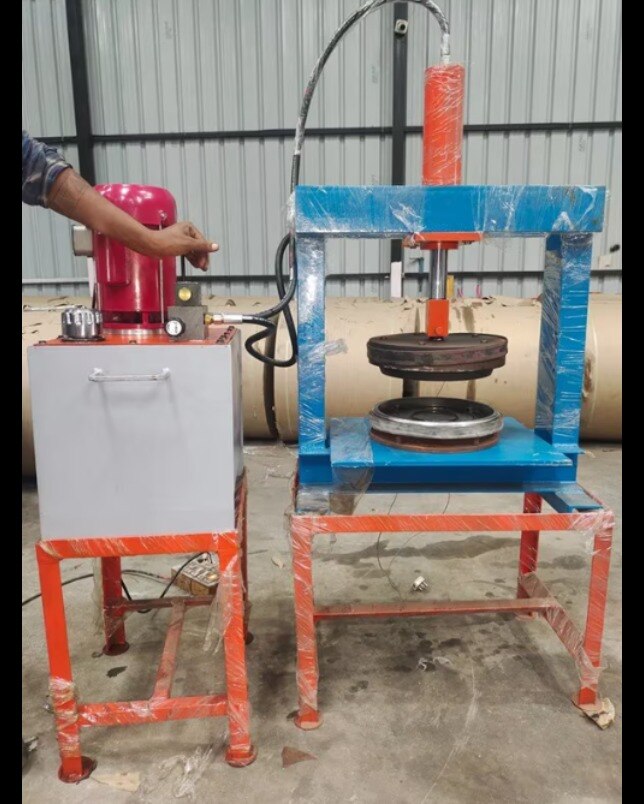
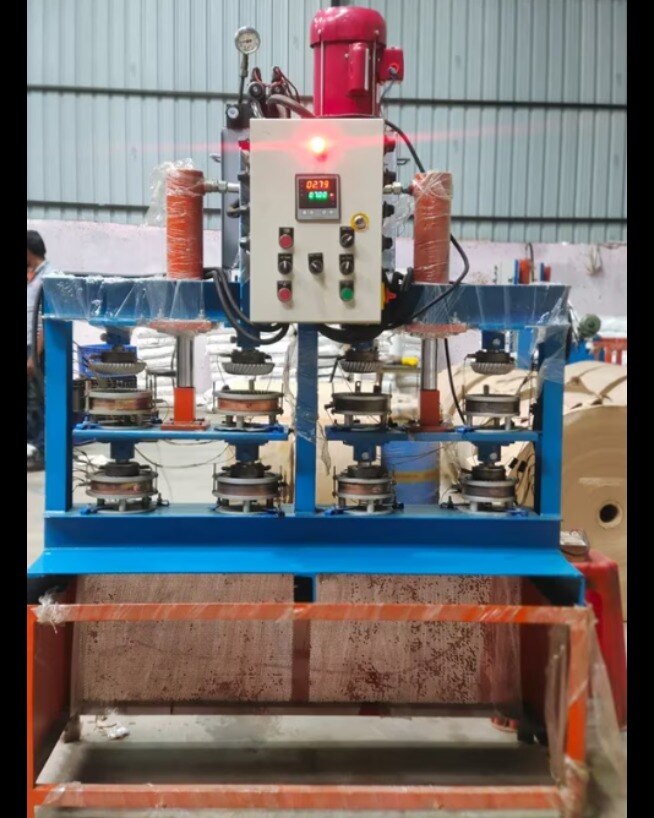
| Hydraulic machine | Uses hydraulic pressure to drive the press; automation depends on its feeder and discharge system | Performs any steps not covered by the installed automation |
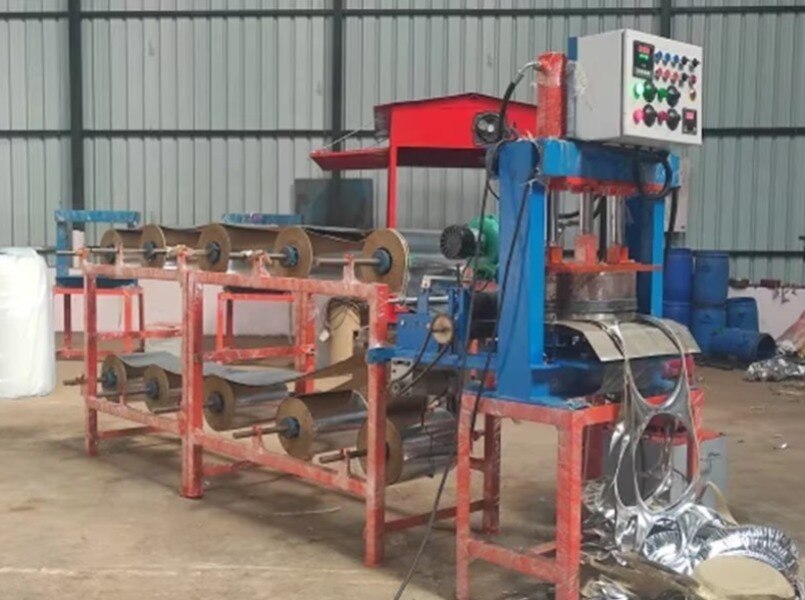
“Hydraulic” does not mean “fully automatic.” A hydraulic press can still require hand-fed blanks and manual unloading, while a servo-driven line can automate the same steps without hydraulic actuation. Ask the supplier to demonstrate the entire cycle, not only press speed.
Automation improves labour productivity by removing repetitive loading, unloading, counting, and stacking. It does not eliminate supervision: paper curl, coating, moisture, blank flatness, and stiffness affect separation and forming, so an operator must monitor misfeeds, wrinkles, rim cracks, incomplete forming, and stack alignment.
Increasing press speed without synchronising transfer and stacking usually creates rejects instead of saleable plates.
How an Operator Runs the Machine During a Shift
The operator begins paper plate machine operation by loading the specified blanks, checking that they are flat, dry and correctly aligned, then confirming the die for the required plate diameter. Paper curl, coating, stiffness and blank size affect feeding stability, wrinkles and forming pressure.
1. Load the blank magazine without overfilling it, set the guides, and select the stored die recipe on the PLC control panel. During a die changeover, isolate power, remove the previous tooling, clean its seating surfaces, fit the new die, centre it, and run trial plates before restoring production speed.
2. Start the line at the approved speed and watch blank separation, heating, pressing, stripping and transfer. The operator checks plate shape, rim formation and surface defects while photoelectric sensors detect missing blanks, double feeds, product presence and stack height.
3. Remove completed stacks when the counter reaches the packing quantity, record good plates and rejects, and replenish blanks before the magazine runs empty. A full stack or blocked discharge can stop an otherwise healthy line.
4. For a jam, stop the machine through the control panel, wait for motion and heat hazards to clear, and follow the isolation procedure before reaching inside. Remove the trapped blank, inspect the die and transfer path for scraps, check sensor alignment, and restart at reduced speed.
Dust, paper fibres, reflective coatings and curled blanks can trigger false sensor stops. Never bypass a PLC interlock to maintain output; repeated faults require cleaning, alignment or mechanical adjustment.
Calculate Good Plates per Hour, Not the Nameplate Speed
A machine’s paper plate machine production capacity starts with strokes, cavities and time, not its advertised maximum. Calculate ideal output as strokes per minute × cavities per stroke × 60. Thus, 100 strokes per minute with two cavities equals 12,000 ideal pieces per hour before any loss.
Convert that figure into good plates per hour by measuring the actual shift. Record total shift minutes, then remove time spent on:
- Paper loading and material adjustment
- Die changes, centering and cleaning
- Jam clearance and minor stoppages
- Rejects from incomplete forming, rim cracks, delamination or contamination
- Stacker pauses, counting errors and stack removal
If the press runs for 420 of a 480-minute shift, operates at 90% of rated speed and produces 98% good plates, its result is 12,000 × 420 ÷ 480 × 0.90 × 0.98 = 9,261 good plates per shift, or 1,158 good pieces per hour across the shift.
An OEE calculation expresses the same losses as availability × performance × quality. At 80% availability, 90% performance and 98% quality, OEE is 70.6%, so a 12,000 pieces per hour ideal rate becomes 8,472 good pieces per hour. Check the stacker’s sustained limit too; the slowest synchronized action sets output.
Use a witnessed test with your paper, blank size, die, target speed and packing method. Demand good plates per hour over a sustained run, including a controlled changeover, rather than an empty-machine demonstration.
The Specifications That Decide Whether Speed Becomes Output
Stable throughput depends on synchronized capacity, not the headline stroke rate. A fully automatic line can still be intermittent: blank separation, transfer, forming, demoulding, counting, or stacking becomes the bottleneck. If motor power or hydraulic pump capacity is undersized, pressure recovery slows and misfeeds rise.
| Specification | What to verify | Output risk |
|---|---|---|
| Motor power | Rated power under forming load, not no-load consumption | Slow cycles, overheating and trips |
| Hydraulic pump capacity | Flow rate, working pressure and pressure-recovery time | Incomplete forming or cycle delays |
| Heating method | Cartridge, oil, infrared or another system matched to the die | Uneven heating, sticking or rim distortion |
| Temperature control | Independent sensing, setpoint stability and alarm limits | Coating transfer, shallow profiles or weak rims |
| Die and frame | Correct plate diameter, cavity count and alignment | Dimensional drift and stack misalignment |
Qualify the machine with the exact paper grades and blank dimensions you will buy. Basis weight, stiffness, coating, curl, moisture and flatness affect separation force, die filling, wrinkles and stable speed; a different paper can turn a successful demonstration into reject-heavy production.
Record each recipe by material grade, die temperature, pressure, dwell time and speed. Excessive heat can soften or transfer coating, while insufficient heat or pressure leaves weak rims. Track first-pass yield separately from total count, including cracks, delamination, contamination and incomplete forming.
Use OEE to expose the gap: 80% availability × 90% performance × 98% quality equals 70.6%. Confirm it in a sustained factory test using your paper, dies, target speed, loading, minor stoppages, rejects and stacking method.
Compare Labour, Running Cost and Supplier Test Evidence
Compare every quote over one shift, not by machine price or advertised strokes per minute. The paper plate machine labour requirement includes loading, stack removal, jam recovery, die changes and cleaning; record operator hours and training time.
| Cost area | Compare | Evidence to request |
|---|---|---|
| Labour | Operators per shift, setup time and training hours | Timed changeover and recovery records |
| Electricity and heating | Connected load, average consumption, warm-up time and heater duty | Meter readings during production |
| Hydraulic oil and air | Oil grade, replacement interval, pressure stability and compressor demand | Maintenance schedule and utility log |
| Tooling | Die price, life, centering repeatability and change time for each diameter | Demonstration with your die set |
| Maintenance | Preventive maintenance tasks, spare parts and service response | Parts list and completed maintenance plan |
| Waste and downtime | Start-up rejects, wrinkles, jams, leaks and stoppage minutes | Reject count and downtime log from a sustained run |
Require a witnessed factory acceptance test using your paper grade, blank sizes, dies, target speed and packing method. The acceptance figure is good plates per hour after loading, minor stops, rejects and a controlled changeover—not a short empty-machine demonstration.
Ask Shivansh Engineering, or any supplier, for signed test sheets, electricity readings, sample stacks, die-change timings, training coverage and fault-recovery results. Check food-contact documents for the exact coating and fibre: U.S. paperboard may fall under 21 CFR 176.170, while EU supply requires Regulation (EC) No. 1935/2004 compliance. Requalify after changing either input.
Related products
 | Automatic Paper Plate Making Machine Fully Automatic All-in-One Paper Plate Machine ₹340000 The Fully Automatic All-in-One Paper Plate Machine is the ultimate choice for entrepreneurs and manufacturers who want a high-performance,... View product → |
 | Automatic Thali Making Machine Semi Automatic Hydraulic 8 Die Wrinkle Paper Plate Machine ₹290000 A Semi Automatic Hydraulic 8 Die Wrinkle Paper Plate Machine is a powerful and efficient manufacturing unit designed for high-volume production of... View product → |
Frequently asked questions
What does a fully automatic paper plate machine automate?
It automates blank separation, paper feeding, heating, pressing, forming, demoulding, counting, and stacking.
How do you calculate good plates per hour?
Multiply completed cycles by plates per cycle, then subtract rejects and account for stoppages, misfeeds, and changeovers.
Which specifications affect actual paper plate output?
Separator reliability, heating performance, press cycle time, mould changes, demoulding, counting, stacking, and compatible paper sizes determine usable output.
What supplier evidence should you request before buying?
Request a test run using your paper and plate sizes, with recorded cycle speed, good plates, rejects, stoppages, changeover time, and labour requirements.