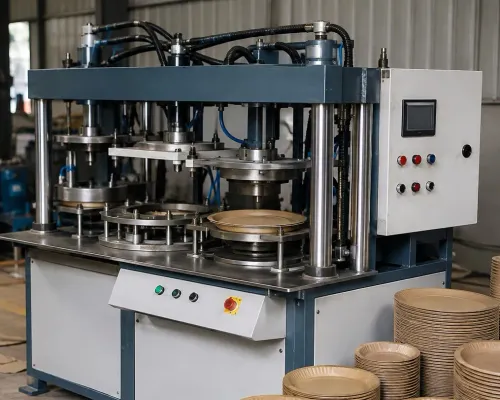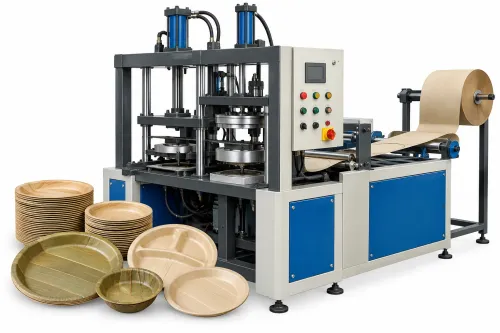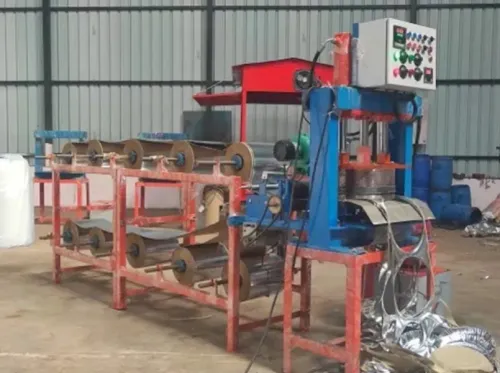
A small plate-making operation can lose money by buying for headline speed instead of saleable output, or by choosing automation that its orders and maintenance capacity do not justify. Use your order forecast, product mix, paper specification, floor plan and labour availability to compare machine types, calculate usable capacity and test a supplier’s claims before committing capital.
Key takeaways
- Calculate saleable plates per hour after stoppages and rejects.
- Compare die count using finished output, not advertised strokes per minute.
- Check press force and tooling against your paper and product drawings.
- Witness a trial before approving the machine and final configuration.
Start with demand, paper format and the plant you can actually run
Choose a machine from your expected daily orders, not its headline strokes per minute. Convert the order target into saleable plates per hour after loading, stoppages, changeovers and rejects; otherwise an apparently fast press will leave orders late.
Match the choice to your paper format and product range: a fixed-size machine becomes uneconomic when you add diameters, donas or thalis.
| Option | What it means | When it applies |
|---|---|---|
| Manual | The operator loads blanks, starts pressing and removes plates; output depends heavily on skill and handling speed. | A small paper plate manufacturing business with low volume, limited floor space and tight capital. |
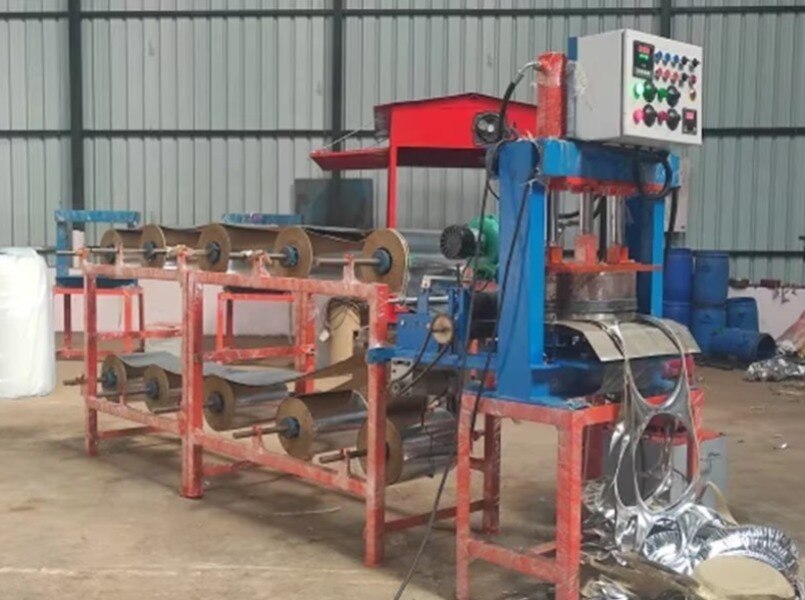
| Semi-automatic | The press performs forming while the operator feeds blanks, unloads or stacks products, and manages adjustments. | Moderate expected daily orders, available labour, and a training budget capability for consistent operation. |
| Fully automatic | Feeding, forming, unloading and stacking run through integrated controls, reducing repetitive handling. | High, steady orders justify greater investment, electrical demand, maintenance and operator training. |
Before comparing prices, request the complete tooling-change list:
- Die, punch and blanking-tool changes for every planned diameter and shape.
- Feeder-guide, stacker and control-parameter adjustments.
- Changeover time measured by one trained operator, not an estimate.
- A witnessed trial using your paper, coating and product drawings, recording saleable output, scrap, stack quality and stoppages.
Confirm that the machine fits your floor space with room for paper storage, operator access, maintenance and safe movement. Also assess labour availability and training budget capability; an automatic press is not economical if one untrained operator cannot keep it supplied or respond safely to faults.
Compare die count by saleable capacity, not advertised strokes
Convert your daily order target into saleable plates per operating hour. Divide the required plates by available hours after loading, breaks and planned changeovers; then allow for jams, cleaning and rejected pieces.
Use this calculation: strokes per minute × cavities per stroke × 60 × uptime × yield. Uptime must include stoppages and changeovers, while yield excludes cracked, wrinkled or poorly formed plates. A single-cavity press advertised at 40 strokes per minute is not a 2,400 saleable-plates-per-hour machine.
| Option | Capacity and operating effect | Best fit and trade-off |
|---|---|---|
| single-die paper plate machine | One die forms each stroke, so output is lowest but tooling, alignment and maintenance are simpler. | A small range, limited orders or a business prioritising low investment and easy size changes. |
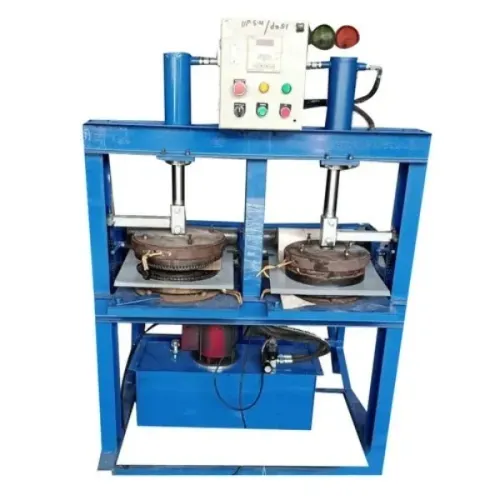
| double-die paper plate machine | Two dies increase simultaneous production without doubling press complexity. | Growing demand with two regularly ordered sizes; check whether one faulty die stops half the output. |
| four-die paper plate machine | Four dies raise theoretical capacity, press-force demand and tooling cost. | Multiple high-volume products with enough labour and floor space to support die maintenance. |
| eight-die paper plate machine | Highest simultaneous output, but alignment, energy use and fault impact also increase. | Sustained, predictable volume; poor value when orders are mixed or changeovers are frequent. |
Ask for a witnessed trial using your paper and product drawings. Record sustained saleable plates per hour, scrap rate, stack quality and changeover time—not a short no-load speed demonstration. A lower-cavity machine with quick, repeatable tooling changes can deliver more usable capacity across several sizes.
Match the press and tooling to your paper and product drawings
A 180 mm plate can require more forming force than a larger, shallow plate if its draw depth, rim profile or blank size is greater. Tie the quoted tonnage, hydraulic pressure and installed motor power to a named product drawing, paper specification and die configuration—not to maximum plate diameter alone.
| Specification | What to match | Failure if mismatched |
|---|---|---|
| Maximum blank diameter | Largest blank required by each drawing, with clearance for feeding and die alignment | The blank catches, shifts or cannot enter the die |
| Forming depth and rim profile | Drawing dimensions, corner radii and draw geometry | Cracks at the corners, incomplete rims or wrinkles |
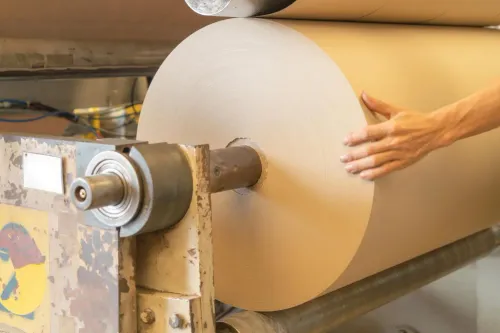
| Paperboard range | GSM, caliper, stiffness, moisture, grain direction and coating type | Springback, splitting or poor stacking despite correct GSM |
| Die configuration | Single, double, four or eight cavities, with balanced force and alignment | Uneven forming, higher tooling stress and multiple rejects from one fault |
| Cycle time | Sustained forming time at the required pressure, not unloaded strokes per minute | Heat, jams and lower saleable output than quoted |
| Coating orientation and temperature limits | Coated face position and die contact conditions | Scuffing, delamination or coating transfer onto the die |
Ask for the machine’s maximum blank diameter and working pressure at the intended cycle time. A higher hydraulic pressure does not fix an unsuitable die radius or excessive draw depth. Calculate usable output as cycle time, cavity count, uptime and yield together, then test the result with your paper and drawings.
Record cracks, wrinkles, coating damage and rim dimensions during a sustained trial.
Price the complete size change, quality control and safety requirements
A machine quote often hides operating costs. Price each product change as a complete job, not as an additional forming die. Record die changeover time using your paper, tools and operator; a short demonstration can conceal adjustment work, scrap, electricity, compressed-air use and lost production.
Confirm whether plate stacking and counting are automatic, accurate and included, or whether an operator must sort, count and re-stack every batch.
Ask the supplier to itemise every changeover component:
- Die and punch
- Blanking tool
- Feeder guides
- Stacker adjustments
- Control parameters and stored recipes
- Labour, tooling, setup time and trial-paper consumption
Budget maintenance separately. Request the price and replacement interval for wear parts, lubrication, electrical components and service visits. A cheap press becomes expensive when a failed sensor stops the line or a poor stack requires manual rework.
Require documents for the finished plate and its materials, not only a machine declaration. For EU sales, check Regulation (EC) No 1935/2004, Regulation (EC) No 2023/2006 and, for plastic-coated paper, Regulation (EU) No 10/2011. Obtain the supplier’s material declaration and migration-test reports; “food grade” alone proves little.
Specify ISO 12100 risk assessment and guarding, plus ISO 13849-1 safety-control design. Verify protected die access, interlocked doors, emergency-stop performance and restart prevention before accepting the quotation.
Use a witnessed trial to choose the supplier and final configuration
Run a witnessed machine trial using your own paper, dies and every plate design you plan to sell. A short no-load demonstration proves little; form each product for a sustained period and record saleable plates per hour, scrap rate, stack quality, jams, die cleaning and changeover time.
Require the machine acceptance test to state measurable pass conditions:
- Run each named diameter, depth and rim profile for a fixed production period.
- Record paper weight, coating, blank size, die cavities, hydraulic pressure and operating speed.
- Measure electricity and compressed-air consumption under load.
- Count cracked, wrinkled, poorly formed or badly stacked plates as rejects.
- Repeat a size change and record the time until saleable output resumes.
- Attach photographs, sample plates and signed results to the purchase contract.
Compare the trial evidence with the quotation:
| Measure | Acceptable evidence | Warning sign |
|---|---|---|
| Saleable plates per hour | Sustained output after rejects and stoppages | Strokes per minute only |
| Product range | Every intended drawing forms correctly | One sample diameter |
| Changeover | Timed, repeatable operator change | “Quick change” without minutes |
| Material compliance | Supplier material declaration and migration-test documentation for coated paper | Generic “food grade” claim |
Ask Shivansh Engineering, or any competing supplier, to tie quoted tonnage and cavity count to your named drawings rather than maximum diameter. If plastic coating falls under Regulation (EU) No 10/2011, obtain the supporting migration records before approving the paper. A signed trial result protects you from buying theoretical capacity.
Related products
 | Paper Plate Circle Cutting Machine Paper Plate Circle Cutting Machine ₹160000 A Paper Plate Circle Cutting Machine is an essential tool for manufacturers producing paper plates, donas, and disposable tableware. View product → |
 | Automatic Paper Plate Making Machine Fully Automatic All-in-One Paper Plate Machine ₹340000 The Fully Automatic All-in-One Paper Plate Machine is the ultimate choice for entrepreneurs and manufacturers who want a high-performance,... View product → |
Frequently asked questions
How should a small business calculate the machine capacity it needs?
Convert daily orders into saleable plates per hour after loading time, stoppages, changeovers and rejected plates. Use that figure instead of the advertised strokes per minute.
Why is die count more useful than advertised machine speed?
A machine with more dies can produce more plates per stroke, but only saleable output matters. Compare die count, actual cycle speed, downtime and reject rates.
What should you check before matching a press to paper and plate designs?
Check the paper format, thickness, coating, plate diameter, depth, rim profile and drawing dimensions against the press force and forming-tool specification.
What should a supplier trial prove before you buy?
A witnessed trial should demonstrate the target plate sizes, paper grades, cycle performance, changeover process, finished quality, reject handling and operator safety.
Related products
 | Paper Plate Making Machine Automatic Hydraulic Double Die Paper Plate Making Machine ₹120000 The Automatic Hydraulic Double Die Paper Plate Making Machine is one of the most reliable and efficient solutions for manufacturers seeking faster... View product → |
 | Paper Plate Thali Making Machine Fully Automatic Paper Plate Thali Making Machine ₹340000 If you are planning to start or expand your disposable plate manufacturing business, a Fully Automatic Paper Plate Thali Making Machine is the best... View product → |
 | Automatic Paper Plate Making Machine Semi Automatic Hydraulic 4 Die Wrinkle Paper Plate Machine ₹180000 The Semi Automatic Hydraulic 4 Die Wrinkle Paper Plate Machine is a powerful and efficient production solution designed for manufacturers who want to... View product → |
 | Automatic Thali Making Machine Semi Automatic Hydraulic 8 Die Wrinkle Paper Plate Machine ₹290000 A Semi Automatic Hydraulic 8 Die Wrinkle Paper Plate Machine is a powerful and efficient manufacturing unit designed for high-volume production of... View product → |