A machine’s automation label and strokes-per-minute figure do not tell you how many saleable plates it will produce, what paper it can form, or what labour and infrastructure it requires. By comparing the process, tooling, utilities, quality controls, ownership costs and acceptance tests, you can select equipment against your actual product range and daily demand.
Key takeaways
- List every operator task, including blank loading, stack removal and jam clearing.
- Compare saleable plates per hour, not the machine’s headline strokes per minute.
- Test your paper, plate sizes and die changes during a witnessed supplier trial.
- Model installation, labour, maintenance and break-even costs before signing the order.
Compare automation by completed tasks and saleable output
An “automatic paper plate machine” label does not define how much labour remains. Ask the supplier to name every operator task, from loading blanks to removing counted stacks and clearing jams.
| Automation level | Day-to-day operator work | Production implication |
|---|---|---|
| Semi-automatic paper plate machine | Load pre-cut blanks, start cycles, remove finished plates and clear misfeeds | Labour remains tied to feeding and unloading; quoted speed is rarely continuous output |
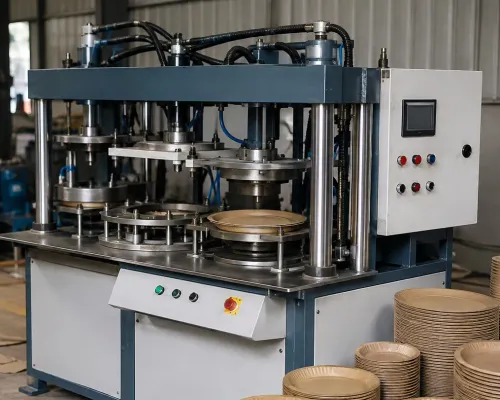
| Automatic paper plate machine | Powered blank feeding and forming, with operators replenishing stacks, collecting output and responding to faults | Less handling, but feeder reliability and recovery time determine saleable production |
| Fully automatic paper plate machine | Automatic feeding, forming, stacking or counting, with supervision for replenishment, rejects and maintenance | Lowest routine handling; it still needs planned checks and a response to jams |
Compare saleable plates per hour, not strokes per minute. Estimate output as strokes per minute × usable cavities × operating minutes × yield; subtract time for loading, die changes, jams, rejects and maintenance. A larger diameter, deeper profile or heavier GSM can lengthen the cycle and reduce the stated rate.
Request a witnessed run using your paper, blank size, plate diameter, rim geometry and target speed. Record continuous runtime, average cycle time, double feeds, misfeeds, rejects, stack changes and recovered output over several hours. The acceptance document should state whether the result is plates per hour or a theoretical press rate.
A slower feeder with stable yield can produce more saleable plates than a faster press that repeatedly feeds two blanks.
Check the product envelope, paper input and die-change process
A machine is suitable only if its product envelope covers your finished diameter, blank diameter, plate depth, rim height and compartment geometry—not just its advertised plate size range.
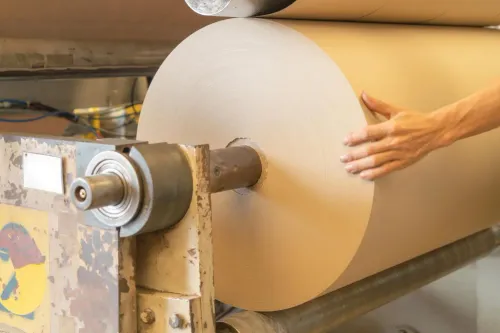
1. Match the material specification to your stock. Confirm the accepted paper GSM, coating type, moisture range and thickness, then check whether the feeder takes pre-cut blanks, fan-folded sheets or roll-fed material. Ask for stack capacity, blank-size tolerance, double-sheet detection and misfeed recovery; repeated jams can erase the advantage of a faster press.
2. Test the complete product family. A shallow 6-inch plate and a deep 10-inch thali demand different forming area, die geometry and force. Request a witnessed run using your paper, target diameter, rim profile and production speed rather than relying on strokes per minute.
3. Treat every paper plate die as a recurring production asset. Confirm whether one base accepts multiple die sets, whether plates, donas and thalis require separate dies, and how alignment is set. Obtain the die-change procedure and time, plus prices and lead times for future dies.
4. Price the tooling after the sale. Ask which wear parts are supplied, when dies require sharpening or replacement, and whether proprietary components limit outside servicing. A low machine price can become expensive when a new profile takes weeks to arrive.
Require written limits for each mould profile. If the supplier cannot state the compatible blank dimensions, forming depth and die-change method, you cannot calculate downtime or tooling cost reliably.
Evaluate forming technology, finished quality and operator safeguards
Choose the press technology by the stock, die depth and control you need—not by advertised tonnage. Forming force depends on product area, material thickness, die geometry and speed; poor control causes incomplete rims, wrinkles, rim cracks and uneven flatness. Excessive force can damage coatings and wear dies.
| Technology | Strength | Risk and buying check |
|---|---|---|
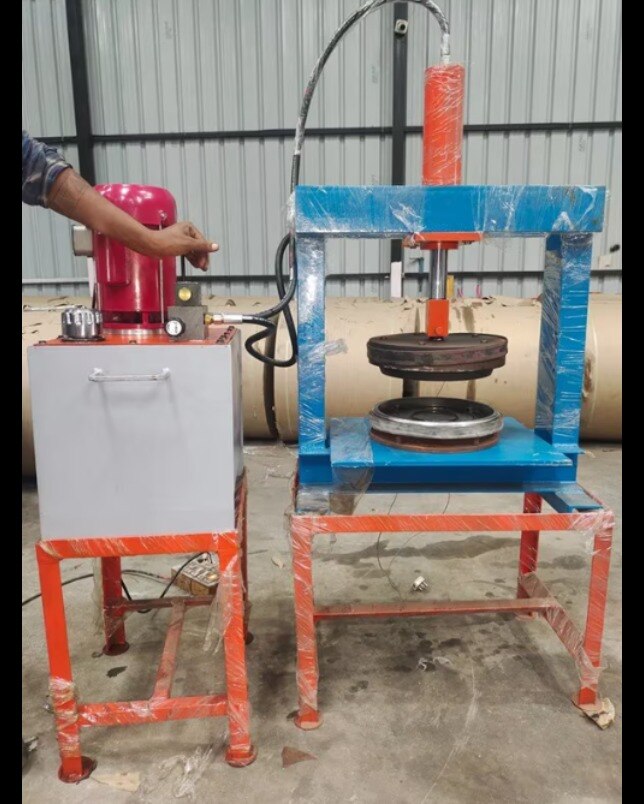
| Hydraulic paper plate machine | Adjustable force and slower, controlled forming suit deep plates and mixed grammage | Request the maximum forming area, pressure-control method and force curve; uncontrolled pressure can crush coatings |
| Pneumatic press | Fast cycling suits lighter stock and shallow profiles | Confirm regulator stability, air consumption and force at the die, or thin blanks may wrinkle |
| Mechanical press | Consistent high-speed cycles suit repeat runs with fixed tooling | Force follows the crank and die position; check overload protection and performance on your thickest stock |
Protect paper plate quality with sensors for blank presence, double sheets, die position and cycle completion. Require sample records for rim height, plate depth, diameter, flatness, cracks and reject rate at both thin and thick stock settings. A speed claim without yield hides jams and failed plates.
Demand these operator safeguards:
- Fixed guarding around the die and drive
- Interlocked access doors that stop the cycle when opened
- Emergency-stop buttons within reach of the operator
- Two-hand controls where hands could enter the forming zone
- Jam-clearing mode that isolates energy before access
- Overload protection and documented lockout points
Calculate installation, labour, maintenance and support requirements
A machine price is only the starting figure. Before production, budget for electrical work, an air compressor, foundation or levelling, commissioning, training, dies, spare parts and several weeks of operating cash.
1. Confirm the installation load in writing. Record voltage, phase, frequency, installed power and paper plate machine power consumption, then price the cable, isolator, earthing and stabilisation equipment. Check compressed-air pressure and consumption, floor loading, ventilation, noise and access for unloading. Hydraulic models also need oil-temperature control, leak management, filtration and disposal arrangements.
2. Cost the people and the lost minutes. Set the operator count for paper loading, die changes, jam clearing, quality checks and packing; do not treat quoted strokes per minute as saleable output.
Allow paid operator training and calculate output as strokes per minute × usable cavities × operating minutes × yield, deducting setup, rejects and planned maintenance.
3. Build a paper plate machine maintenance budget. Include hydraulic oil and filters, heaters, seals, valves, sensors, belts, drives and die wear parts, plus sharpening or replacement intervals. Ask for a critical-spares list, prices and lead times before accepting proprietary components.
4. Make support measurable. Require machine installation and commissioning scope, remote diagnostics, response times, electrical and pneumatic drawings, PLC software backup, maintenance training and a documented escalation contact. When comparing a quote from Shivansh Engineering, request these documents alongside the machine specification, not after payment.
For food-contact production, obtain traceability and declarations for contact metals, coatings, lubricants and replacement parts, including compliance with Regulation (EC) No. 1935/2004 and Regulation (EC) No. 2023/2006 when selling into the EU.
Related products
 | Automatic Paper Plate Making Machine Fully Automatic All-in-One Paper Plate Machine ₹340000 The Fully Automatic All-in-One Paper Plate Machine is the ultimate choice for entrepreneurs and manufacturers who want a high-performance,... View product → |
 | Automatic Paper Plate Making Machine Semi Automatic Hydraulic 4 Die Wrinkle Paper Plate Machine ₹180000 The Semi Automatic Hydraulic 4 Die Wrinkle Paper Plate Machine is a powerful and efficient production solution designed for manufacturers who want to... View product → |
Use a witnessed trial and break-even model before signing
A two-hour demonstration can hide heat buildup, die fouling and rising rejects. Require a witnessed paper plate machine capacity test using your paper, diameter, rim geometry and target speed, then record saleable plates per hour rather than strokes per minute.
- Run the machine continuously for a defined period with the intended blank, fan-folded or roll-fed stock. Record cycle time, stack-loading interruptions, die changes, jams, double feeds, rejects and recovery time.
- Calculate output as strokes per minute × usable cavities × operating minutes × yield. Treat the result as proven only when the machine acceptance test confirms continuous saleable output and the agreed reject percentage.
- Test every die set you will buy. Record changeover time, alignment work, sharpening needs and output for each plate, dona or thali profile.
- Obtain written acceptance criteria covering output, plate flatness, rim formation, cracks, wrinkles, feed reliability, safety functions and training. Withhold final payment until the trial passes.
For break-even analysis, calculate the incremental contribution per saleable plate: selling price minus paper plate production cost, packaging, power, direct labour, waste and maintenance. Divide the multi-die or automation premium, including tooling and installation, by that contribution and by the additional saleable plates produced per month.
Compare the resulting months to break even with your realistic orders, not the supplier’s rated capacity. A slower machine with reliable feeding can repay sooner than a faster press that produces frequent rejects.
Frequently asked questions
How do you compare automation between automatic paper plate machines?
List each remaining operator task and compare completed, saleable output per hour rather than headline strokes per minute.
What paper and product details should you check before buying?
Confirm the paper input range, supported plate sizes and shapes, product envelope, blank format and die-change process.
What should you inspect during a machine demonstration?
Test forming quality, stack consistency, paper handling, jam clearing, guarding, emergency stops and operator access.
Which costs belong in an automatic paper plate machine break-even model?
Include installation, electrical work, labour, dies, consumables, maintenance, spare parts, downtime and supplier support.
Related products
 | Automatic Thali Making Machine Semi Automatic Hydraulic 8 Die Wrinkle Paper Plate Machine ₹290000 A Semi Automatic Hydraulic 8 Die Wrinkle Paper Plate Machine is a powerful and efficient manufacturing unit designed for high-volume production of... View product → |
 | Paper Plate Thali Making Machine Fully Automatic Paper Plate Thali Making Machine ₹340000 If you are planning to start or expand your disposable plate manufacturing business, a Fully Automatic Paper Plate Thali Making Machine is the best... View product → |
 | Paper Plate Making Machine Automatic Hydraulic Double Die Paper Plate Making Machine ₹120000 The Automatic Hydraulic Double Die Paper Plate Making Machine is one of the most reliable and efficient solutions for manufacturers seeking faster... View product → |