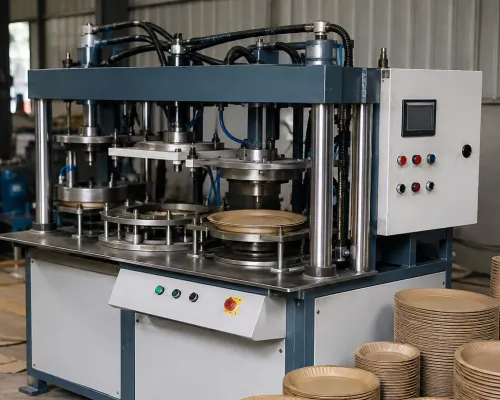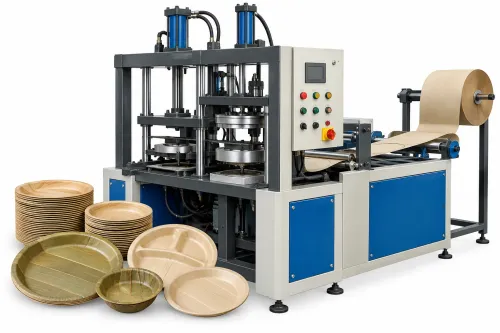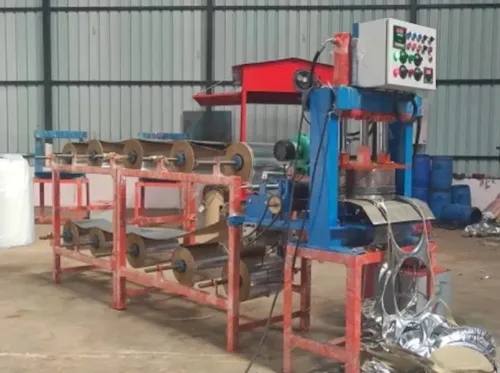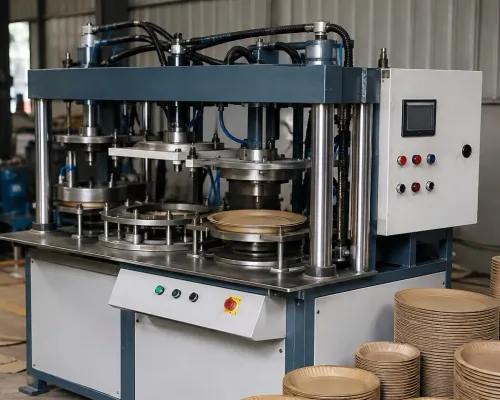
Disposable paper dishes are widely used for serving snacks, meals, sweets, and refreshments across catering, food service, events, takeaway counters, and institutional applications. As demand increases, manual production methods may become difficult to manage consistently.
A Paper Dish Making Machine provides a more structured way to form disposable dishes at repeatable production volumes.
For businesses in Chakan, Maharashtra, understanding the complete manufacturing process can help determine whether this equipment fits the planned operation.
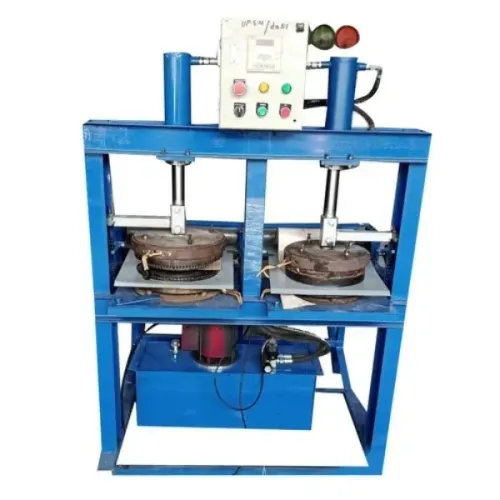
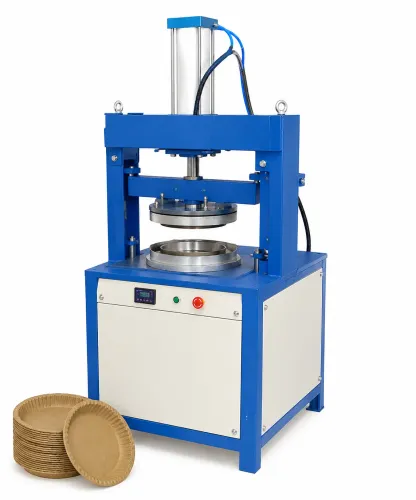
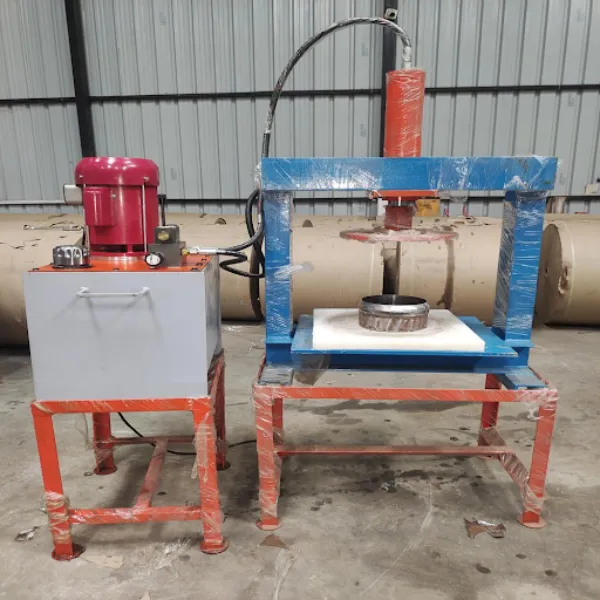
What a Paper Dish Making Machine Does
The machine forms suitable paper material into a defined dish shape using a matched die and controlled pressing mechanism.
Depending on machine configuration, the production process may include material feeding, positioning, pressing, forming, release, and collection.
The objective is not simply faster production. Mechanization can also support dimensional consistency when the machine is correctly configured and suitable raw material is used.
Consistency Supports Better Product Handling
Disposable dishes should generally have consistent dimensions so they can be stacked, counted, packaged, transported, and supplied efficiently.
Large variations between pieces can complicate packaging and may affect customer acceptance.
A properly configured machine helps repeat the same forming cycle. Die condition, machine settings, raw material, and operator practices still need to remain controlled to maintain that consistency.
Different Dies Can Expand the Product Range
One important consideration is die compatibility.
A manufacturer may begin with one popular dish size and later receive enquiries for other dimensions.
Where the machine design supports interchangeable dies, adding compatible dies may provide a practical way to broaden the product portfolio.
Before investing, buyers should understand die dimensions, changeover requirements, production differences between sizes, and the cost of additional tooling.
Production Planning Should Include Raw Material
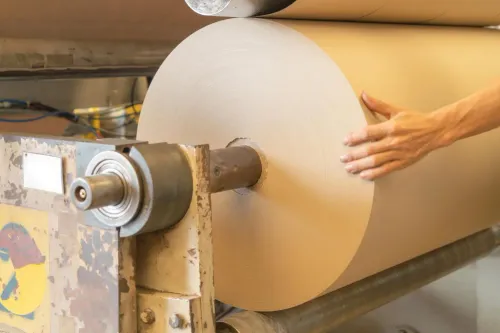
Reliable manufacturing depends on a steady supply of suitable raw material.
Businesses should evaluate paper quality, thickness, coating where required, storage conditions, sheet dimensions, and supplier consistency.
Poor material can lead to issues such as tearing, uneven forming, weak edges, and unnecessary waste.
Raw material should also be stored away from excessive moisture or conditions that could affect its physical properties.
Workflow Matters as Much as Machine Speed
A fast machine will not automatically create an efficient factory.
If raw material is stored too far from the machine, finished dishes accumulate around the operator, or packaging cannot keep pace, production becomes unbalanced.
A simple workflow can be organized around:
- Raw material storage
- Material preparation
- Machine feeding
- Dish forming
- Quality inspection
- Counting
- Packing
- Finished-goods storage
This approach helps identify bottlenecks before production volume increases.
Quality Checks Should Be Simple and Frequent
Manufacturers do not need to wait until the end of a shift to identify quality problems.
Operators can periodically check dish shape, edge formation, dimensions, surface condition, and stacking consistency.
If a defect begins appearing repeatedly, production can be stopped briefly to inspect the material, die, or machine settings.
Early intervention helps reduce avoidable waste.
Plan Maintenance Around Production
Regular cleaning and inspection should form part of the operating schedule.
Dies should remain clean and properly aligned. Moving mechanisms should be checked according to the manufacturer's recommendations, while electrical and hydraulic systems should be inspected where applicable.
Maintenance should ideally be planned rather than performed only after a breakdown.
Selecting Equipment for Long-Term Use
Businesses should evaluate a Paper Dish Making Machine according to intended dish sizes, expected output, material characteristics, workspace, power availability, maintenance requirements, and future product plans.
For industrial businesses operating around Chakan, access to engineering and manufacturing support can also influence equipment decisions.
Shivansh Engineering can assist businesses in understanding machinery configurations according to practical production requirements. The objective should be to establish an organized manufacturing process where machinery, raw materials, operators, quality checks, and packaging work together efficiently.
When these elements are planned as one production system, a Paper Dish Making Machine can support a more predictable approach to disposable dish manufacturing.
Keywords