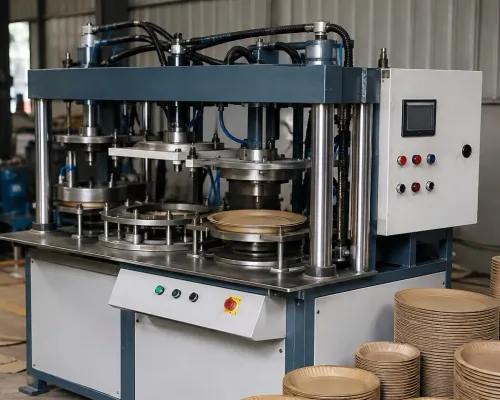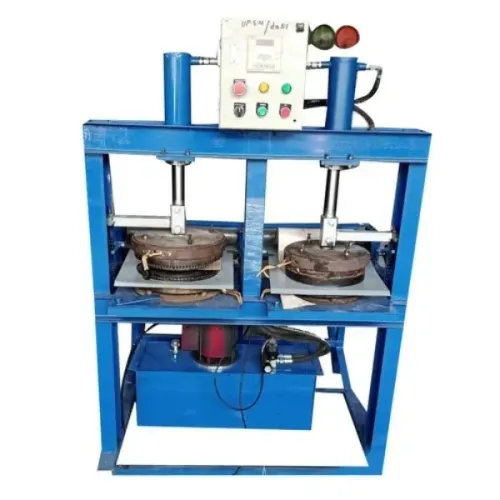


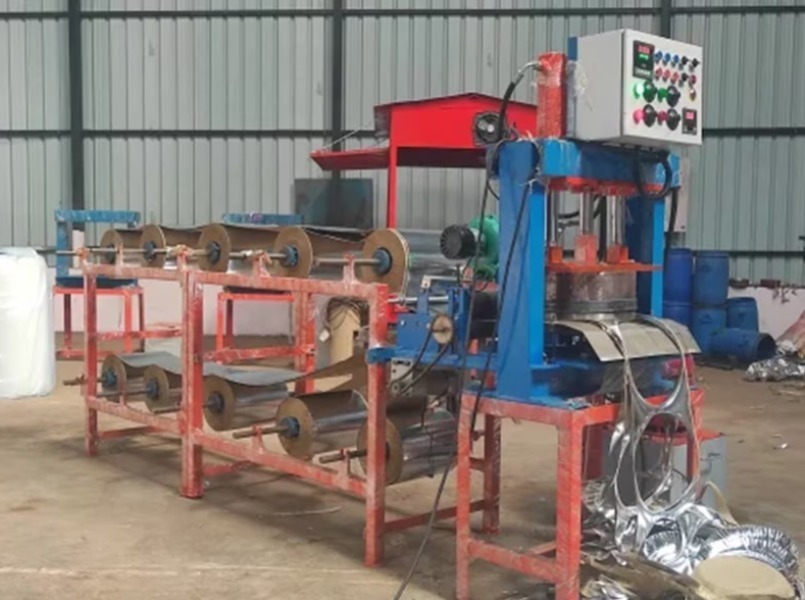
The quoted price of a Paper Plate Manufacturing Machine is only the beginning of the investment calculation. Businesses planning commercial production also need to consider raw material, dies, electricity, labour, packaging, maintenance, workspace, and expected machine utilization.
For entrepreneurs and established manufacturers in Nashik, Maharashtra, evaluating total production economics before purchasing machinery can provide a clearer picture of profitability and help prevent unexpected costs after installation.
Machine Configuration Influences Investment
Paper plate machines are available in different configurations.
Price can vary according to operating mechanism, number of dies, production capacity, automation level, construction, controls, and additional features.
A machine with greater production capability may require a higher initial investment but could provide a lower production cost per plate when operated at sufficient utilization.
The key is to choose capacity according to demand rather than purchasing either the cheapest or largest machine available.
Dies Need to Be Included in the Budget
The die determines the shape and dimensions of the plate.
Businesses planning to manufacture multiple sizes may require additional dies, which should be included in the initial project calculation.
Before purchasing a machine, determine which sizes are likely to generate regular orders.
Starting with commercially relevant sizes can prevent unnecessary investment in tooling that remains underused.
Raw Material Is a Major Recurring Cost
Paper consumption generally represents a significant portion of ongoing manufacturing expenditure.
Cost depends on paper type, thickness, size, supplier, order quantity, wastage, and product specifications.
Manufacturers should calculate material consumption per plate rather than looking only at the price of paper per kilogram or sheet.
This creates a better basis for estimating unit economics.
Calculate Realistic Labour Requirements
Labour needs depend on the machine configuration and production workflow.
Workers may be required for material preparation, machine operation, finished-product collection, quality checking, counting, packing, and material movement.
A high-output machine can still become inefficient if packaging cannot keep pace with production.
Labour planning should therefore consider the entire process rather than the machine operator alone.
Include Electricity in Operating Cost
Confirm the electrical requirements of the proposed Paper Plate Manufacturing Machine before installation.
Estimate electricity consumption according to expected operating hours.
If production will run across multiple shifts, energy expenses become more significant and should be incorporated into monthly manufacturing calculations.
The facility's electrical infrastructure may also require modification, which can create an additional setup cost.
Understand Wastage
Not every piece of material entering production necessarily becomes a saleable plate.
Waste can arise from material trimming, damaged paper, incorrect feeding, forming defects, setup trials, or quality rejection.
Ignoring wastage can make estimated production costs appear artificially low.
Track actual material input against saleable finished output after production begins.
Maintenance Has a Financial Impact
Machines require periodic servicing and component replacement.
A realistic operating budget should account for lubrication, dies, electrical components, hydraulic parts where applicable, moving mechanisms, and other wear items.
Preventive maintenance may involve routine expenditure, but it can help reduce the financial impact of unexpected downtime.
Calculate Cost Per Saleable Plate
A simple costing model should include:
- Raw material
- Electricity
- Labour
- Packaging
- Maintenance
- Wastage
- Rent and overhead allocation
- Transportation where applicable
- Machine investment recovery
Divide the relevant production expenses by the number of saleable plates produced during the same period.
This gives a more meaningful cost estimate for pricing decisions.
Evaluate Investment With Real Numbers
Machine purchasing should ultimately be linked to expected sales.
Shivansh Engineering can discuss machinery configurations according to plate dimensions, die requirements, expected production, and operating conditions, helping buyers understand which setup fits their planned manufacturing scale.
For businesses in Nashik, evaluating a Paper Plate Manufacturing Machine through total cost rather than purchase price alone can lead to a more informed investment decision. When capacity, expenses, utilization, and market demand are considered together, manufacturers gain a clearer understanding of the production volume required to make the operation commercially practical.