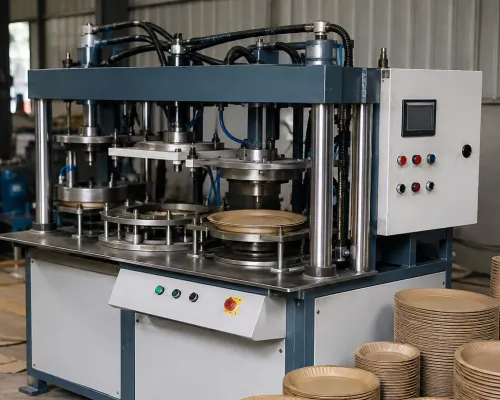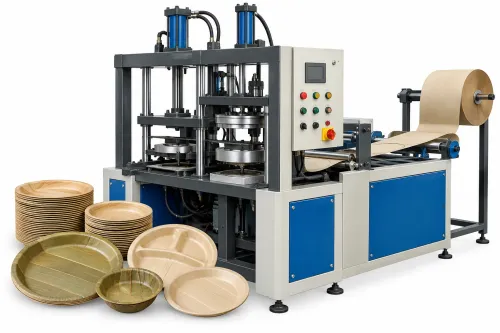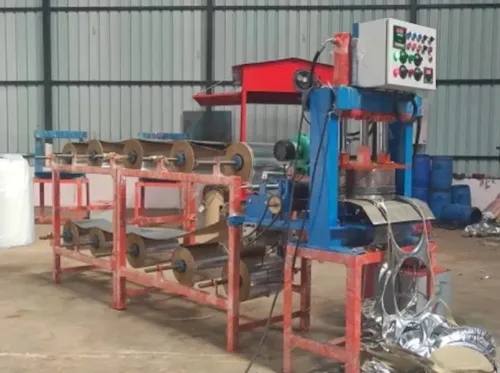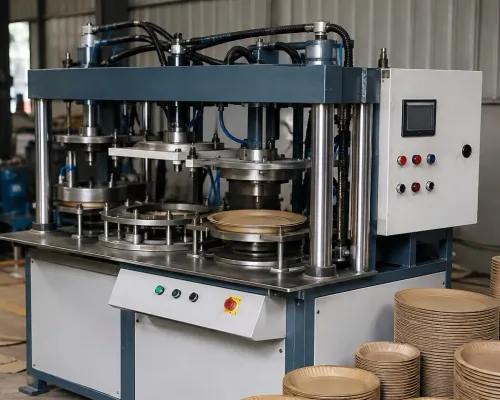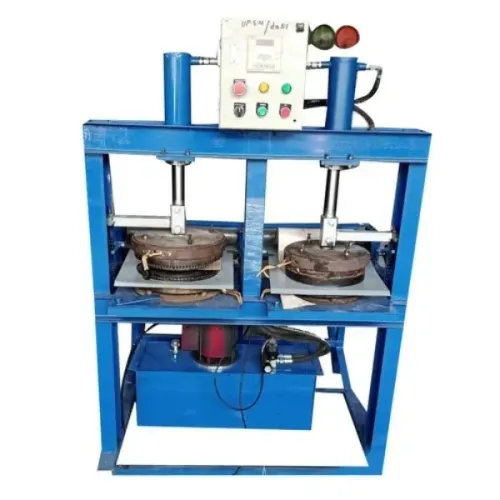
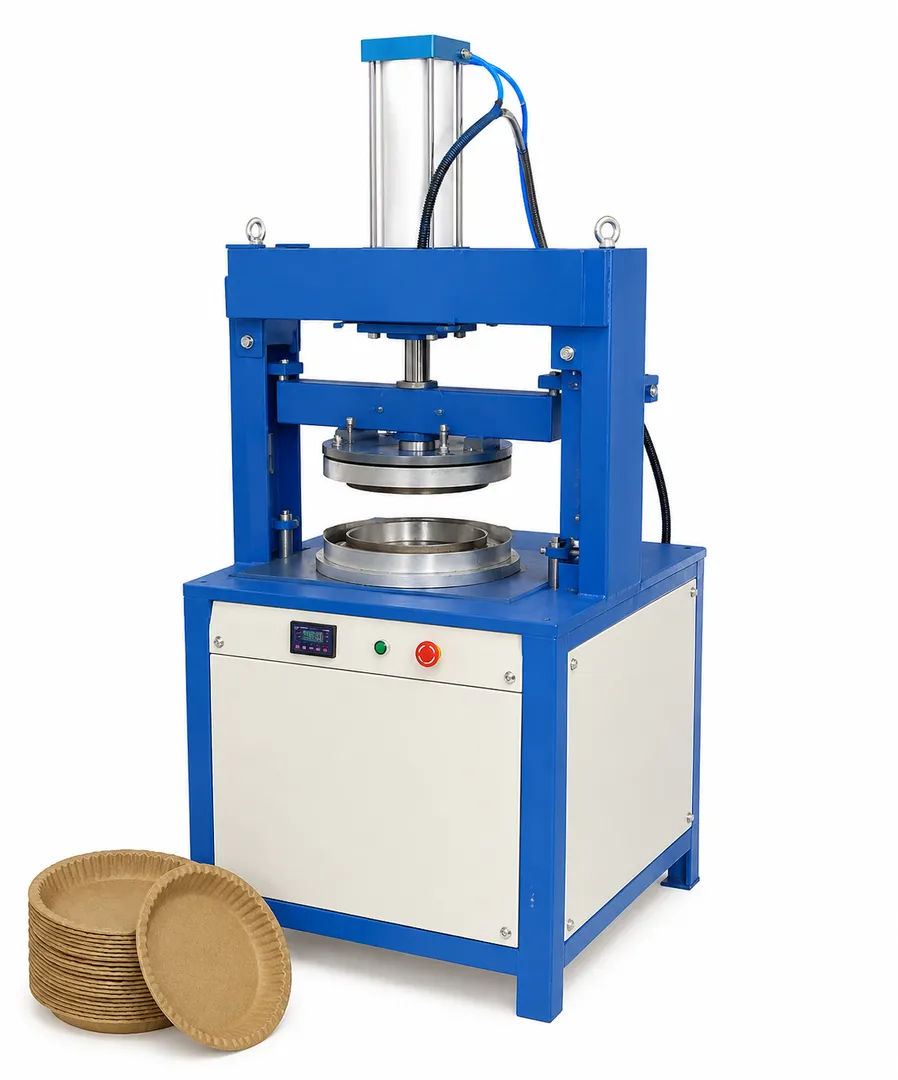
Not every paper plate manufacturing business needs a large multi-die production system from the beginning. For entrepreneurs testing a new market or manufacturers concentrating on a limited product range, a Single Die Paper Plate Machine can provide a focused production setup without unnecessary complexity.
Businesses considering disposable plate manufacturing in Dhule, Maharashtra should evaluate whether a single-die configuration matches their expected orders, product sizes, available workforce, and investment plan.
What Single Die Operation Means
A single-die machine uses one forming station during its production cycle.
The selected die determines the dimensions and shape of the plate being produced. Depending on the machine design, operators may be able to replace the die when another compatible plate size is required.
This configuration can be useful when a business mainly produces one frequently ordered plate size.
Suitable for Focused Production
A common mistake among new manufacturers is purchasing more production capability than their initial market requires.
If most customer demand is concentrated around one plate specification, operating a simpler production setup can make planning easier.
Raw material purchasing becomes more predictable, operators become familiar with the production cycle, and finished-product inventory can be managed around a smaller range.
Businesses can subsequently evaluate expansion based on actual orders rather than assumptions.
Consider the Expected Output
A Single Die Paper Plate Machine should still be selected according to realistic production requirements.
Estimate the number of plates needed each day and compare that requirement with practical machine output.
Remember that effective capacity can be influenced by:
- Plate dimensions
- Paper thickness
- Machine cycle
- Feeding method
- Operator efficiency
- Setup time
- Production stoppages
- Quality rejection
Allow some capacity margin rather than planning operations around continuous maximum output.
Evaluate Changeover Requirements
A single-die configuration does not necessarily mean the business must manufacture only one product forever.
Where compatible interchangeable dies are available, different plate dimensions may be produced through die changes.
However, changing dies takes time and requires correct installation and alignment.
If several plate sizes must be manufactured repeatedly during the same shift, frequent changeovers may reduce practical productivity. In that situation, another machine configuration could be more appropriate.
Space Can Be an Important Advantage
New manufacturing businesses often operate from limited industrial premises.
A focused production setup may be easier to accommodate than a larger production line, although sufficient working clearance remains essential.
Plan separate space for raw paper, machine operation, operator movement, plate collection, quality inspection, packaging, and finished inventory.
An efficient layout reduces unnecessary material movement.
Calculate Production Economics
Machine purchase price is only one component of manufacturing cost.
Calculate expenses related to paper material, electricity, labour, packaging, maintenance, wastage, transport, and dies.
Then estimate the expected number of saleable plates.
This helps determine approximate production cost per unit and provides a better basis for setting wholesale prices.
Maintenance Still Matters
A simpler machine does not eliminate the need for preventive maintenance.
Dies should be cleaned regularly, fasteners inspected, moving mechanisms checked, and lubrication performed according to recommendations. Electrical connections and safety components should also be periodically examined.
Consistent maintenance helps prevent minor problems from becoming unexpected production interruptions.
Decide Based on Your Market
A Single Die Paper Plate Machine can be appropriate when demand is concentrated around a manageable product range and production targets do not justify more complex equipment.
Manufacturers such as Shivansh Engineering can discuss the relationship between dies, machine configuration, product dimensions, and production requirements before equipment is finalized.
For businesses in Dhule entering disposable plate manufacturing, beginning with a machine suited to actual demand can provide a more controlled route into production while leaving future expansion decisions to be guided by genuine market growth.
Keywords