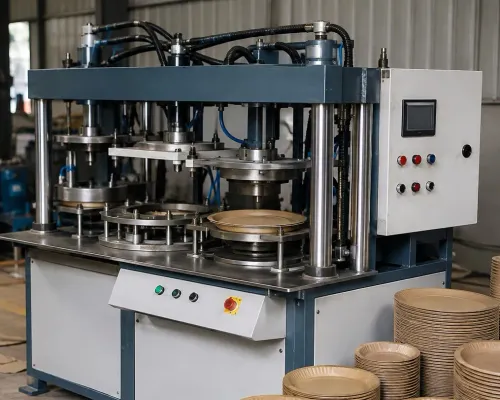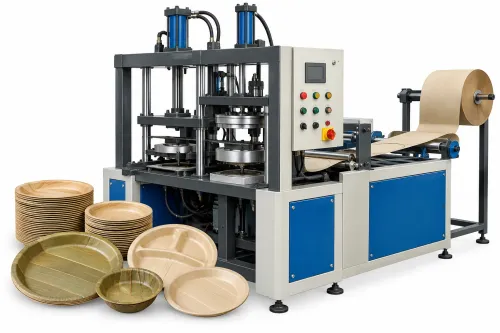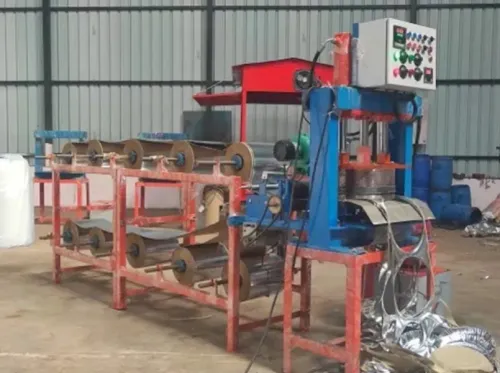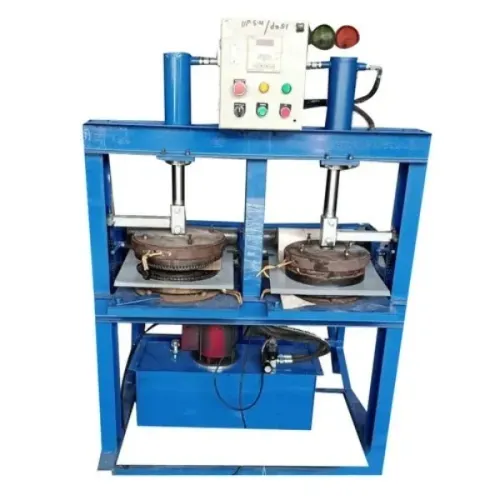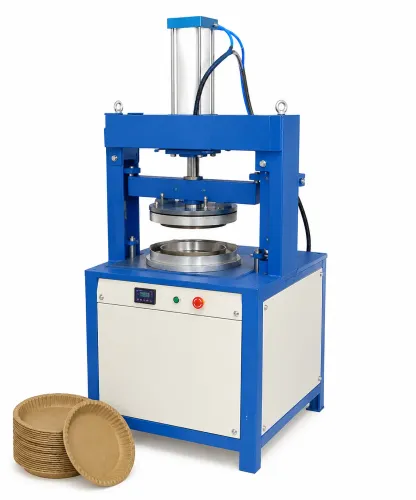
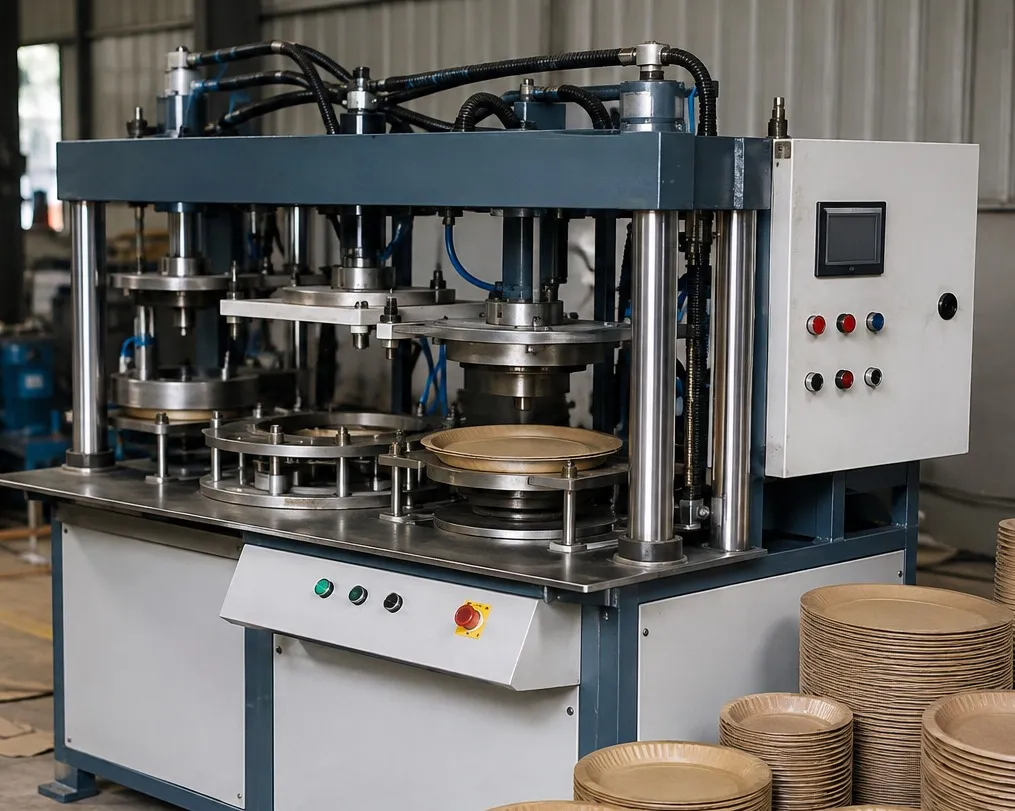
Businesses exploring alternatives to conventional disposable foodware are increasingly interested in paper-based products. For manufacturers entering this segment, an Eco-Friendly Paper Plate Machine can form part of a production setup designed around suitable paper materials, efficient manufacturing, controlled waste, and responsible operating practices.
For businesses in Mumbai, Maharashtra, where food service, catering, events, takeaway businesses, distributors, and institutional buyers create diverse demand for disposable products, sustainability needs to be considered across the entire production process rather than through machinery alone.
What Makes Paper Plate Production More Sustainable
A machine itself does not automatically make the finished product environmentally responsible.
Sustainable manufacturing depends on several interconnected factors, including the type of raw material, material utilization, energy consumption, production efficiency, rejection rate, packaging, transportation, and end-of-life characteristics of the finished product.
Manufacturers should therefore evaluate the complete product lifecycle when developing an eco-conscious paper plate range.
Start With Suitable Raw Materials
Raw material selection has a major influence on the finished plate.
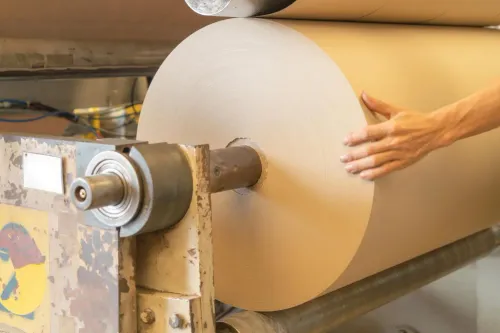
Manufacturers should assess paper specifications according to intended food-contact requirements, strength, forming characteristics, and applicable compliance needs.
Consistency is particularly important for machine operation.
Material with irregular thickness or unsuitable physical properties can result in incomplete forming, tearing, weak edges, or excessive rejection. This increases waste and can reduce overall production efficiency.
Sample trials can help establish whether a particular material works reliably with the selected machine and die.
Reduce Waste Through Better Production Control
One of the practical ways to improve manufacturing efficiency is to minimize rejected products.
Waste may occur because of incorrect material positioning, unsuitable paper, worn dies, poor alignment, improper machine settings, or operator errors.
Regular quality checks can identify these problems before large quantities are affected.
Operators can inspect plate dimensions, shape, edge formation, surface condition, and stacking behaviour at defined intervals during production.
Match Capacity With Actual Demand
Buying a significantly oversized machine does not automatically improve sustainability or profitability.
If equipment operates far below its intended utilization for long periods, the investment may not be efficient.
Manufacturers should estimate realistic daily and monthly requirements before deciding on machine capacity.
Businesses serving Mumbai's large and varied market may experience different demand patterns across catering, retail distribution, food businesses, and institutional supply. Production planning should therefore be based on actual customer categories and order volumes.
Consider Energy Requirements
Electrical consumption forms part of ongoing production costs.
When comparing machinery, businesses should understand the installed electrical load and expected operating requirements for the proposed configuration.
Machine productivity should be considered alongside energy use. The relevant question is how effectively the system converts raw material, labour, electricity, and production time into usable finished plates.
Design an Efficient Factory Layout
Unnecessary material movement consumes time and labour.
An organized production unit can arrange operations in a logical sequence:
- Raw material receiving
- Material storage
- Machine feeding
- Plate forming
- Quality checking
- Counting and stacking
- Packaging
- Finished-goods storage
This reduces unnecessary handling and makes it easier to monitor production.
Keep the Machine in Efficient Condition
Preventive maintenance supports both productivity and resource efficiency.
Poorly maintained machinery can contribute to irregular forming, increased rejection, unnecessary stoppages, and component wear.
Dies, moving parts, electrical connections, fasteners, lubrication points, and hydraulic components where applicable should be inspected according to recommended intervals.
Look Beyond the Eco-Friendly Label
Manufacturers should be careful about treating “eco-friendly” as a simple product claim.
A more responsible approach is to understand raw material specifications, production efficiency, waste generation, packaging, and relevant regulatory requirements before making environmental statements about finished products.
Shivansh Engineering manufactures industrial machinery and can discuss paper plate equipment based on production specifications, die requirements, capacity, and operating conditions.
For manufacturers in Mumbai, an Eco-Friendly Paper Plate Machine is best viewed as one component of a broader production strategy. Responsible material selection, controlled manufacturing, lower rejection, appropriate capacity, and efficient workflow collectively contribute to a more sustainable disposable plate operation.
Keywords