As a disposable plate business grows, production requirements can change quickly. Orders become larger, delivery schedules become tighter, and customers may expect reliable quantities without inconsistent quality.
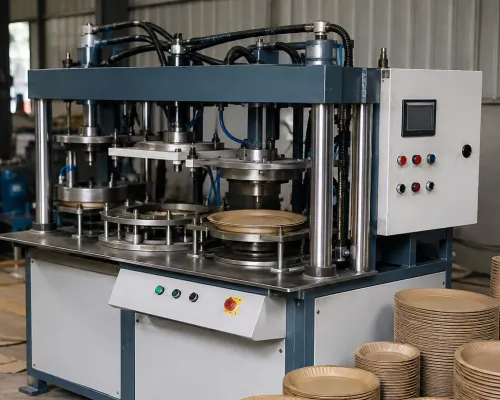
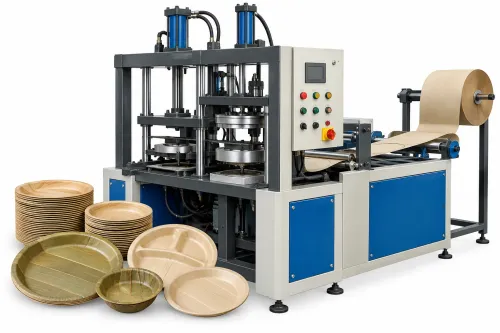
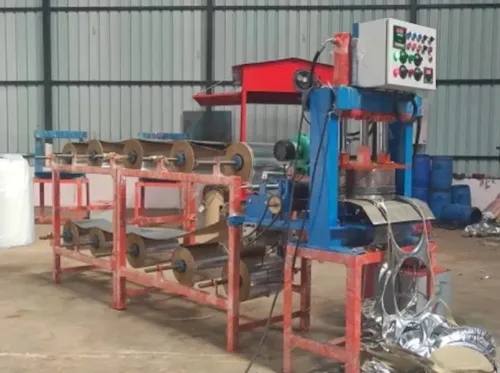
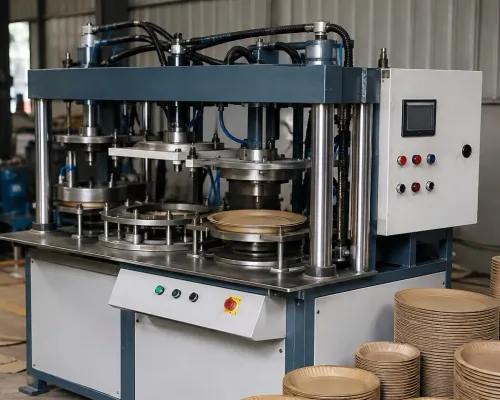
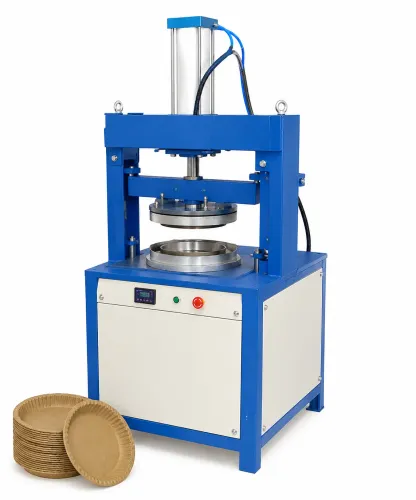
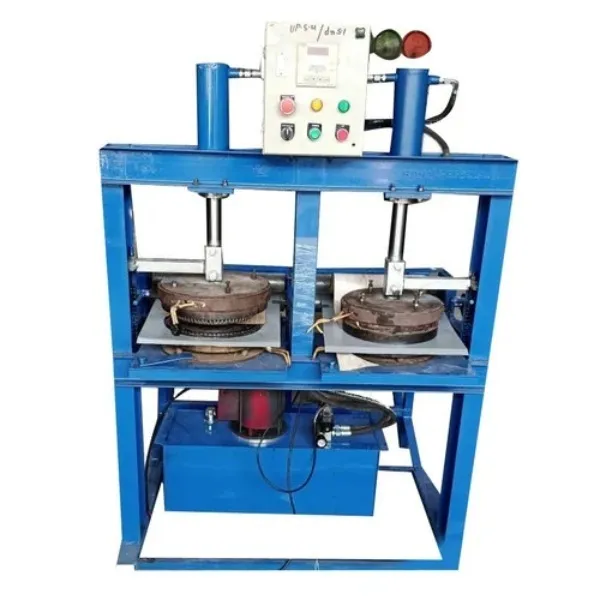
A Double Die Paper Plate Machine can be considered when a manufacturer requires increased production capability and wants to improve output within the available operating schedule.
For businesses in Kolhapur, Maharashtra, understanding where a double-die configuration adds practical value is important before moving from a smaller setup.
Why Manufacturers Consider Double Die Machines
The basic advantage comes from the machine's die arrangement.
Compared with a single-die setup, a suitable double-die configuration can provide greater forming capability per operating cycle, depending on the machine design and product specifications.
This can be useful for businesses supplying wholesalers, catering-product distributors, event suppliers, food-service businesses, and other customers requiring regular volumes.
However, higher capacity should be matched with sufficient demand.
Better Use of Production Hours
Manufacturers often reach a point where extending working hours is no longer the most practical method of increasing output.
Additional shifts mean more labour scheduling, supervision, electricity usage, and operational coordination.
Increasing productive capacity through appropriately configured machinery can help businesses obtain more output from available manufacturing hours.
The exact benefit depends on plate size, machine cycle, die configuration, and feeding arrangements.
Raw Material Supply Must Keep Pace
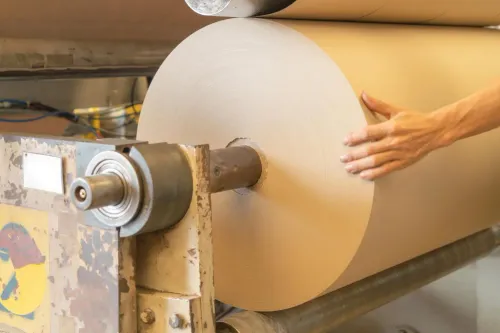
Higher production capacity creates higher material consumption.
Before upgrading, manufacturers should confirm that raw material suppliers can consistently provide the required quantity and specifications.
Inconsistent paper can interrupt production even when the machine itself has adequate capacity.
Businesses should therefore plan raw material inventory according to expected production rather than relying entirely on last-minute purchasing.
Packaging Can Become a Bottleneck
One frequently overlooked issue in capacity expansion is downstream handling.
If the machine produces plates faster than workers can count, stack, inspect, and pack them, finished products begin accumulating around the production area.
Before installing a higher-output machine, review the complete workflow.
Consider whether additional packaging tables, storage racks, workers, or handling arrangements will be required.
Quality Should Remain Consistent
Increasing output should not mean accepting higher rejection.
Operators should periodically inspect:
- Plate shape
- Edge quality
- Forming consistency
- Surface condition
- Dimensions
- Stacking behaviour
Any recurring variation should be investigated promptly.
Possible causes may include material variation, die condition, alignment, machine settings, or operator practices.
Understand Utility Requirements
Before installing a Double Die Paper Plate Machine, confirm the electrical and workspace requirements for the specific configuration.
Production areas should provide adequate machine clearance, safe operator movement, raw material handling space, and maintenance access.
If the existing facility is being upgraded, electrical capacity should also be reviewed before installation rather than after the machine arrives.
Compare Expansion With Actual Demand
Higher output is valuable when customers can absorb it.
Study current monthly orders, seasonal demand, distributor enquiries, rejected orders due to insufficient capacity, and expected business growth.
If the existing machine regularly operates near capacity and orders are being delayed, additional production capability may be justified.
If demand remains irregular, the investment requires more careful evaluation.
Building Capacity With the Right Equipment
Machine selection should be based on sustainable output rather than simply choosing the largest available model.
Shivansh Engineering manufactures industrial machinery and can help businesses evaluate machine configuration against product specifications, dies, expected production, and operating requirements.
For disposable plate manufacturers in Kolhapur, a Double Die Paper Plate Machine can become a practical capacity-building option when market demand, raw material supply, packaging capability, workforce, and production infrastructure are ready to support higher output.
Keywords