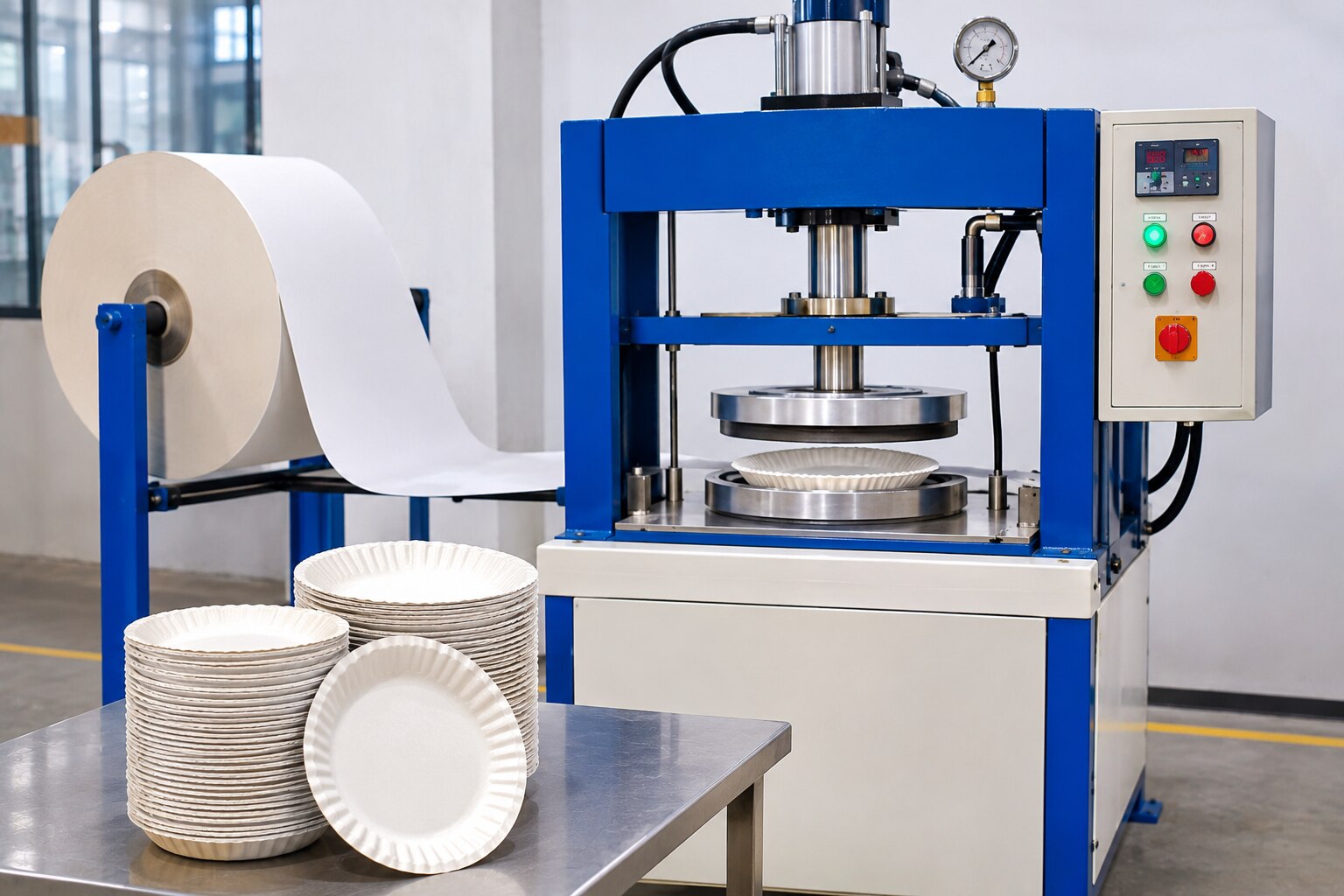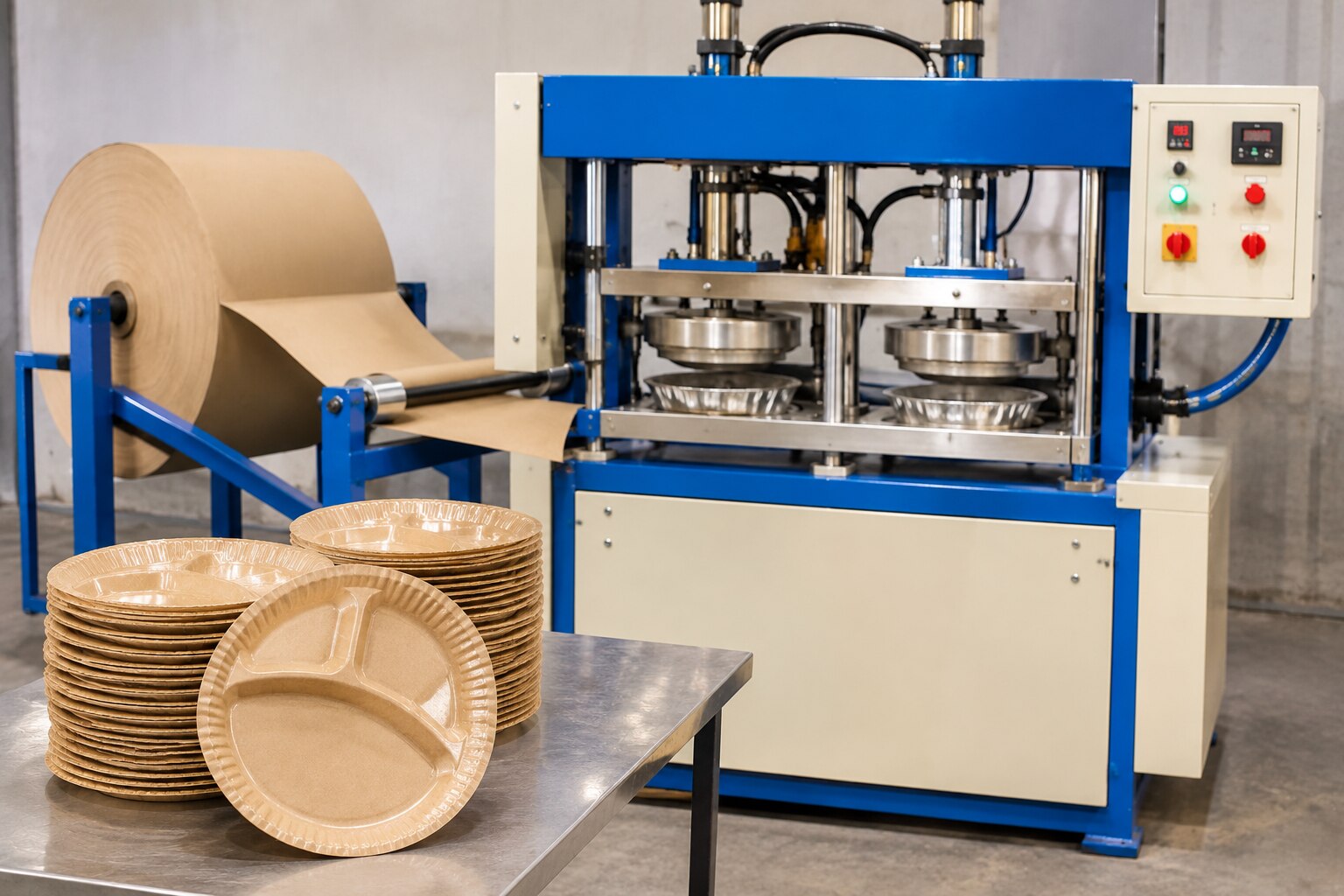
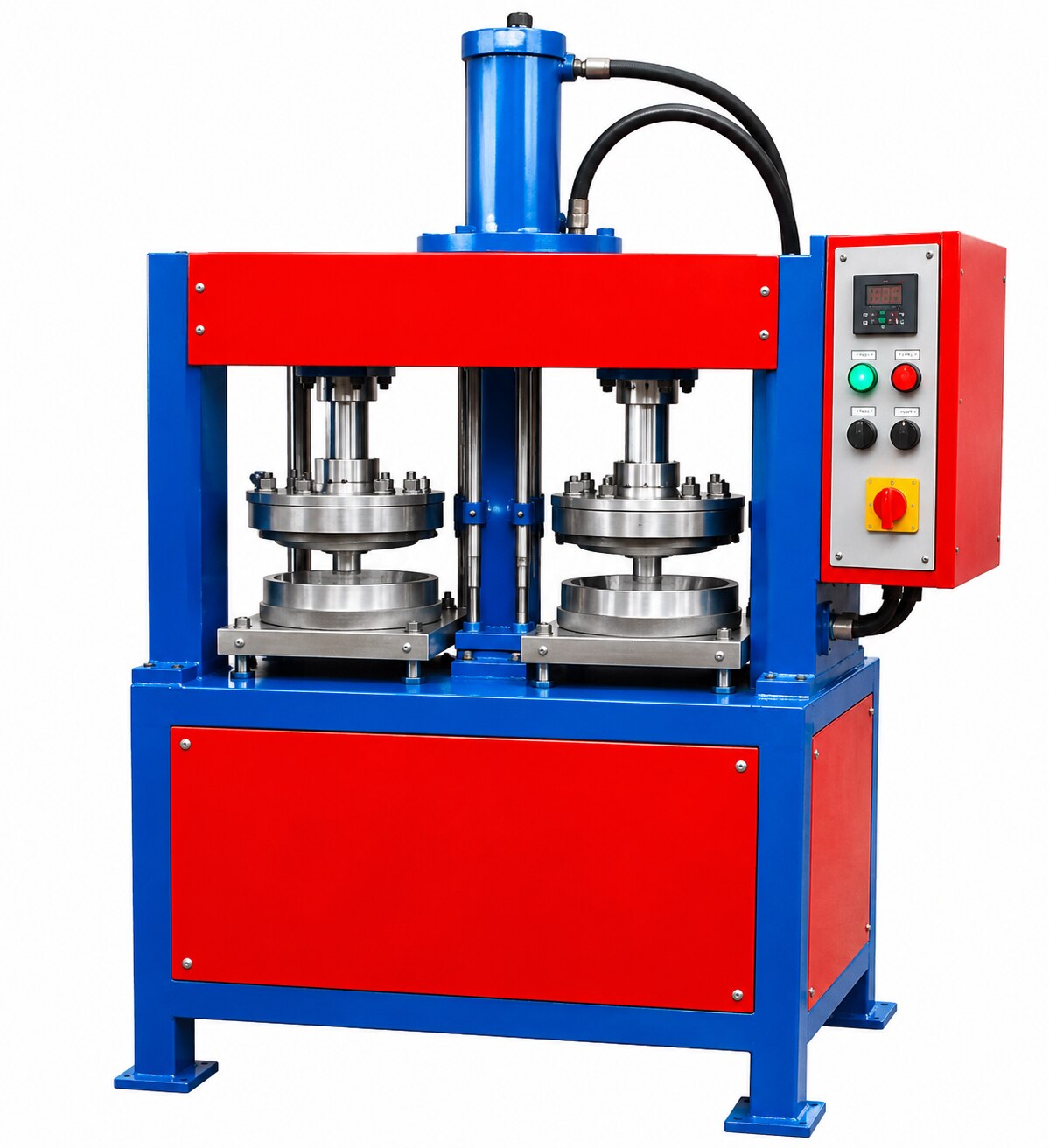
A machine’s advertised strokes per minute says little about the number of saleable donas you will produce after feeding errors, changeovers, rejects and stacking. Use a controlled factory test, a written material specification and a complete service-and-cost review before comparing manufacturers. By the end, you can turn a sales quotation into measurable purchase conditions.
Key takeaways
- Measure saleable pieces per hour, not the advertised press speed.
- Run the exact paper, die and dona size in a factory-acceptance test.
- Check utilities, guarding, emergency stops and finished-product quality before purchase.
- Demand installation, training, spare-parts and response commitments in writing.
Verify saleable capacity instead of trusting the speed figure
A machine’s rated speed is not its production capacity. Verify the gap with a factory-acceptance test using the exact product and materials you will sell, then measure saleable pieces per hour after feeding, forming, stripping, stacking and rejects.
Use the buyer’s actual production set:
- Paper grade, GSM, coating or lamination
- Blank dimensions and feeding format
- Dona diameter and bowl depth
- Tooling configuration and stacking pattern
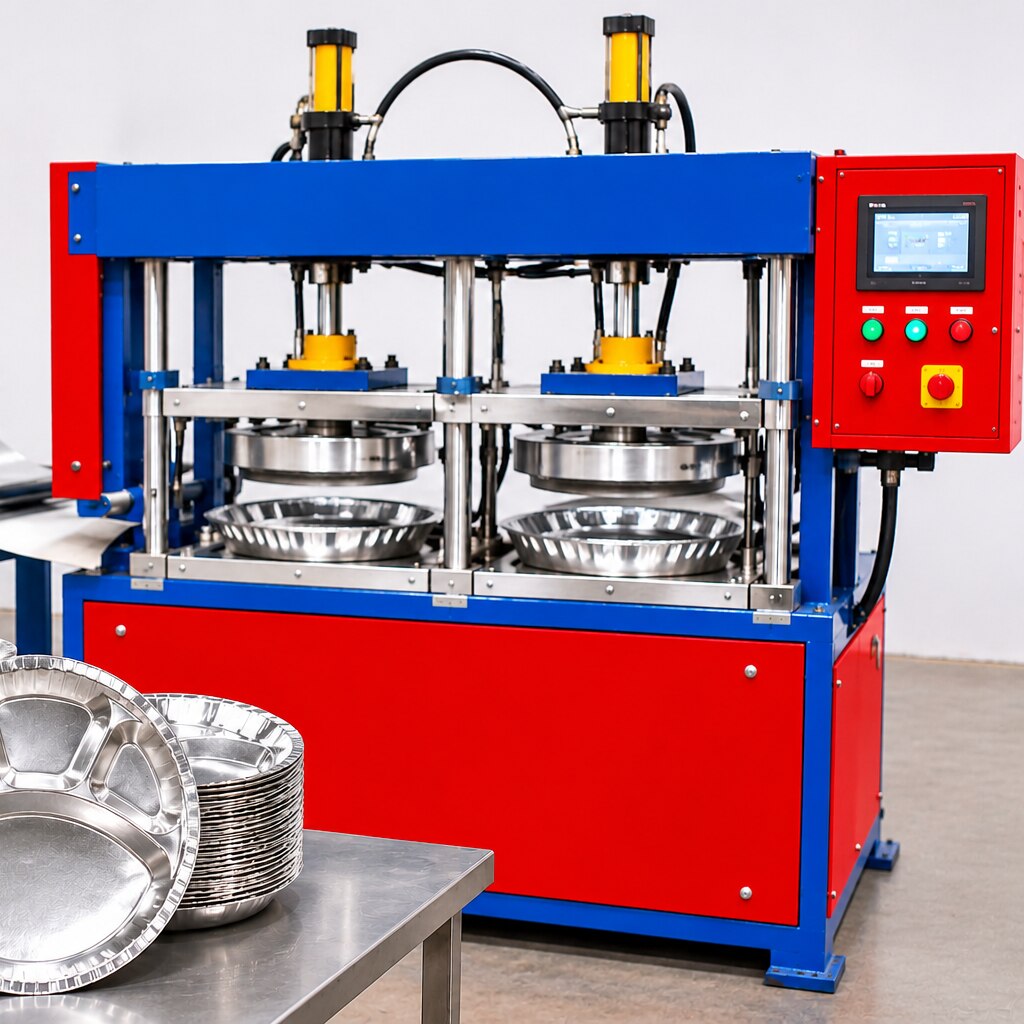
Ask the manufacturer to state the tested pieces per minute and whether the result comes from one-up, two-up or multi-cavity tooling. A two-up die may double theoretical output, but uneven pressure, poor blank registration or cavity wear can increase scrap and reduce usable production.
Define the trial around a continuous run long enough to expose heating, feeding and stacking problems. Record these acceptance measures:
- Saleable pieces per hour
- Reject rate, with the supplier’s calculation and scrap causes
- Changeover time for a specified second size
- Dimensional tolerance, rim integrity and nesting height
- Leakage or liquid-holding performance where the dona requires it
- Energy consumed per 1,000 saleable pieces
Compare the measured saleable pieces per hour with your required hourly volume after allowing for breaks, cleaning, changeovers and planned downtime. Reject rate belongs in the calculation: 10,000 formed pieces at a 5% reject rate produce only 9,500 saleable pieces.
If deeper shapes, heavier board or coated stock reduce sustained output, require that lower figure in the quotation and acceptance clause.
Match the machine, paper, dies and forming system
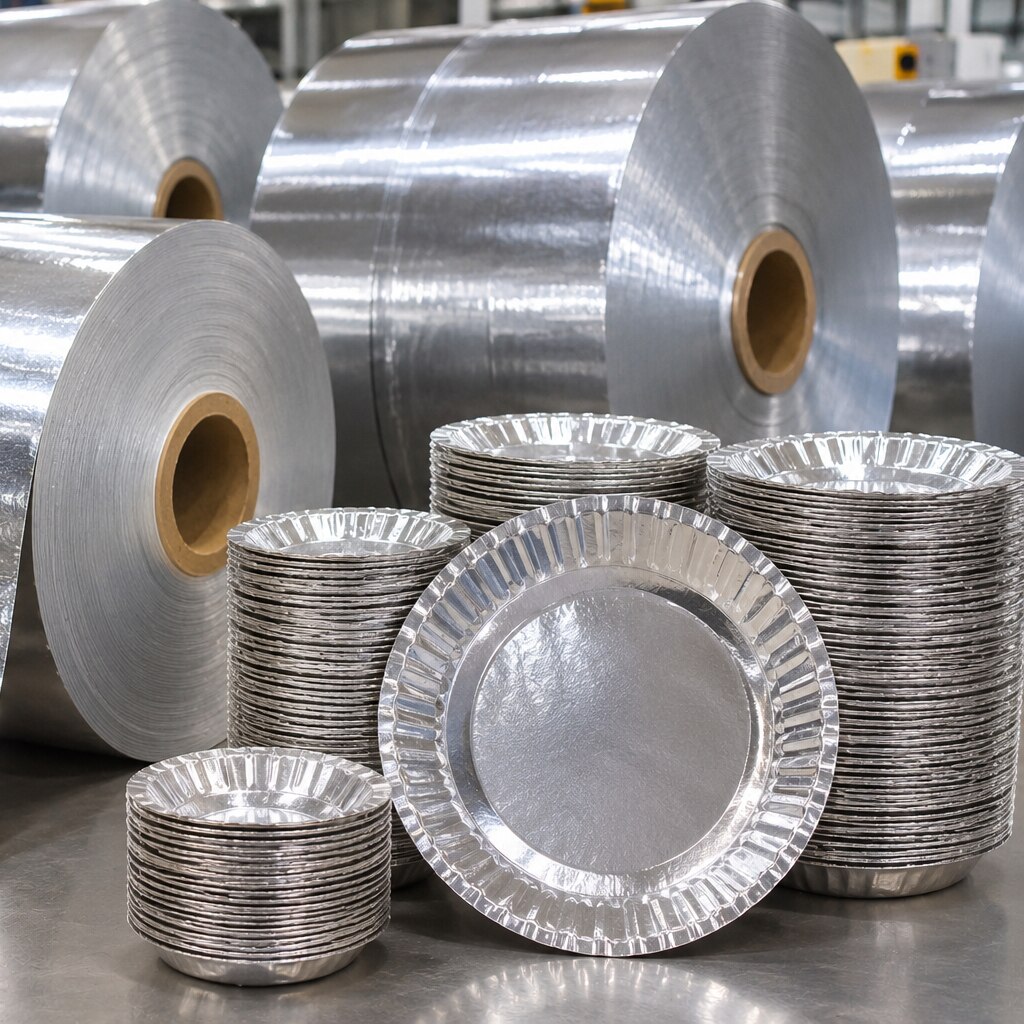
A machine is suitable only when its material window, feeding system and forming tools match the dona you will sell. Put these limits in the purchase contract: paper GSM, caliper, moisture range, coating type, roll or sheet dimensions, grain direction and allowable curl.
A nominal paper specification does not prove compatibility with PE-coated, PLA-coated, water-based-coated or multilayer stock; each may need different heating, clamping pressure or forming settings.
| Feeding option | Confirm before purchase | Failure if mismatched |
|---|---|---|
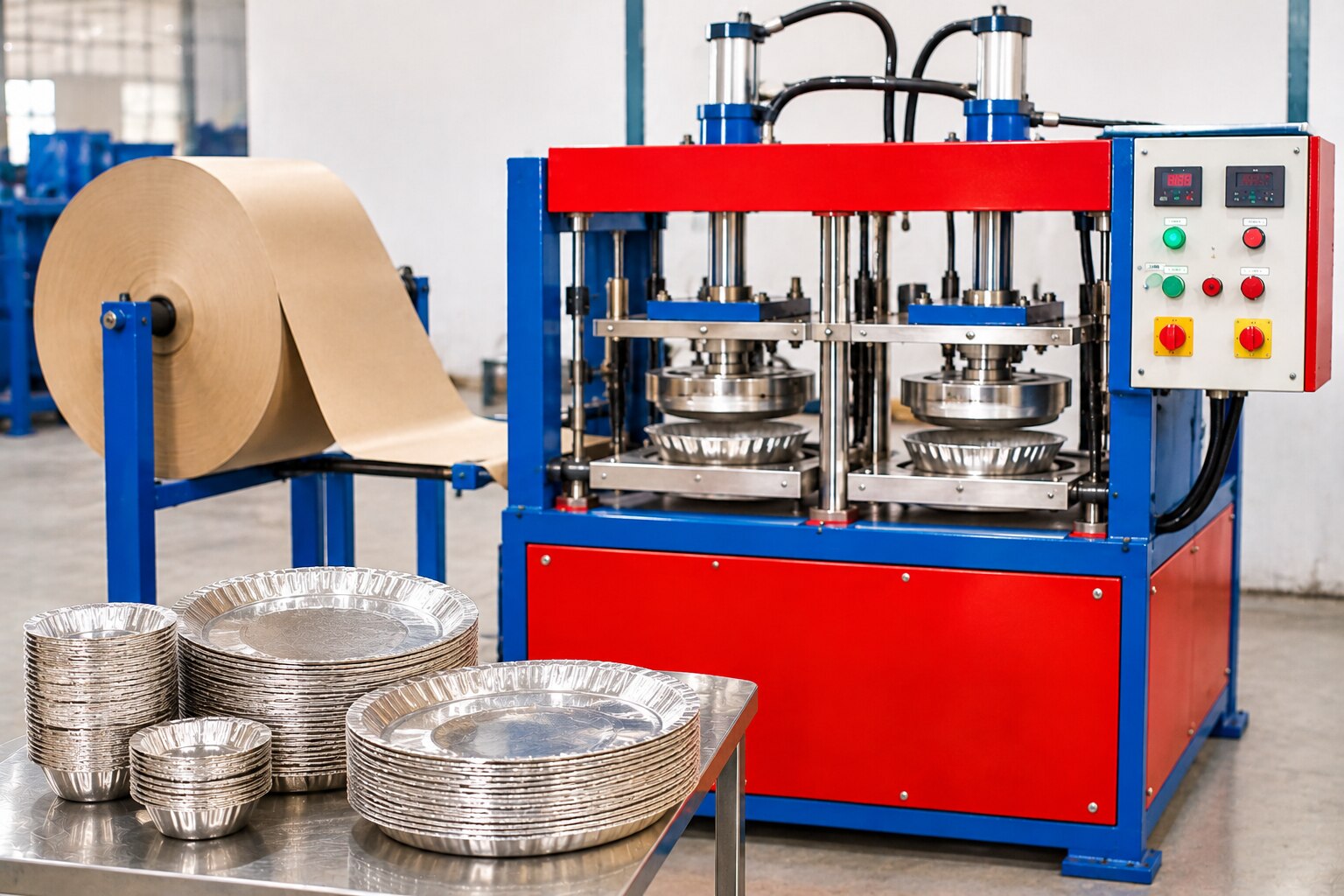
| Paper-roll versus pre-cut-sheet feeding | Roll width, core diameter, unwind control, sheet length and maximum sheet size | Skewed blanks, misfeeds or unusable trim |
| Pre-cut sheets | Sheet squareness, stack height, GSM range and feeder adjustment | Double-feeding, corner pickup or stoppages |
| Coated or laminated stock | Coating temperature response, forming pressure and compatible contact surfaces | Cracked coating, sticking, poor rim definition or delamination |
Match every die set to the finished diameter, rim profile, bowl depth and blank size. Ask how many cavities run together, whether cavity-to-cavity parts interchange, and how long a die changeover takes. A shallow dona and a deep dona can require different punches, forming molds, stripping arrangements and heating zones.
- Request die life, replacement prices for punches and molds, and the permitted product-size range.
- Require drawings or CAD files showing blank layout, grain direction and nesting.
- Confirm that future dies can be manufactured locally to those drawings.
- Test the actual paper grade, coating, blank dimensions, depth and stacking pattern, then record rejects, changeover time and sustained saleable output.
Test product quality, utilities and machine safety before purchase
A factory-acceptance test using your paper and intended dona proves far more than a speed demonstration. Run the machine in your plant, or reproduce its voltage, compressed air, temperature and humidity, then judge saleable donas rather than empty cycles.
1. Feed the actual grammage, caliper, coating, moisture range, blank dimensions and grain direction. Test the intended bowl depth and fill load, then record rim definition, side-wall thickness, cracking, coating delamination and nesting stability.
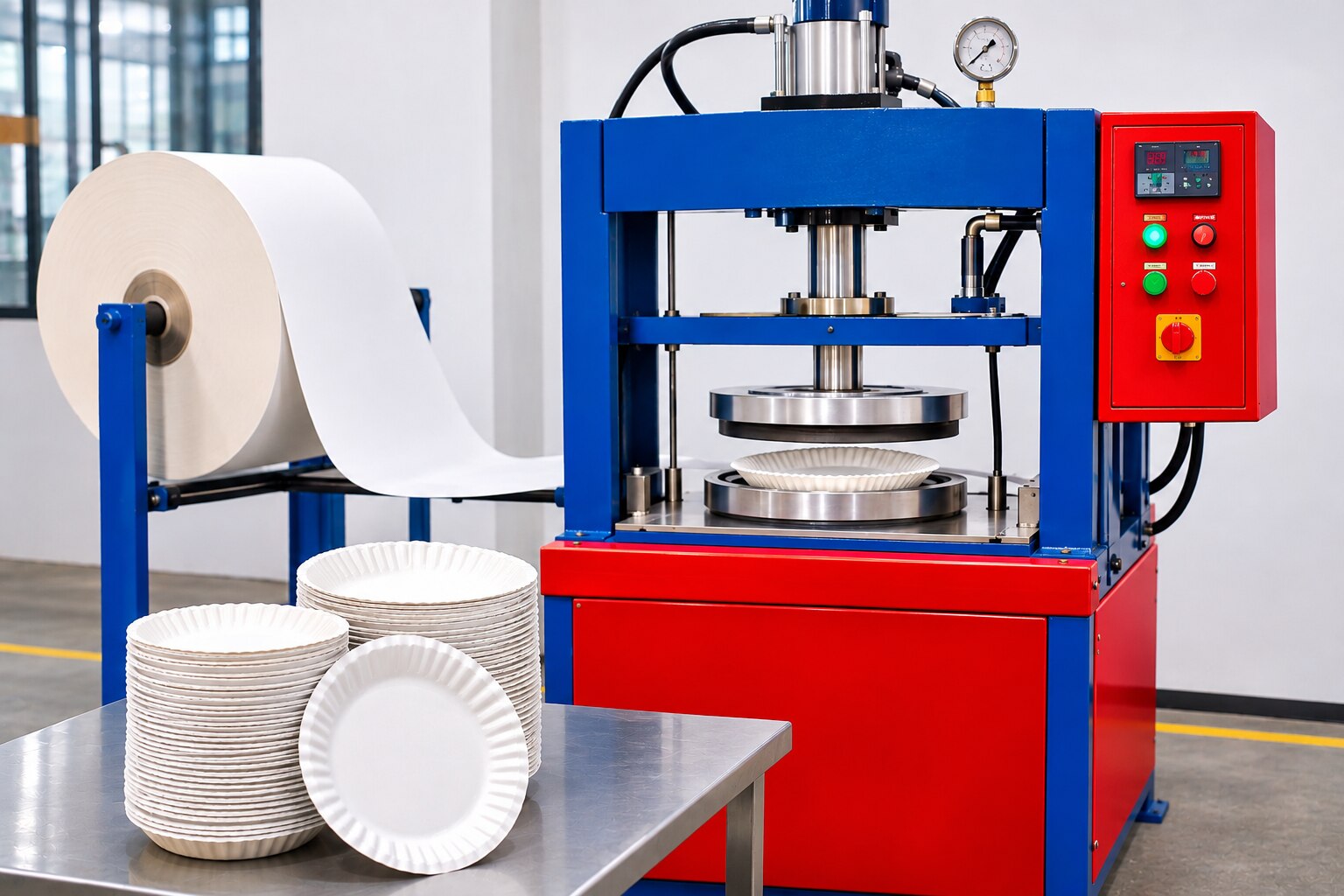
2. Compare hydraulic pressing and mechanical pressing under the same paper and die conditions. Record saleable pieces per hour, reject rate, changeover time and sustained output over a defined run; deeper shapes, heavier board and coated stock can reduce forming speed.
3. Verify supply voltage and frequency, short-circuit rating, control-panel components, heat-load capacity and pneumatic demand. Require clean, stable compressed air, guarded moving parts, emergency stops and door interlocks; otherwise sensor faults, heater trips or crush injuries can follow installation.
4. Inspect every paper-contact and product-adjacent surface for oil mist, excess grease, paper dust and coating buildup. Obtain a cleaning schedule, lubrication points and inspection intervals, because residue causes odour, stains, feed errors and food-contact concerns.
Put the accepted raw-material window and test results in the purchase contract. For European sales, request evidence against Regulations (EC) No. 1935/2004 and 2023/2006; for US sales, check the applicable 21 CFR 176.170 conditions rather than accepting “FDA approved paper” as proof.
Demand evidence of engineering support after installation
A dependable manufacturer hands over an operating system, not only a machine. Before paying the balance, require installation and commissioning records, operator and maintenance training, a wiring diagram, pneumatic diagram, PLC/HMI backup, parameter list, alarm-history access, and a documented controller or drive-replacement procedure.
Ask for these deliverables in writing:
- A preventive-maintenance schedule showing cleaning points, lubrication grades, inspection intervals and replacement limits for heaters, thermocouples, sensors, belts, bearings, cylinders, valves and forming surfaces.
- A spare-parts list divided into commissioning spares, normal-wear parts and long-lead critical parts, with exact part numbers, quantities, prices and stated availability.
- A machine-safety file covering the risk assessment, guards, interlocks, emergency stops, stored-energy isolation and safety-control architecture. ISO 9001 certification alone does not prove machinery-safety compliance.
- Training records that identify who will adjust paper feeding, dies, temperature, pressure, alarms, cleaning and changeovers, plus the language and duration of training.
- A service commitment stating remote-response time, on-site arrival time, working hours, escalation contact and technician travel charges.
Ask Shivansh Engineering to include these items in the quotation rather than accepting “lifetime support” as evidence. Also demand cleaning instructions for paper-contact areas, because oil mist, grease, dust or coating buildup can cause odour, stains and feed failures.
If the supplier will not release control backups or exact part numbers, treat that refusal as a long-term production risk.
Related products
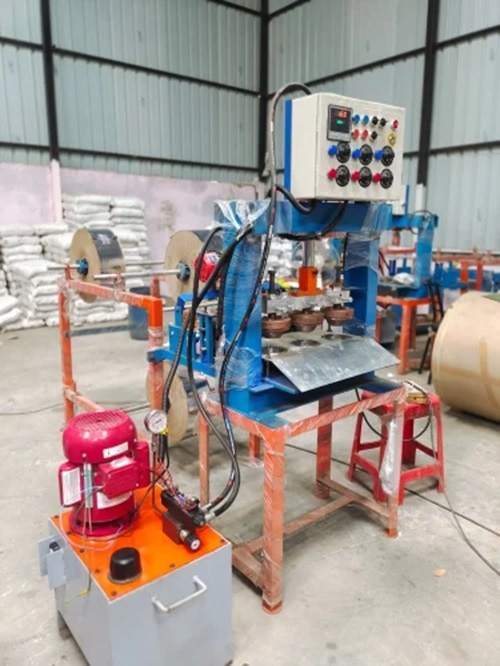 | Paper Dona Making Machine Paper Triple Die Dona Making Machine ₹325000 A Paper Dona Making Machine is an essential manufacturing solution for producing high-quality paper donas (bowls) used widely in food service,... View product → |
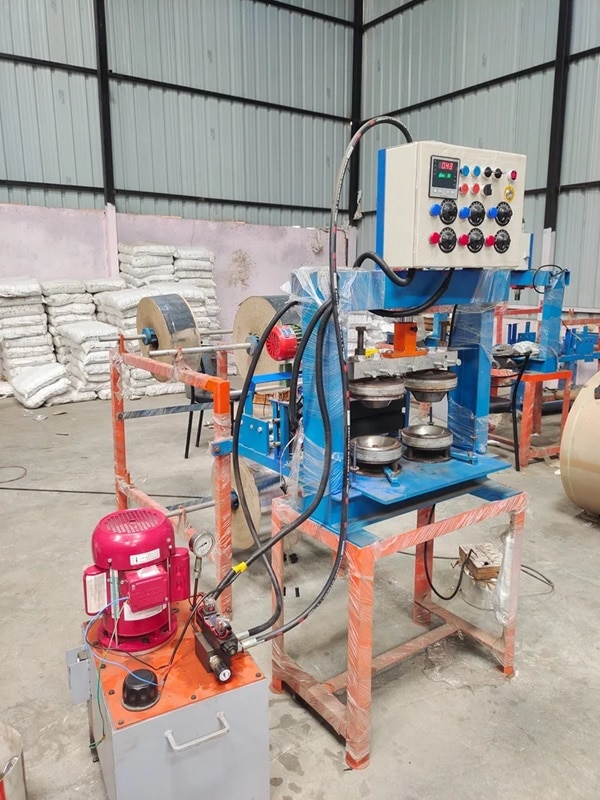 | Paper Dona Making Machine Semi Automatic Dona Making Machine ₹220000 A Semi Automatic Dona Making Machine is a perfect choice for small and medium-scale manufacturers looking for a balance of affordability, efficiency,... View product → |
Compare total ownership cost and supplier risk
A low machine price can become the expensive option after tooling, freight, installation, electrical and air work, commissioning materials, training, spare parts and technician travel are added. Compare total cost of ownership in one written schedule, not the headline quotation.
| Cost item | Ask the manufacturer to state | Risk if omitted |
|---|---|---|
| Tooling | Die sets for each dona size, die life, punch and forming-mold replacement cost | Future products require an unplanned tooling purchase |
| Installation | Foundation or floor work, utilities, commissioning and operator training | The machine arrives but cannot run |
| Materials | Trial paper, expected scrap rate, trim recovery and scrap disposal | Raw-material cost exceeds the estimate |
| Service | Travel charges, response rates and critical-part lead times | A small fault creates a long shutdown |
Request a live customer reference using the same paper stock, product sizes and production volume. Call the operator, not only the sales contact, and ask about actual output, repeat breakdowns, response time, die replacement and the last warranty claim. Ask to see the machine running.
Compare payment milestones with risk transfer. Link instalments to documented events: design approval, factory acceptance test, delivery, installation, successful commissioning and operator training. Avoid paying the final balance before agreed output and quality checks pass.
Read warranty exclusions line by line. Identify coverage for heaters, thermocouples, sensors, drives, PLC and HMI components, forming surfaces and labour. Require backed-up control software, electrical drawings, pneumatic diagrams and exact spare-part numbers; “lifetime support” is not a parts-availability commitment.
Frequently asked questions
How do you verify a paper dona machine’s real production capacity?
Run a factory-acceptance test with the exact product and materials you will sell, then count saleable pieces after feeding, forming, stripping, stacking and rejects.
Why must the paper, dies and forming system match?
Paper stiffness, coating, GSM, die geometry and the forming method determine whether the machine produces consistent donas without wrinkles, cracks or excessive rejects.
What should you test before buying a paper dona making machine?
Test finished-product quality, utility requirements, feeding and stacking, guarding, emergency stops and other machine-safety controls using your intended production setup.
What engineering support should a manufacturer provide after installation?
Request written commitments for installation, operator training, commissioning, troubleshooting, spare parts, maintenance guidance and response times.
How should you compare paper dona machine suppliers?
Compare total ownership cost, including power, labour, dies, consumables, maintenance, spares, downtime and rejects, alongside the supplier’s engineering capability and risk.
Related products
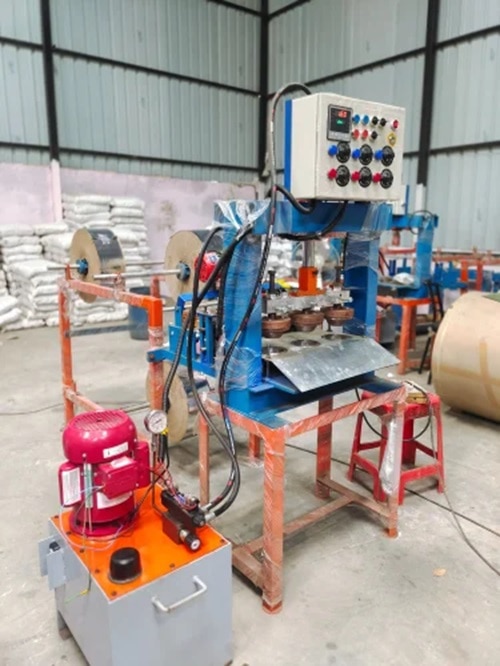 | Paper Dona Making Machine Fully Automatic Dona Making Machine ₹120000 A Fully Automatic Dona Making Machine is the most advanced and efficient solution for large-scale production of high-quality paper donas (bowls). View product → |
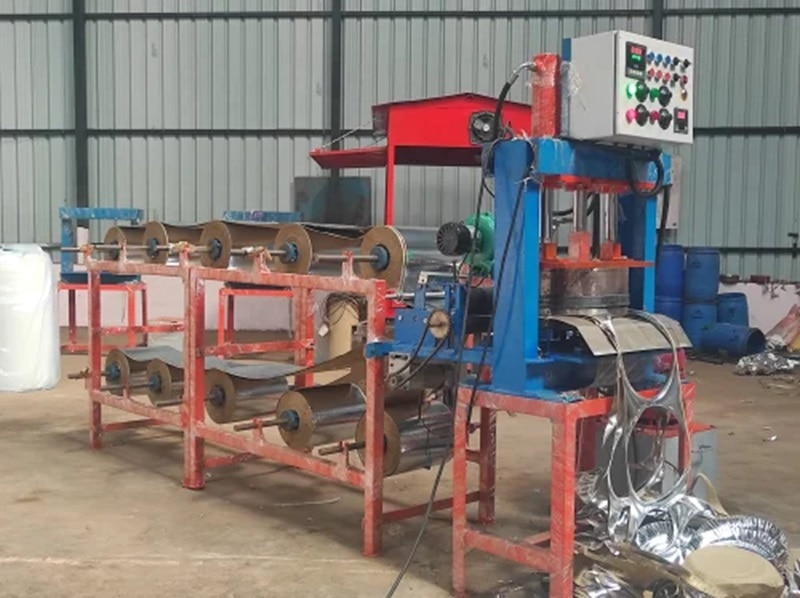 | Automatic Paper Plate Making Machine Fully Automatic All-in-One Paper Plate Machine ₹340000 The Fully Automatic All-in-One Paper Plate Machine is the ultimate choice for entrepreneurs and manufacturers who want a high-performance,... View product → |