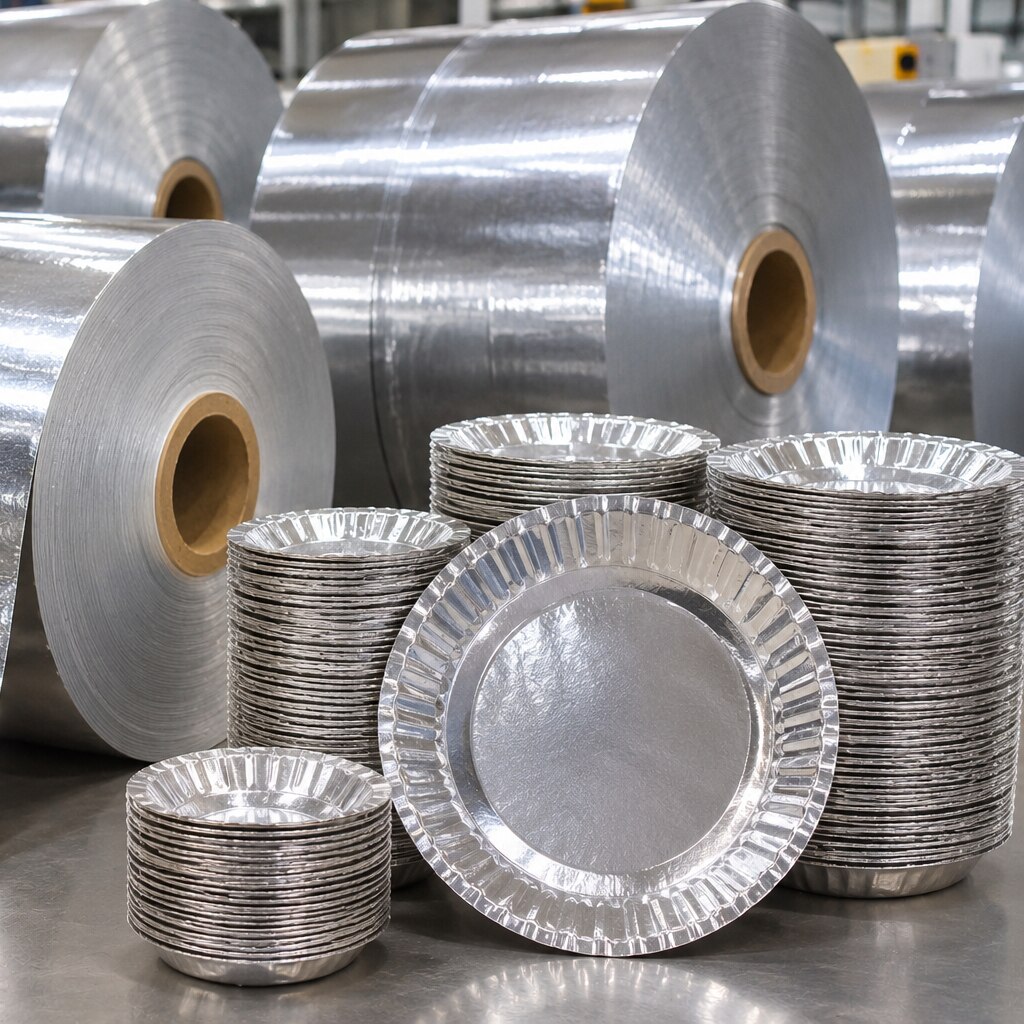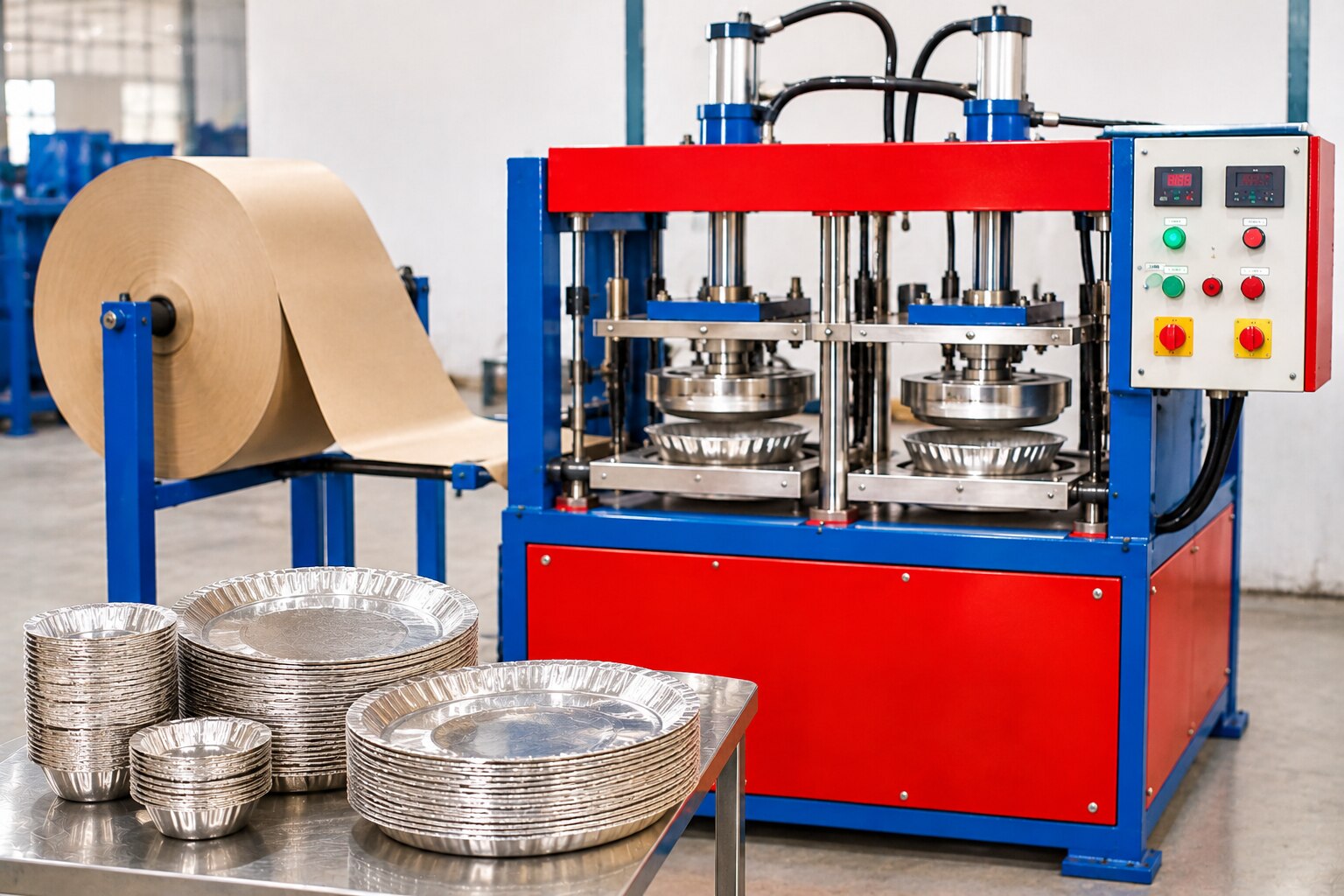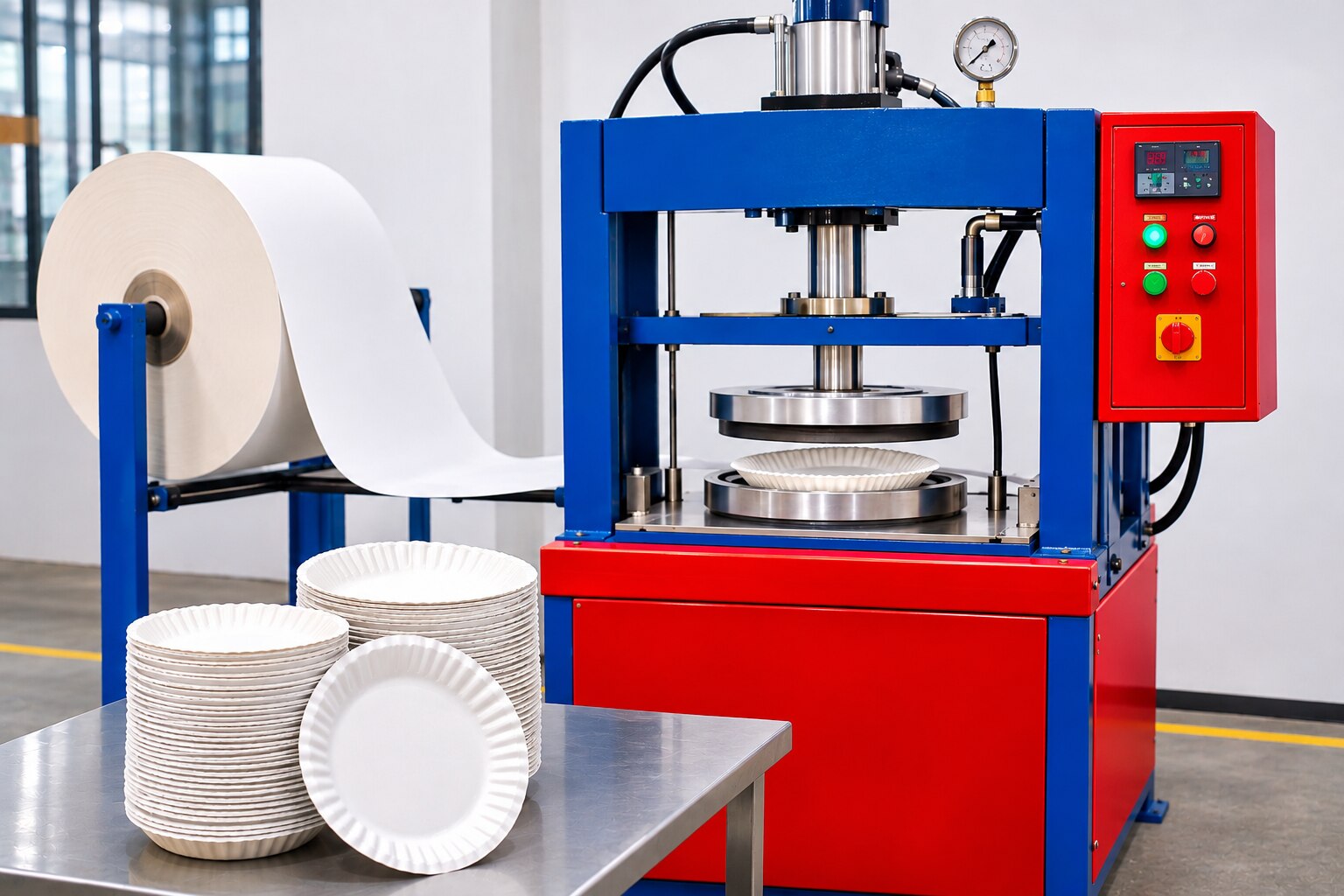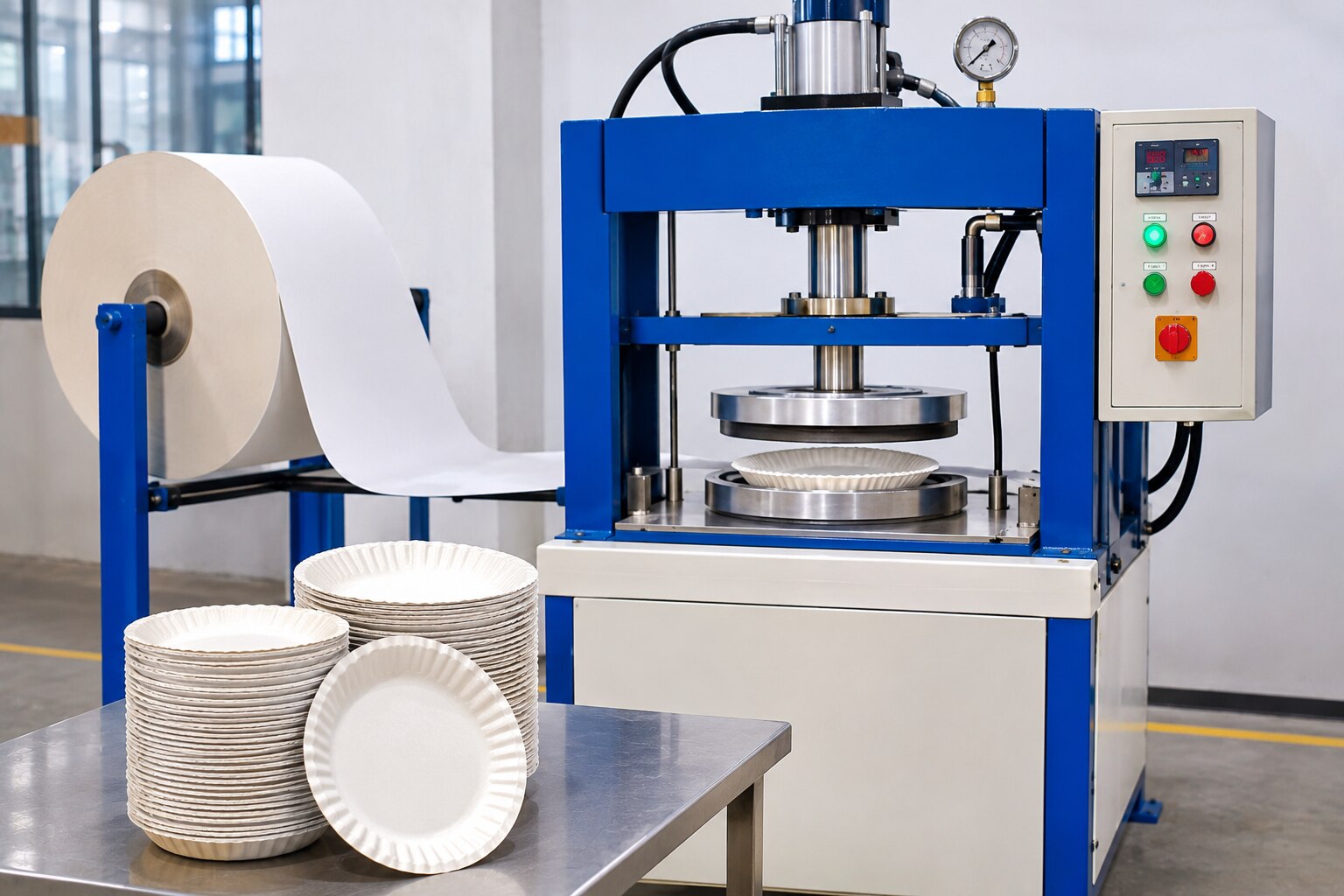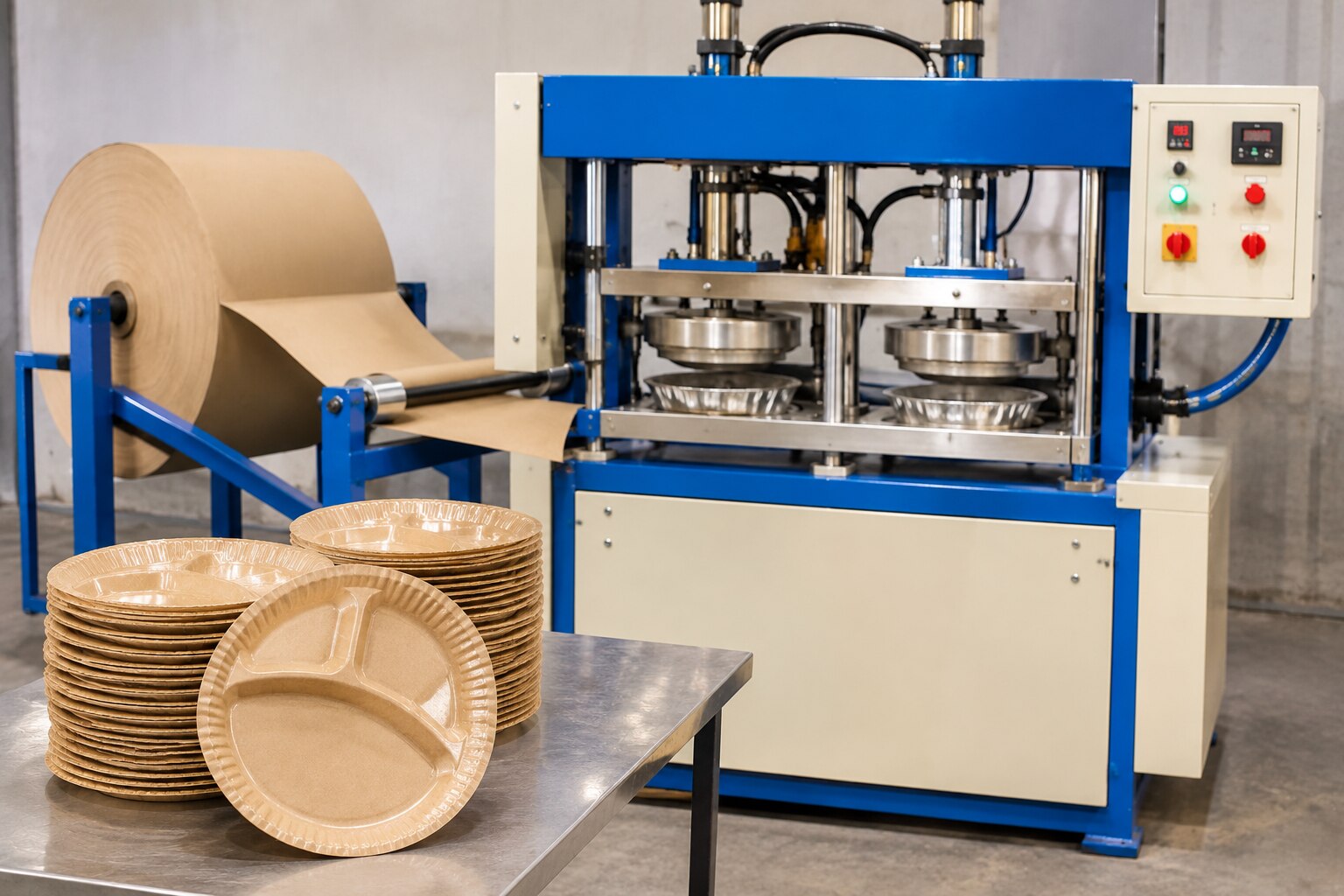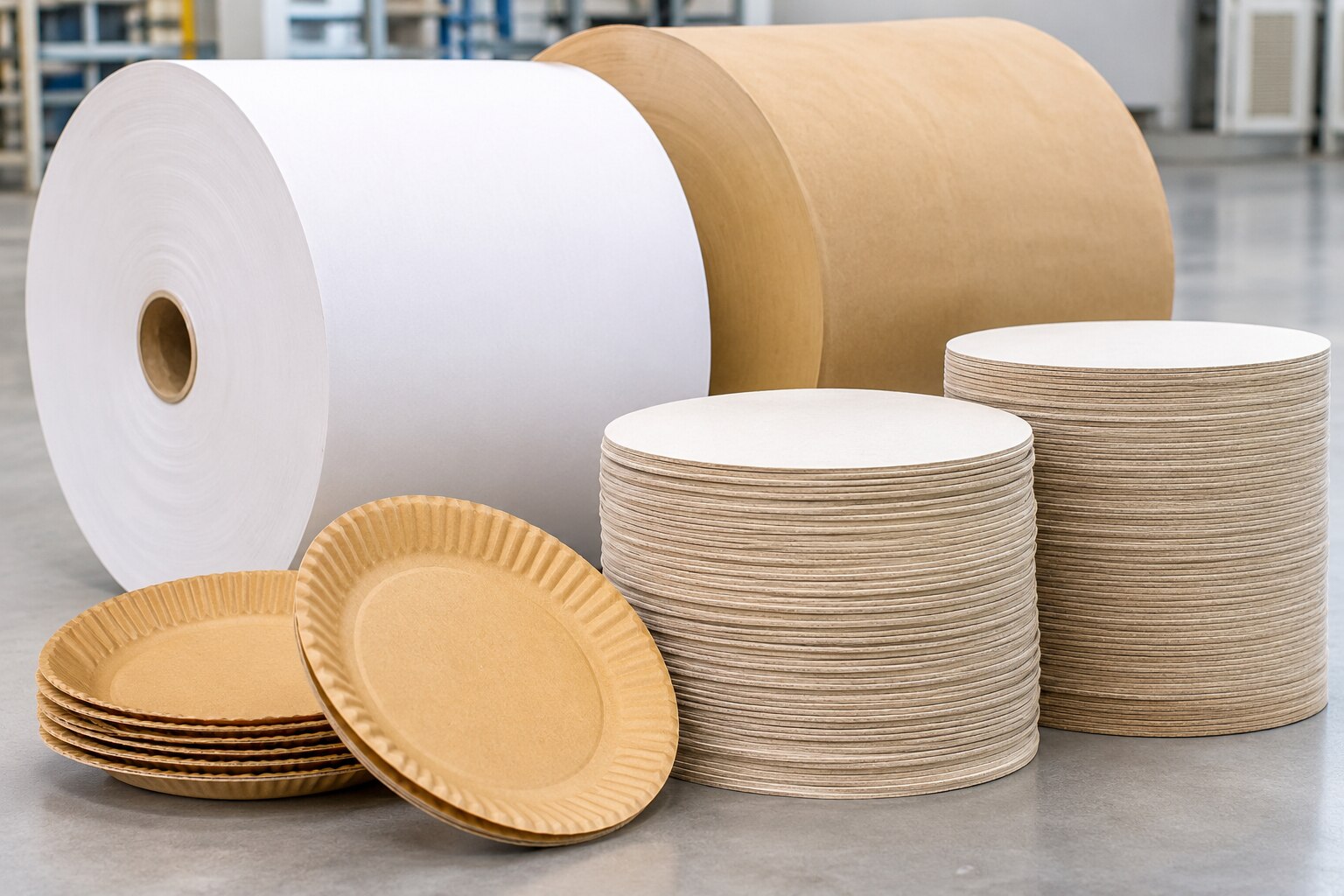
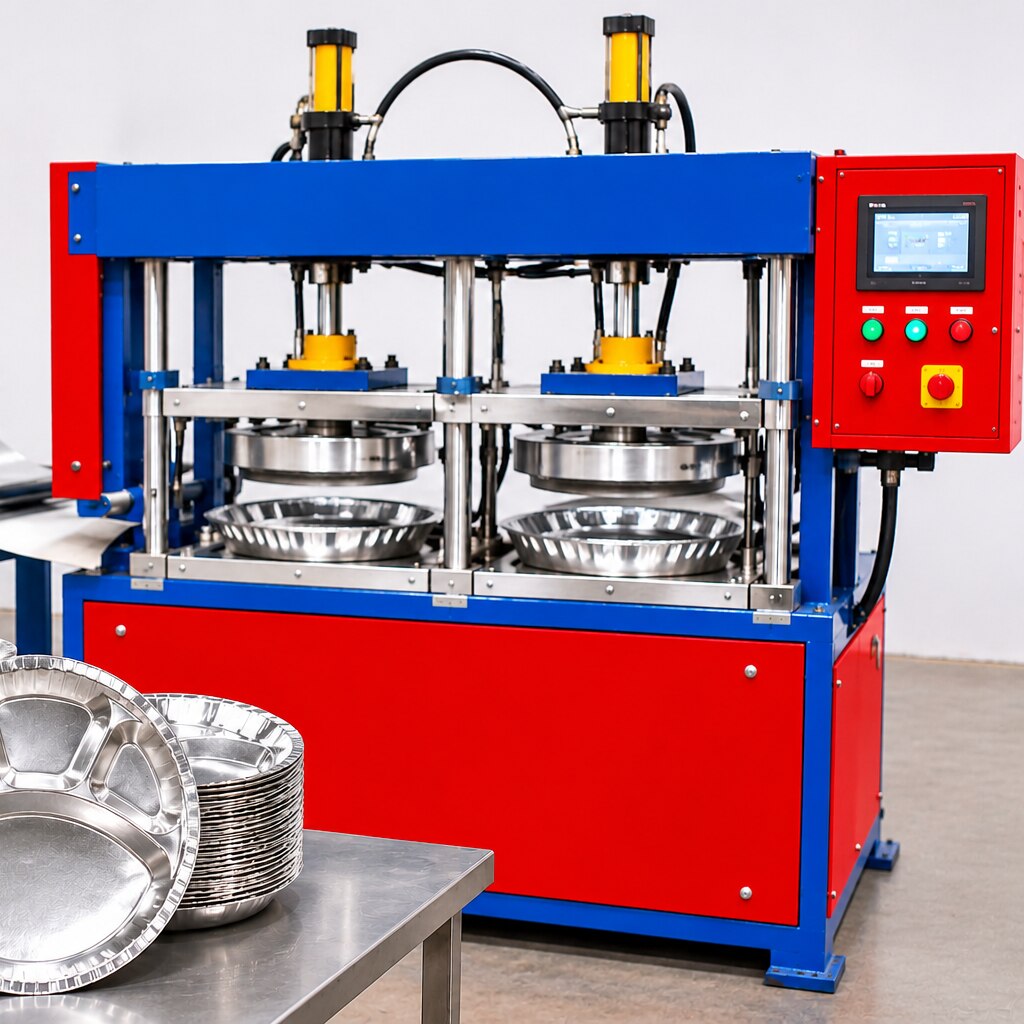
High-volume thali production depends on more than press speed: material feeding, matched tooling, uptime, forming quality, and packing all determine how many saleable pieces leave the factory. By the end, you will be able to map the production workflow, calculate realistic daily output, compare machine configurations, and define a supplier acceptance test.
Key takeaways
- Size blanks from draw depth, rim width, corner radius, and compartments.
- Convert rated press speed into output after loading, stoppages, and rejects.
- Match die cavities and changeover time to your order pattern.
- Test feeding, forming, dimensions, stacking, and packing before purchase.
From paper blank to packed thali: the production workflow
Paper thali production starts with a blank sized for the finished shape plus material for the sidewall and rim. Draw depth, rim width, corner radius and compartment layout determine the blank diameter, so a finished thali diameter alone is not enough to select tooling or estimate paper use.
1. Prepare paper blanks: use pre-cut, coated paper blanks, or feed a roll-fed web into a cutting section. Pre-cut blanks simplify the press; roll feeding reduces manual loading but adds web-tension, alignment and scrap-control work.
2. Load and align: place blanks in the magazine or guide the web through the feeder. Sensors and stops centre each blank under the tool; a skewed blank creates uneven walls, exposed edges or incomplete embossing.
3. Install matched tooling: position the punch, die, stripper or ejector for the specified thali. A three- or four-compartment design needs product-specific tooling and often a different blank shape, not just a machine-setting change.
4. Form the thali: the press draws the blank into the die, creating the base, raised rim, compartments and embossing. Check rim height, flatness, separation walls, cracks, pinholes, delamination and coating damage because a visually acceptable thali can still leak.
5. Eject and stack: the stripper releases each formed piece, and a chute or conveyor transfers it into aligned stacks. Operators count or visually inspect stacks, remove rejects, and move accepted bundles to packing without crushing the rim.
6. Pack and record: wrap or sleeve the stacks, label the batch, and record rejects, stoppages and tool changes. That production record shows the real performance of the automatic thali making machine, not its demonstration speed.
Convert press speed into saleable daily output
A two-cavity die running at 30 strokes per minute gives 60 thalis per minute on paper, not 60 saleable thalis. The basic thali machine output calculation is:
Usable thalis = scheduled minutes × realized uptime × strokes per minute × cavities per stroke × pass rate.
For an eight-hour shift, 30 strokes per minute, two cavities, 85% realized uptime and 97% first-pass quality, the result is 7,517 usable thalis: 480 × 0.85 × 30 × 2 × 0.97.
Record these figures during a trial rather than relying on the nameplate speed:
- Cycle time: confirm the seconds between completed strokes; 30 strokes per minute equals a two-second cycle.
- Strokes per minute tracking output: log actual strokes, not the controller’s selected speed.
- Realized uptime: subtract loading, die changes, operator breaks, cleaning, jams, lubrication and breakdowns from scheduled minutes.
- Cavities per stroke: count only cavities that consistently form acceptable thalis.
- Pass rate: inspect rims, compartments, embossing and shape, then exclude rejects.
The weakest cavity sets the usable rate. One worn or poorly aligned cavity can produce wrinkles or incomplete forming while the others pass, so inspect every cavity separately.
Include material yield in purchasing calculations. If nesting yields 92%, divide the required usable thalis’ blank requirement by 0.92; add start-up, splice, registration and end-of-roll waste for roll-fed stock. Ask for output by exact diameter, compartment layout, paper GSM, blank size and forming depth, because larger formats usually reduce cycle speed and increase rejects.
Choose the machine and die arrangement for your order pattern
Choose automation from your labour and order pattern, then choose die count from sustained demand. A fully automatic thali machine suits repeat orders where automatic feeding, forming, stacking, and reduced operator handling justify the investment.
A semi-automatic thali machine fits lower volumes, frequent product changes, or plants where an operator can feed blanks and remove stacks without creating a bottleneck.
| Option | What it means | When it applies |
|---|---|---|
| Fully automatic thali machine | Automated blank feeding, forming, and collection | Repeat, high-volume orders with limited labour |
| Semi-automatic thali machine | Operator-assisted feeding or unloading | Smaller batches, frequent changes, or lower capital budget |
| Double-die machine | Two cavities form two thalis per stroke | Moderate demand, mixed sizes, or restricted floor space |
| Four-die machine | Four cavities form four thalis per stroke | Stable demand that can absorb higher output and tooling cost |
| Eight-die machine | Eight cavities form eight thalis per stroke | Large, consistent orders with space, material supply, and labour for continuous running |
Do not select the largest die arrangement from nominal speed alone. Saleable output equals cavities per stroke × strokes per minute × realized uptime × acceptance rate; one misfeeding cavity, blocked vent, or worn component can reduce the whole run.
A double-die machine is safer than an eight-die machine when demand is uneven or changeovers are frequent.
Each thali design needs matched tooling: punch, die, stripper or ejector, and the correct blank size. A compartmented thali is not a settings change from a flat plate. Confirm cavity-by-cavity quality, since the weakest cavity sets usable output.
Control feeding, die changes, and forming reliability
Real output depends on matching the blank, tool, and press setting to each product—not on rated tonnage alone. Specify paper GSM, coating, moisture condition, fibre direction, forming depth and thali diameter for every size.
The blank must exceed the finished diameter to supply the sidewall and rim; draw depth, rim width, corner radius and compartment layout determine its required size.
Use the same control routine for every order:
- Feed blanks square to the die, with guides set tightly enough to prevent skew but not mark the paper. Dry or stiff stock can crack at deep corners; damp stock can wrinkle, stick, or lose rim definition.
- Record the die number, blank size, press force, stroke rate and sample measurements when changing thali dies. Do not approve a tool from diameter alone.
- Measure die changeover time from the last acceptable piece of one size to the first acceptable piece of the next. Include removal, alignment, trial strokes and adjustment.
- Clean paper dust and coating from the punch, cavity, guides and sensors at each changeover. Check bolts, springs, clearance and lubrication before restarting.
| Tooling approach | Best use | Output protection |
|---|---|---|
| Dedicated die per size | Frequent, high-volume sizes | Fast repeat setup and stable alignment |
| Quick-change thali dies | Several sizes on one press | Shorter changeover, provided locating pins and settings are repeatable |
| One adjustable tool | Low-volume experiments | Lowest tooling cost, but higher setup variation and reject risk |
Set a supplier trial and quality checklist before purchase
Verify the machine against your specification, not the supplier’s fastest cycle. Run a machine acceptance test with your food-contact paper stock, production blank, and matched thali tool, then measure saleable output after stoppages and rejects.
- Record the finished diameter, draw depth, rim height, compartment separation, flatness, stacking height, and blank dimensions agreed before the trial.
- Run long enough to include material loading, die cleaning, jam clearance, operator breaks, and at least one die change. Record cavities per stroke, strokes per minute, uptime, changeover time, operator count, power or compressed-air consumption, and pieces per hour.
- Calculate reject percentage from the full run, not a hand-picked sample: rejected pieces ÷ total formed pieces × 100. Set a maximum acceptable figure before testing.
- Inspect samples for pinholes, coating damage, delamination, corner cracks, incomplete embossing, weak walls, and leakage after filling with the intended food or liquid.
- Repeat the trial after cleaning and adjustment. A machine that meets the target only during its first run is not producing a sustainable saleable rate.
Include the signed results in the purchase specification. Shivansh Engineering can be asked to document these figures for the exact die and stock being quoted, rather than relying on a catalogue speed. Reject any trial using thinner, pre-cut, or unusually uniform blanks if your production stock will differ.
Confirm that changing from a flat plate to a compartment thali includes the correct punch, die, stripper, ejector, and blank shape.
Related products
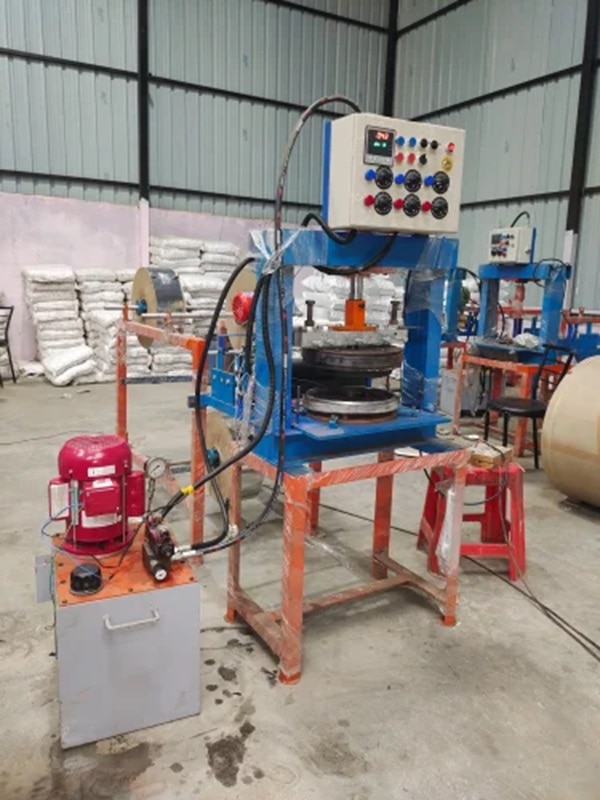 | Paper Plate Thali Making Machine Fully Automatic Paper Plate Thali Making Machine ₹340000 If you are planning to start or expand your disposable plate manufacturing business, a Fully Automatic Paper Plate Thali Making Machine is the best... View product → |
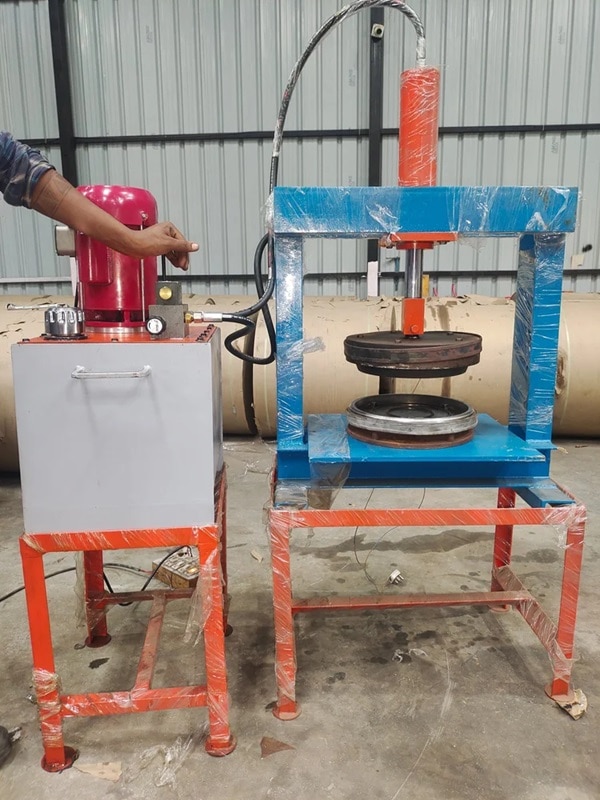 | Thali Making Machine Semi Automatic Thali Making Machine ₹95000 A Semi Automatic Thali Making Machine is an ideal choice for manufacturers who want reliable performance, controlled operation, and cost-effective... View product → |
Frequently asked questions
What determines the paper blank size for a thali?
Calculate the blank from the finished diameter plus the material required for the sidewall and rim. Draw depth, rim width, corner radius, and compartment layout also affect the required blank size.
How do you convert machine speed into daily saleable output?
Start with the press cycle and die cavity count, then subtract planned downtime, loading delays, die changes, rejects, and packing losses. The remaining quantity is your saleable daily output.
How should you choose a die arrangement for thali production?
Match the number of cavities and die configuration to your order sizes, product mix, changeover frequency, available paper sizes, and required daily volume.
What should you test before buying an automatic thali making machine?
Run your paper blanks and target thali designs through a supplier trial. Check feeding consistency, forming reliability, dimensions, rim quality, stacking, reject rate, die-change time, and packing flow.
Related products
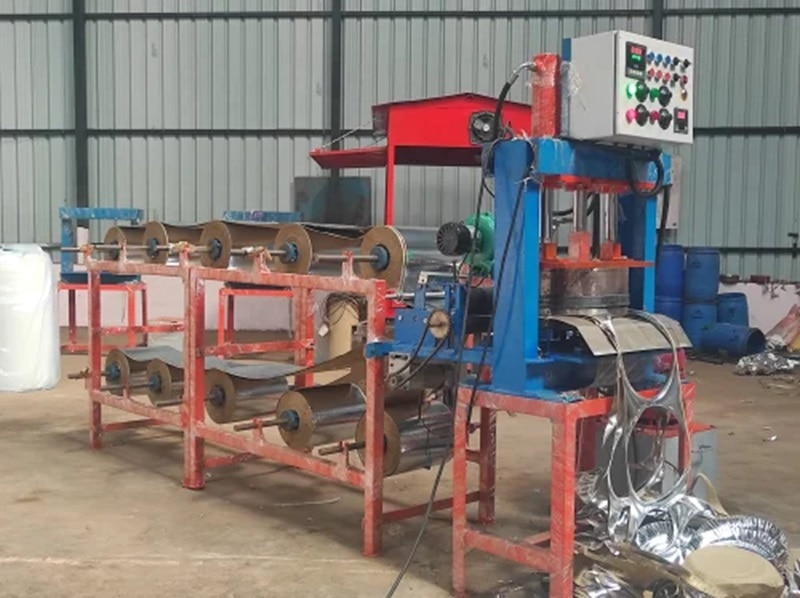 | Automatic Paper Plate Making Machine Fully Automatic All-in-One Paper Plate Machine ₹340000 The Fully Automatic All-in-One Paper Plate Machine is the ultimate choice for entrepreneurs and manufacturers who want a high-performance,... View product → |
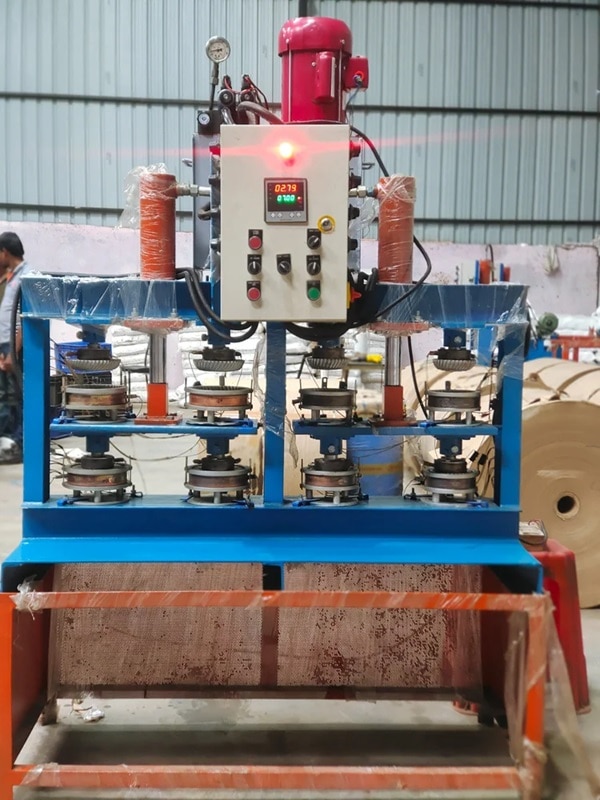 | Automatic Thali Making Machine Semi Automatic Hydraulic 8 Die Wrinkle Paper Plate Machine ₹290000 A Semi Automatic Hydraulic 8 Die Wrinkle Paper Plate Machine is a powerful and efficient manufacturing unit designed for high-volume production of... View product → |
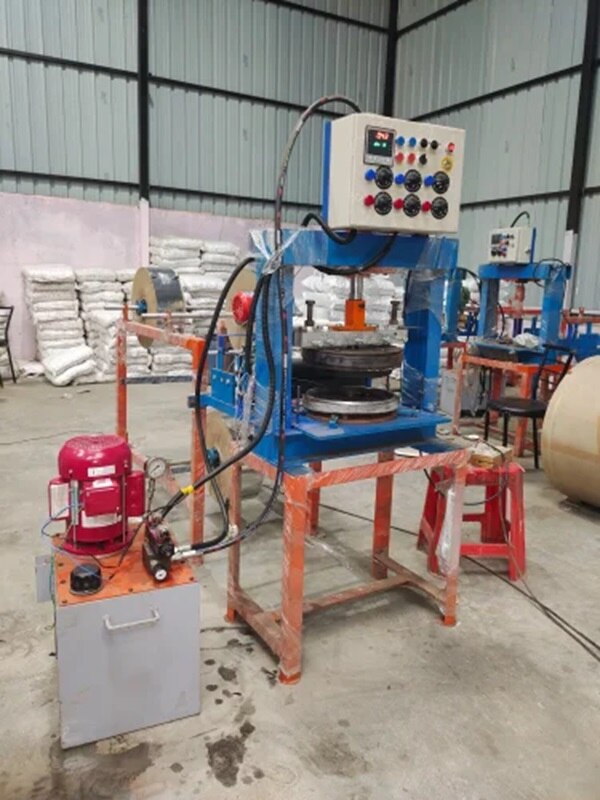 | Paper Plate Thali Making Machine Hydraulic Paper Thali Making Machine ₹110000 SHIVANSH ENGINEERING is engaged in offering a wide range of Hydraulic Paper Plate Making Machine to our clients. View product → |
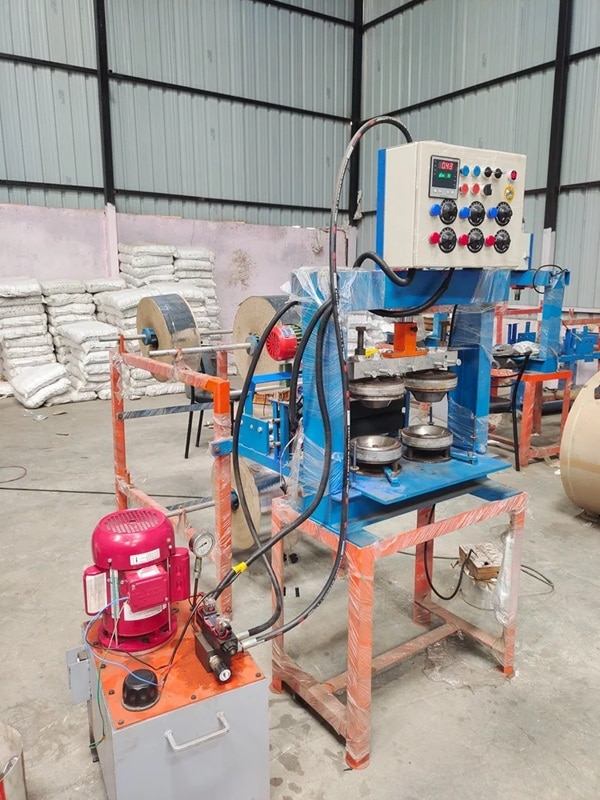 | Paper Plate Making Machine Automatic Hydraulic Double Die Paper Plate Making Machine ₹120000 The Automatic Hydraulic Double Die Paper Plate Making Machine is one of the most reliable and efficient solutions for manufacturers seeking faster... View product → |