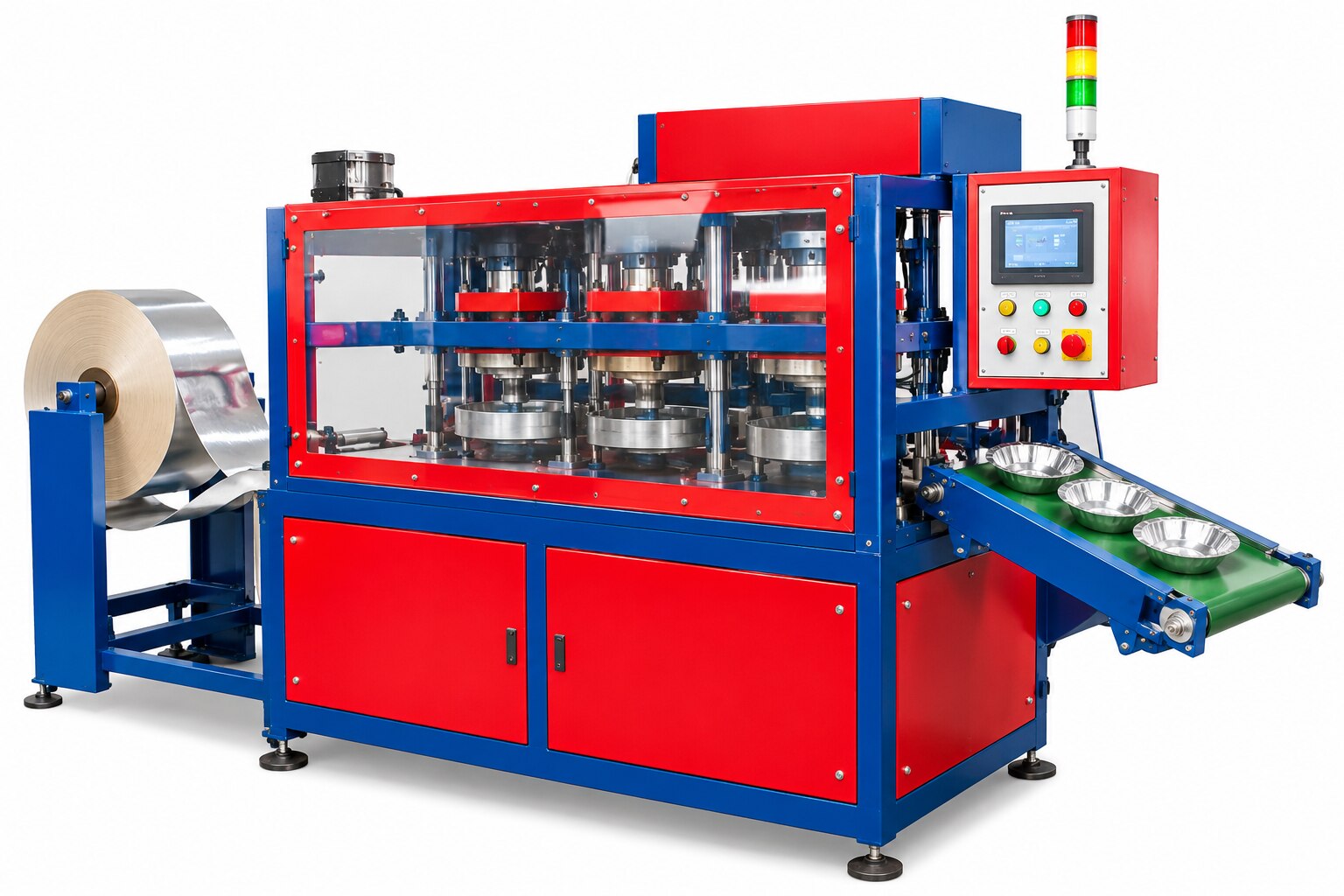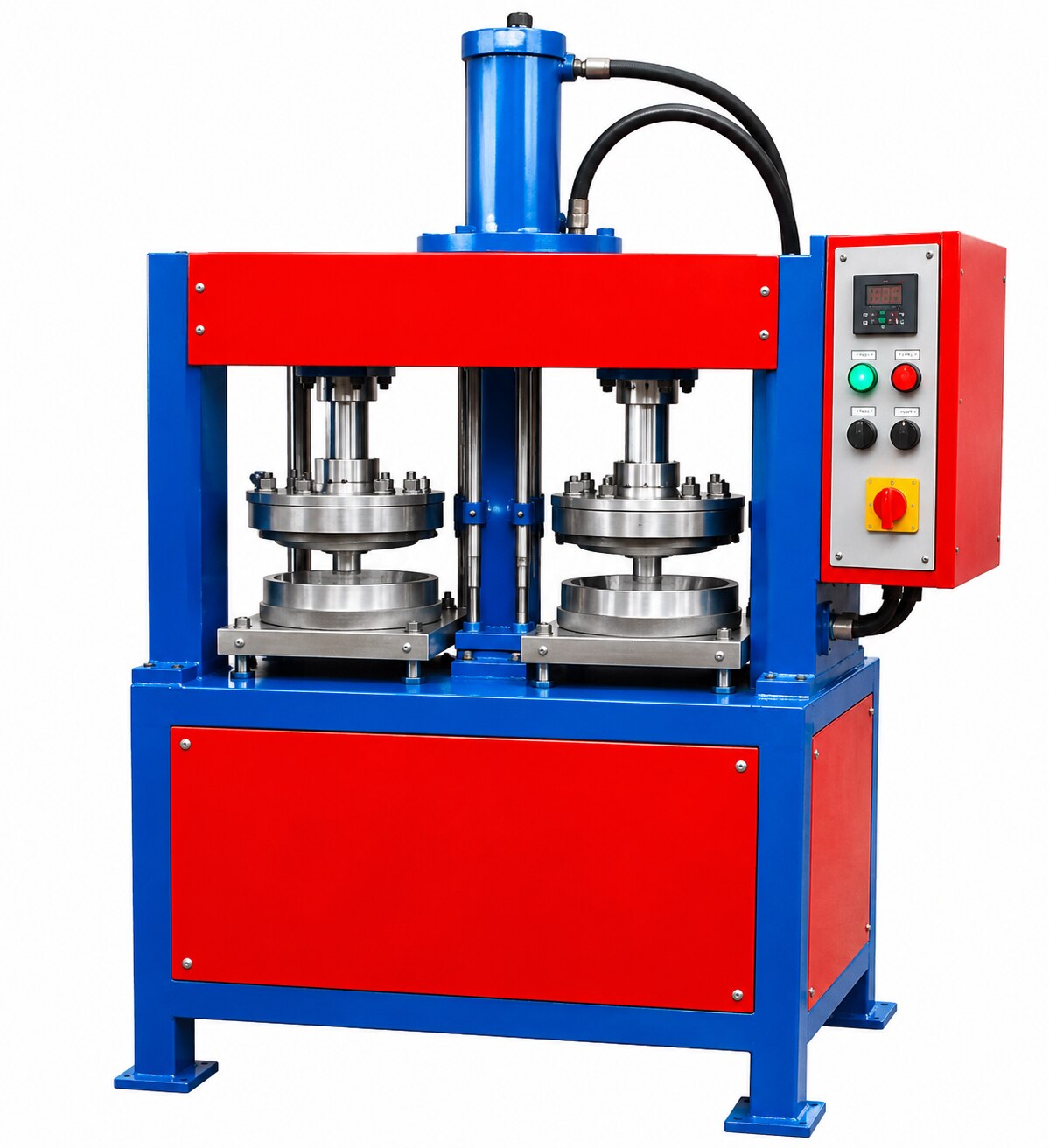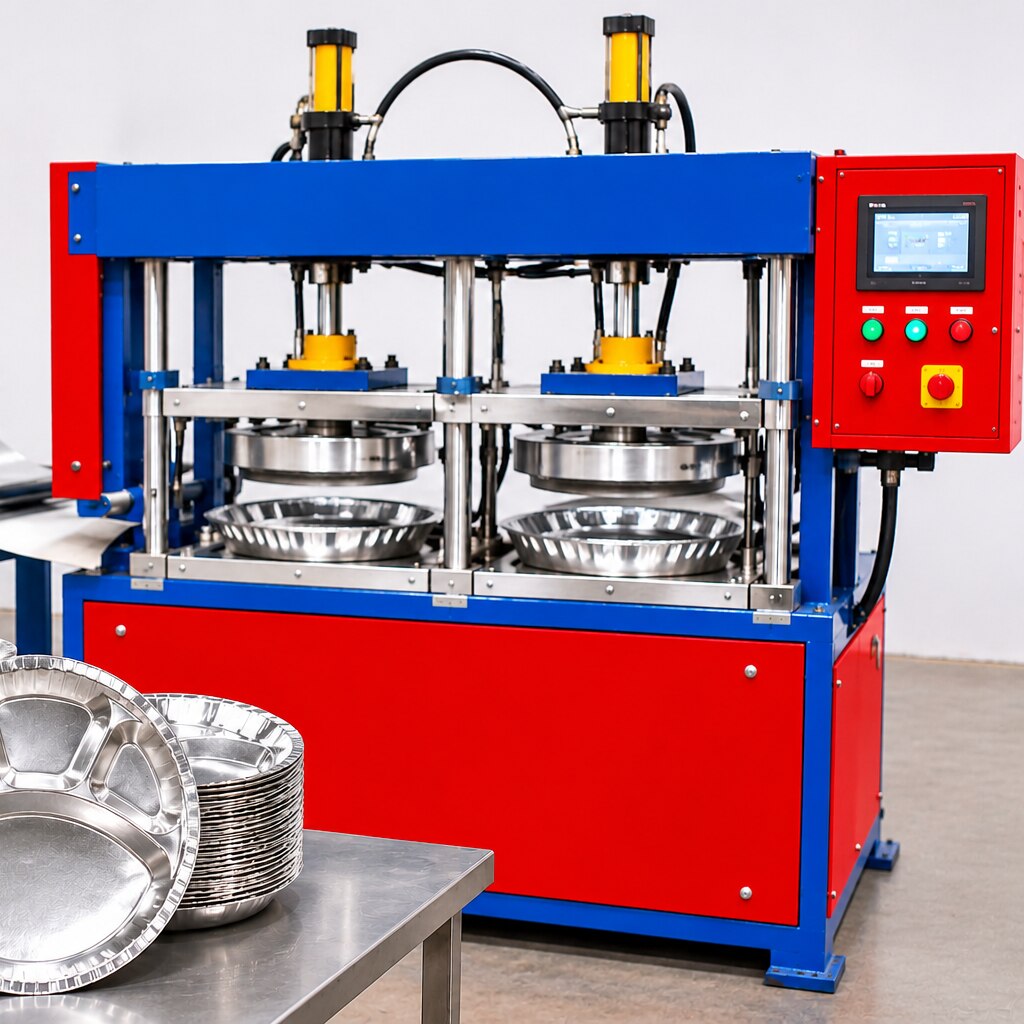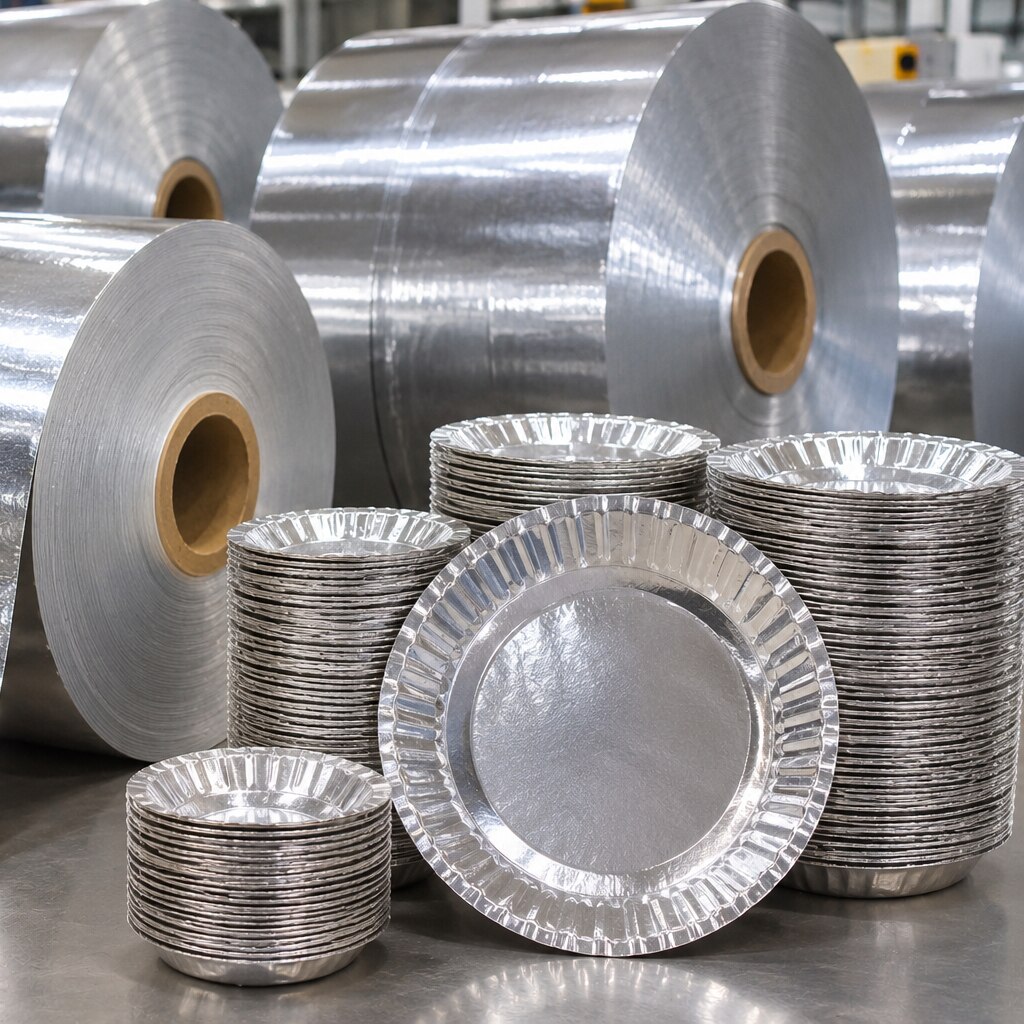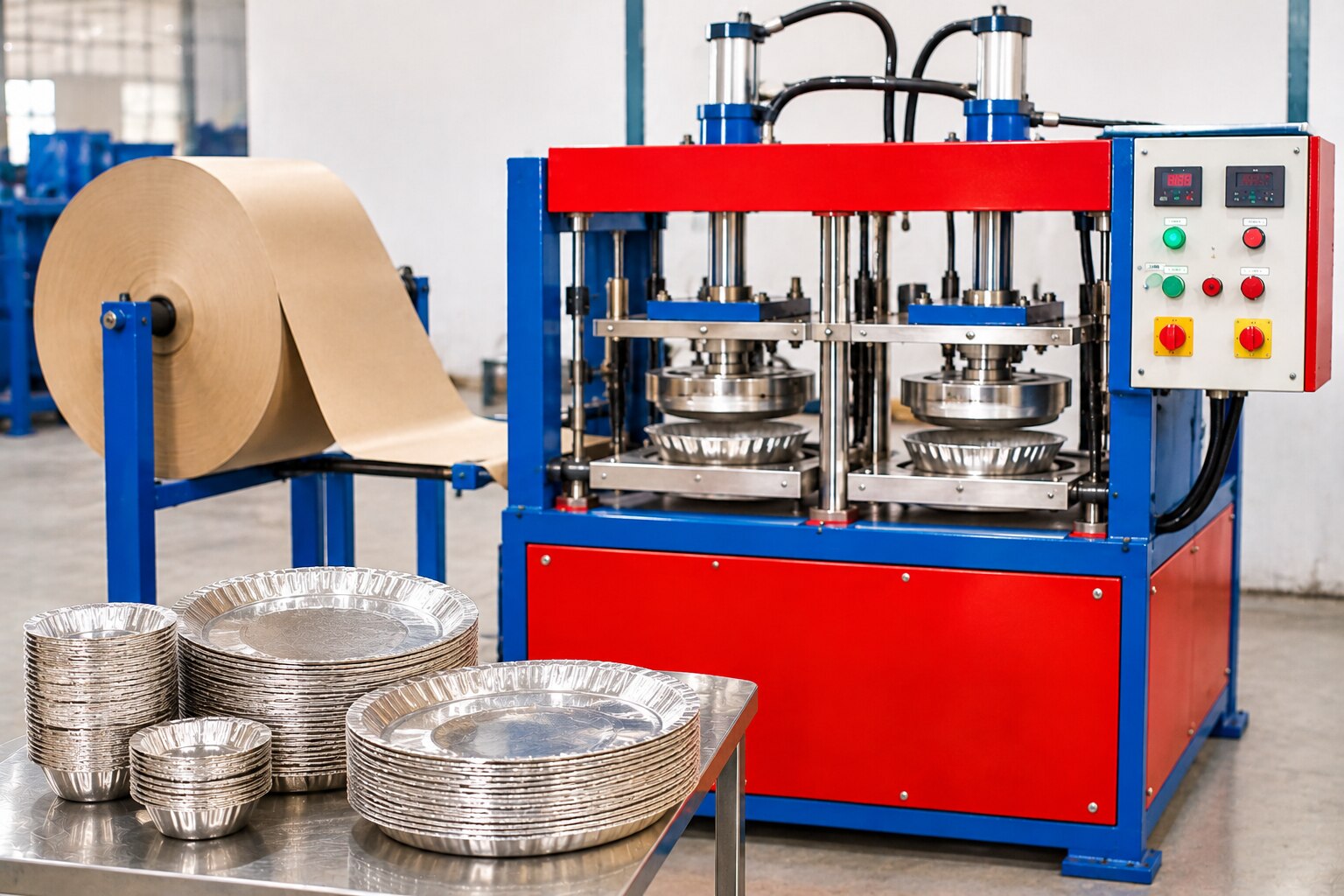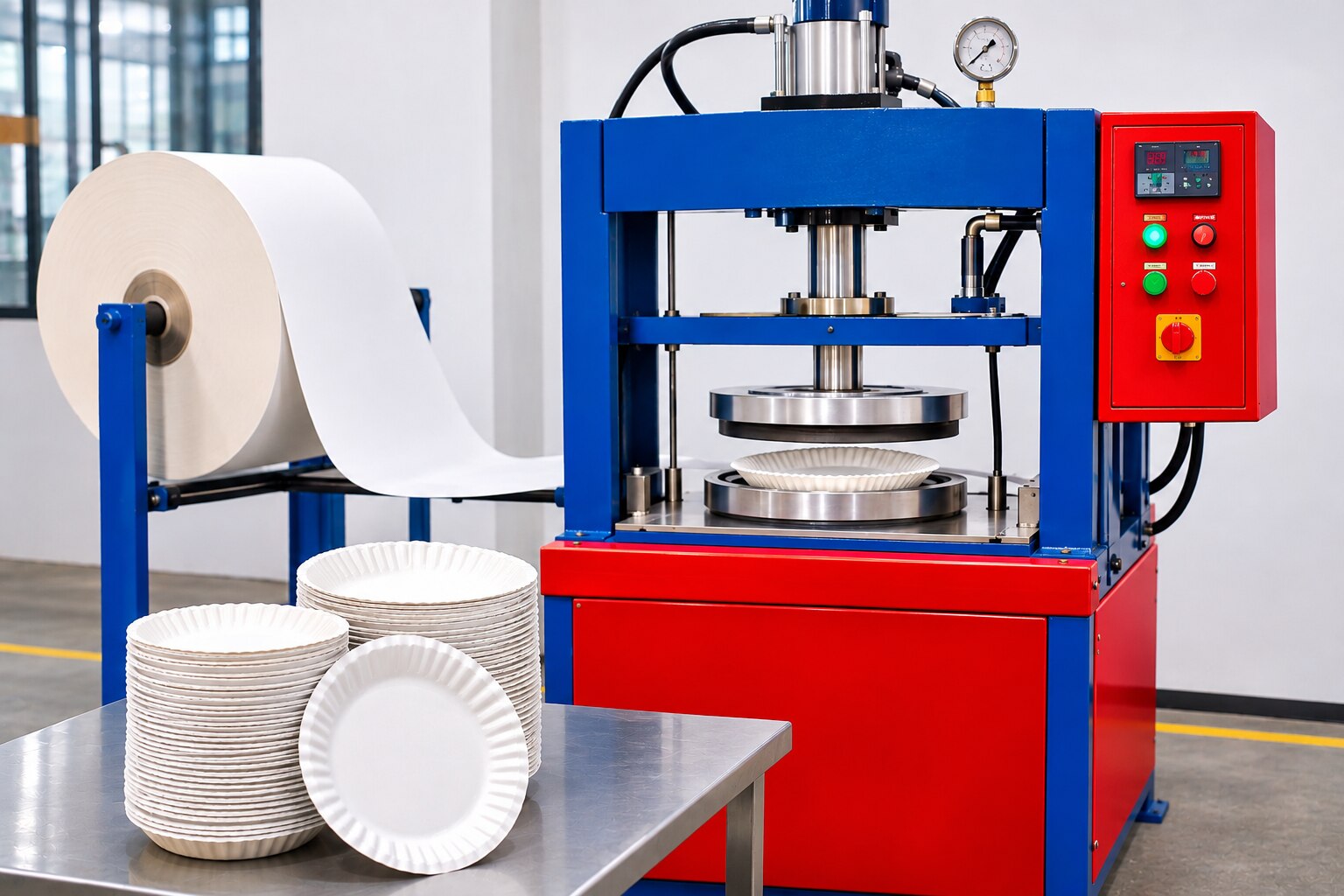
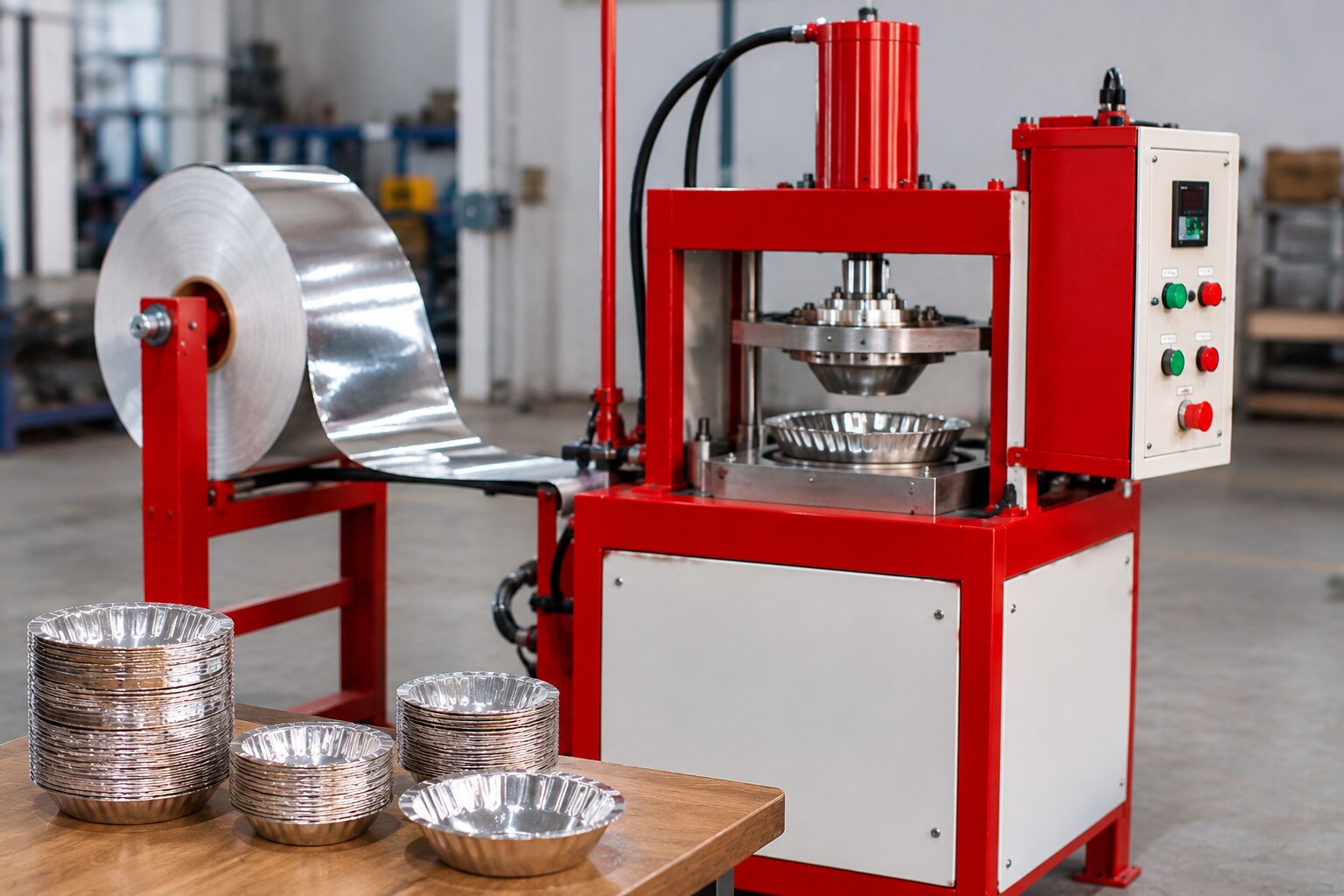
A hydraulic dona machine does more than press paper between two moulds: pressure, heat, dwell time, paper moisture, die geometry and alignment determine whether the finished dona holds its shape. By following the working cycle and checking the machine, material and output, you can operate it safely, diagnose defects and judge whether its capacity suits your production line.
Key takeaways
- Matched dies shape a pre-cut paper blank under hydraulic pressure.
- Heater temperature and dwell time control forming quality.
- Match paper size and die diameter to the required dona.
- Compare cycle time, controls, safety features and maintenance access.
How the Hydraulic Cycle Forms a Dona
The hydraulic dona machine working mechanism turns a pre-cut paper blank into a shaped bowl by closing matched dies under controlled force.
1. Load the pre-cut paper blank onto the lower die, centring it so the grain, printed face and edges sit correctly over the cavity. Poor placement produces an uneven rim or wrinkles before pressure is applied.
2. The motor drives the hydraulic pump, which draws oil from the oil tank and sends it through control valves to the hydraulic cylinder. The piston rod then moves the upper die towards the lower die.
3. As the dies close, the blank enters the cavity. The upper die presses the centre downward while the lower die supports the base and guides the paper around the sidewall, creating the dona’s depth and rim.
4. If the tooling is heated, heaters transfer heat through the die plates into the paper. Heat softens a PE coating or laminated film, allowing it to stretch over the shape and help lock the formed rim; excessive temperature scorches paper, weakens coating and increases sticking.
5. At the set stroke or pressure, the valves hold the cylinder briefly so the coating and paper conform to the die. The control valve then releases oil, the piston rod retracts, and the upper die opens.
6. Remove the finished dona from the lower die by hand or with an ejector, then inspect its base, wall, rim and surface for folds, cracks, scorching or incomplete forming.
Hydraulic pressure becomes forming force through F = pA: pressure acts across the cylinder’s effective piston area. Pump pressure is not the same as pressure on the paper; cylinder size, losses, friction, alignment and platen parallelism determine the force that reaches the dies. A gauge reading alone cannot prove good forming.
What the Dies, Heater and Controls Do During Each Stroke
Repeatability begins with alignment and controlled motion, not the pressure-gauge reading alone. The frame supports the platens and keeps the upper die and lower die on the same axis; guides and a parallel platen prevent one rim section from becoming deeper than another.
1. During loading, place the pre-cut blank centrally on the lower die. Its cavity supports the base while the matching upper die defines the inside profile, rim and wall angle.
2. During closing, a control valve sends oil from the pump to the hydraulic cylinder. The cylinder pushes the piston rod and upper platen downward, bringing the heated die arrangement together. The dies force the paper into the cavity rather than relying on pressure to correct an off-centre blank.
3. During forming and dwell, the valve holds oil pressure while heat softens the PE or laminated coating. Uniform die-surface temperature helps the coating conform and lock the dona’s shape; excessive heat scorches paper, while cold spots leave wrinkles or a weak rim. Heater wattage affects warm-up, not the temperature at every forming surface.
4. During release, the valve redirects oil to the tank, the piston rod retracts, and the upper die separates for removal. A controlled release avoids dragging the formed rim from the lower die.
The cylinder’s available force is approximately F = pA: hydraulic pressure multiplied by effective piston area. Pump pressure is not forming pressure at the paper; relief-valve setting, friction, leakage, die alignment and platen parallelism can reduce the force. Use guarded access, emergency stopping and hydraulic and electrical isolation before die changes or maintenance.
Setting Paper, Die Size and Output for the Required Dona
Match the blank diameter to the die cavity and the finished dona size, not simply to the largest available paper circle. Account for draw depth, flange width, rim geometry and material stretch: an oversized blank increases trim waste and closing force, while an undersized blank causes thin walls, exposed edges or tears.
Check these settings before approving production:
- Confirm the paper grammage, PE coating and paper moisture against the die supplier’s trial range. Excess moisture can wrinkle during heating; excessive heat can soften or scorch the coating.
- Measure the formed sample’s outside diameter, depth, rim width and base diameter. Compare each measurement with the required dona size and tolerance.
- Inspect the rim for continuous shape, the wall for thinning or folds, and the coating for cracking, delamination or sticking to the die.
- Run several consecutive samples. Approve the setting only when dimensions, release, nesting and appearance remain consistent after the die reaches operating temperature.
Practical output is calculated from completed cycles, not the machine’s nominal stroke speed. Use: output per hour = cycles per hour × number of dies × utilisation. If a cycle takes 12 seconds and utilisation is 85%, the estimate is 255 pieces per hour per die.
| Configuration | Calculation | Practical interpretation |
|---|---|---|
| Single-die | 255 × 1 | About 255 pieces/hour |
| Double-die | 255 × 2 | About 510 pieces/hour |
| Triple-die | 255 × 3 | About 765 pieces/hour |
Starting, Stopping, Maintaining and Safely Troubleshooting the Machine
Before production, check the hydraulic oil level, hoses, fittings, electrical connections, guards, emergency stop and die alignment. Confirm that the platen closes evenly, the heater reaches its set temperature, and no paper, oil or tools remain inside the closing zone.
- Load the correct blank centrally on the lower die. Keep hands outside the guarded area; two-hand controls do not replace guarding or interlocked access.
- Start the motor, select a low-speed trial cycle, and watch the upper die descend smoothly. Confirm that the rim forms evenly without wrinkles, tearing or excessive paper compression.
- Run production only after checking one sample for wall depth, rim bonding, symmetry and clean ejection. Stop immediately for abnormal noise, leakage, scorching or movement.
- At shutdown, complete the stroke, release hydraulic pressure, switch off the heater and motor, and press the emergency stop if movement remains unsafe. Isolate electrical and hydraulic energy before die changes, cleaning or repairs.
- Maintain the machine by cleaning die faces and vents, checking fasteners and seals, and replacing contaminated oil and clogged filters. Record temperature, pressure and faults.
Slow cycling, pump noise or erratic movement indicates low oil level, a restricted suction line or air in the circuit. Oil-pressure loss or failure to hold points to internal cylinder leakage, a faulty valve or a leaking connection. Spongy closing indicates trapped air. Uneven rims indicate poor die alignment or non-parallel platens.
Scorching indicates excessive heat or dwell time; poor release points to blocked vents, wrong clearance or an ejection fault. Never test a suspected fault with hands in the die area.
How to Compare Hydraulic Dona Machines Before Buying
Hydraulic forming suits varied dona sizes, deeper draws and production that needs adjustable force; it is unsuitable when you need the lowest purchase cost, minimal maintenance, or only occasional low-volume output. Do not choose by tonnage alone: ask for cylinder area, working pressure, platen parallelism, die dimensions and tested samples using your paper blank.
| Option | Compare | Practical decision |
|---|---|---|
| Hydraulic | Smooth adjustable force; requires pump, oil, seals and leak checks | Choose for flexible products and controlled forming |
| Mechanical | Faster fixed stroke; less hydraulic maintenance but harder force adjustment | Choose for stable, high-volume work with few size changes |
| Pneumatic | Clean, quick actuation; limited force and compressed-air dependence | Choose for lighter blanks and an existing air system |
Compare single-, double-, triple-, four- and eight-die setup against actual hourly output, not die count. A larger blank or extra die does not guarantee capacity; check finished diameter, flange width, draw depth, grammage, trim waste and changeover time.
Compare machine footprint and connected load with your floor space, electrical supply and compressor or hydraulic power requirements.
Specify automatic versus semi-automatic operation, including blank loading, ejection, counting and operator numbers. Ask about guarded access, interlocked doors, emergency stopping, two-hand controls, die-change procedures and isolation of electrical and hydraulic energy; two-hand controls alone do not protect an accessible closing point.
Compare oil-filter, seal and heater access, spare-parts lead time, commissioning, training and response coverage. Shivansh Engineering can be asked to document these points against the proposed die configuration rather than quoting output alone.
Related products
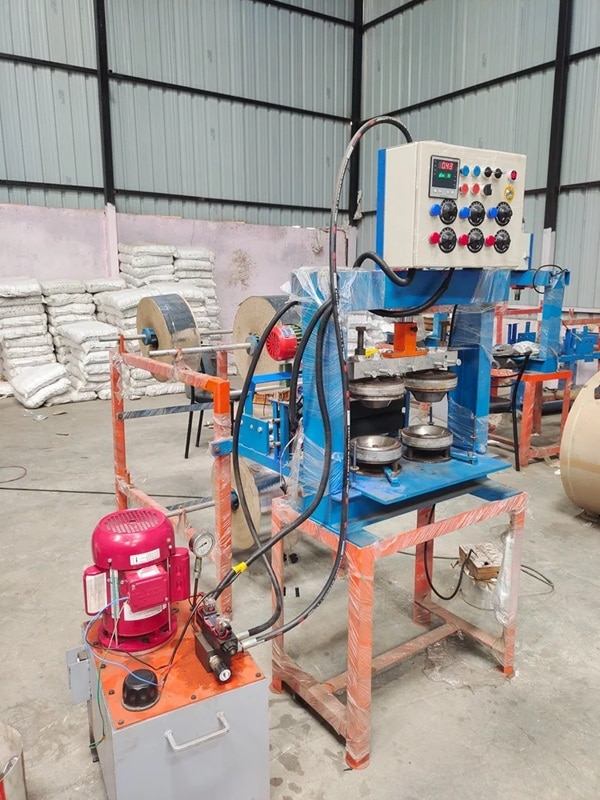 | Paper Plate Making Machine Automatic Hydraulic Double Die Paper Plate Making Machine ₹120000 The Automatic Hydraulic Double Die Paper Plate Making Machine is one of the most reliable and efficient solutions for manufacturers seeking faster... View product → |
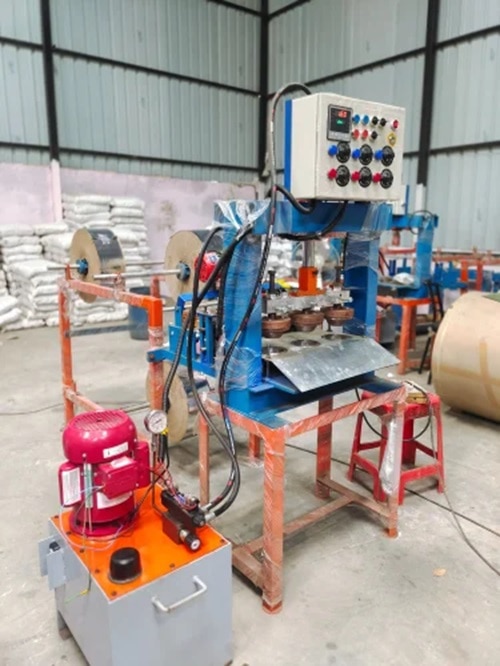 | Paper Dona Making Machine Fully Automatic Dona Making Machine ₹120000 A Fully Automatic Dona Making Machine is the most advanced and efficient solution for large-scale production of high-quality paper donas (bowls). View product → |
Frequently asked questions
How does a hydraulic dona plate machine form a dona?
The operator places a pre-cut paper blank between matched dies. A hydraulic cylinder closes the dies under controlled force, holds the blank during forming, and retracts to release the shaped dona.
What do the dies, heater and controls do during each stroke?
The dies provide the dona’s shape, the heater softens the paper coating for forming, and the controls manage pressure, temperature, dwell time and cylinder movement.
How do you set a machine for the required dona?
Choose a compatible paper blank, install the die set for the required diameter and depth, set the heater and forming cycle, then check the first pieces for shape, edge finish and sticking.
What should you compare before buying a hydraulic dona machine?
Compare die compatibility, cycle time, output, pressure adjustment, temperature control, operator safety, maintenance access, spare parts and the machine’s stopping and troubleshooting features.
Related products
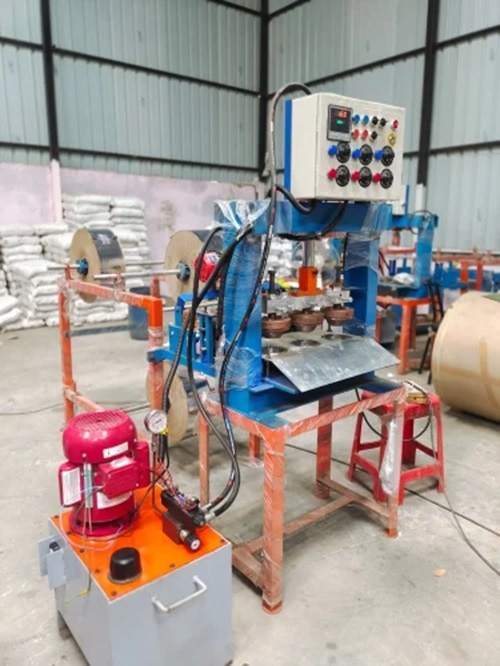 | Paper Dona Making Machine Paper Triple Die Dona Making Machine ₹325000 A Paper Dona Making Machine is an essential manufacturing solution for producing high-quality paper donas (bowls) used widely in food service,... View product → |
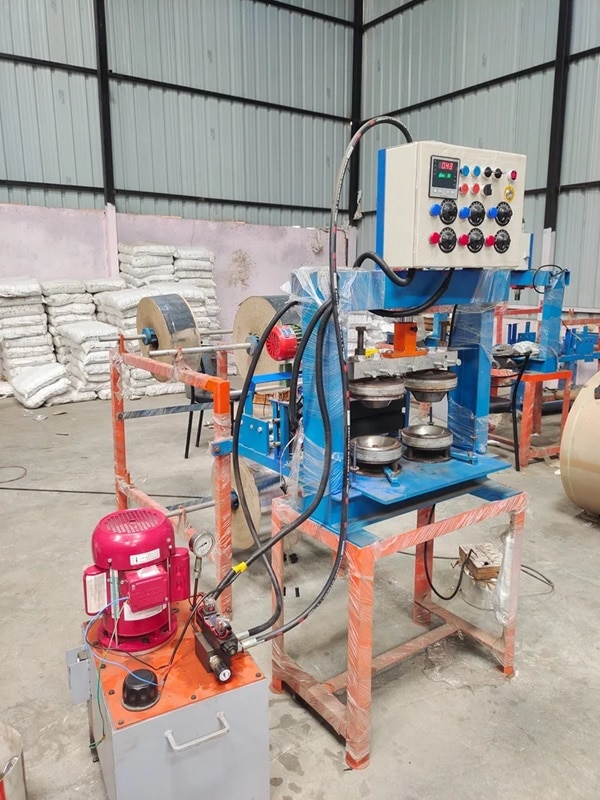 | Paper Dona Making Machine Semi Automatic Dona Making Machine ₹220000 A Semi Automatic Dona Making Machine is a perfect choice for small and medium-scale manufacturers looking for a balance of affordability, efficiency,... View product → |
Keywords