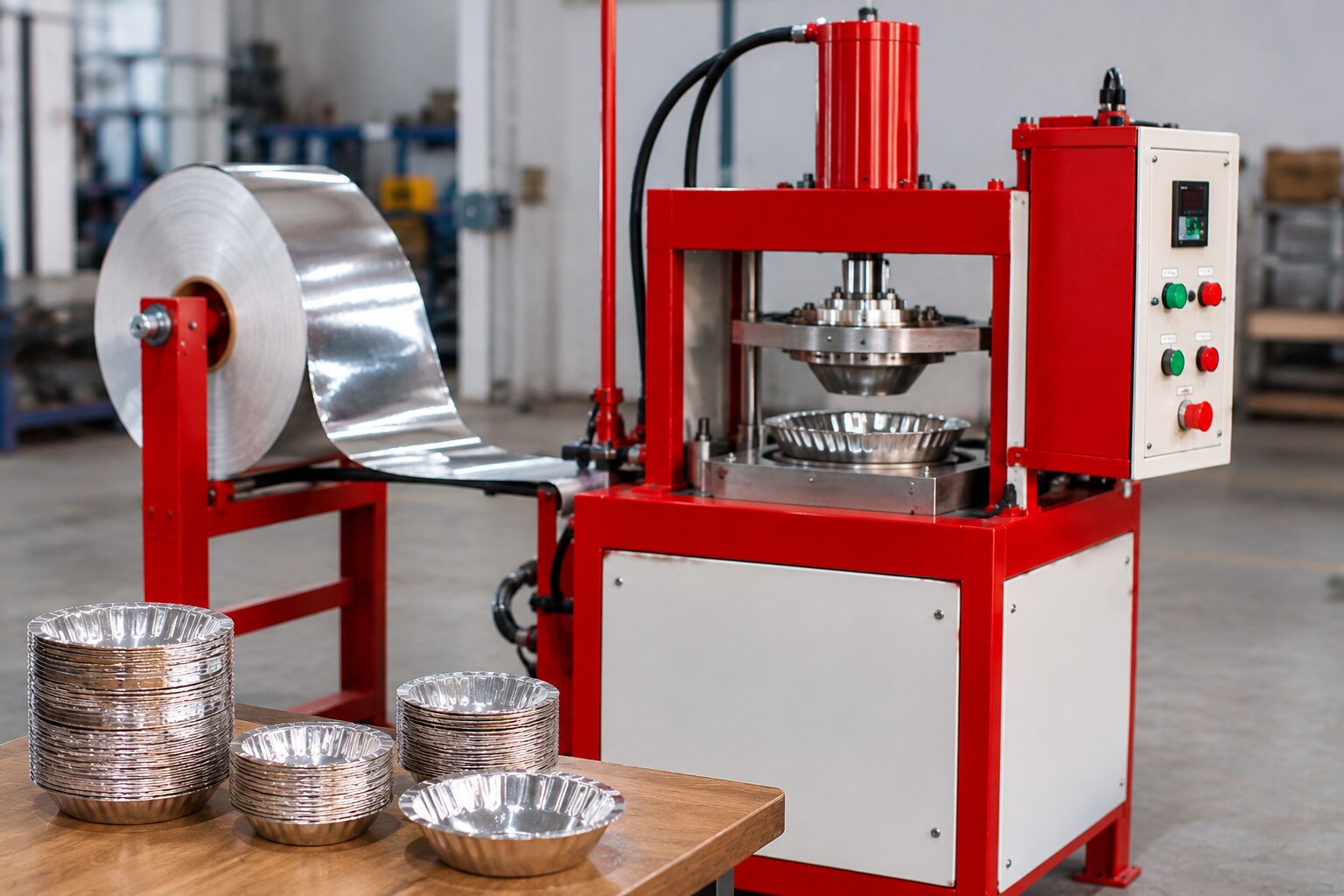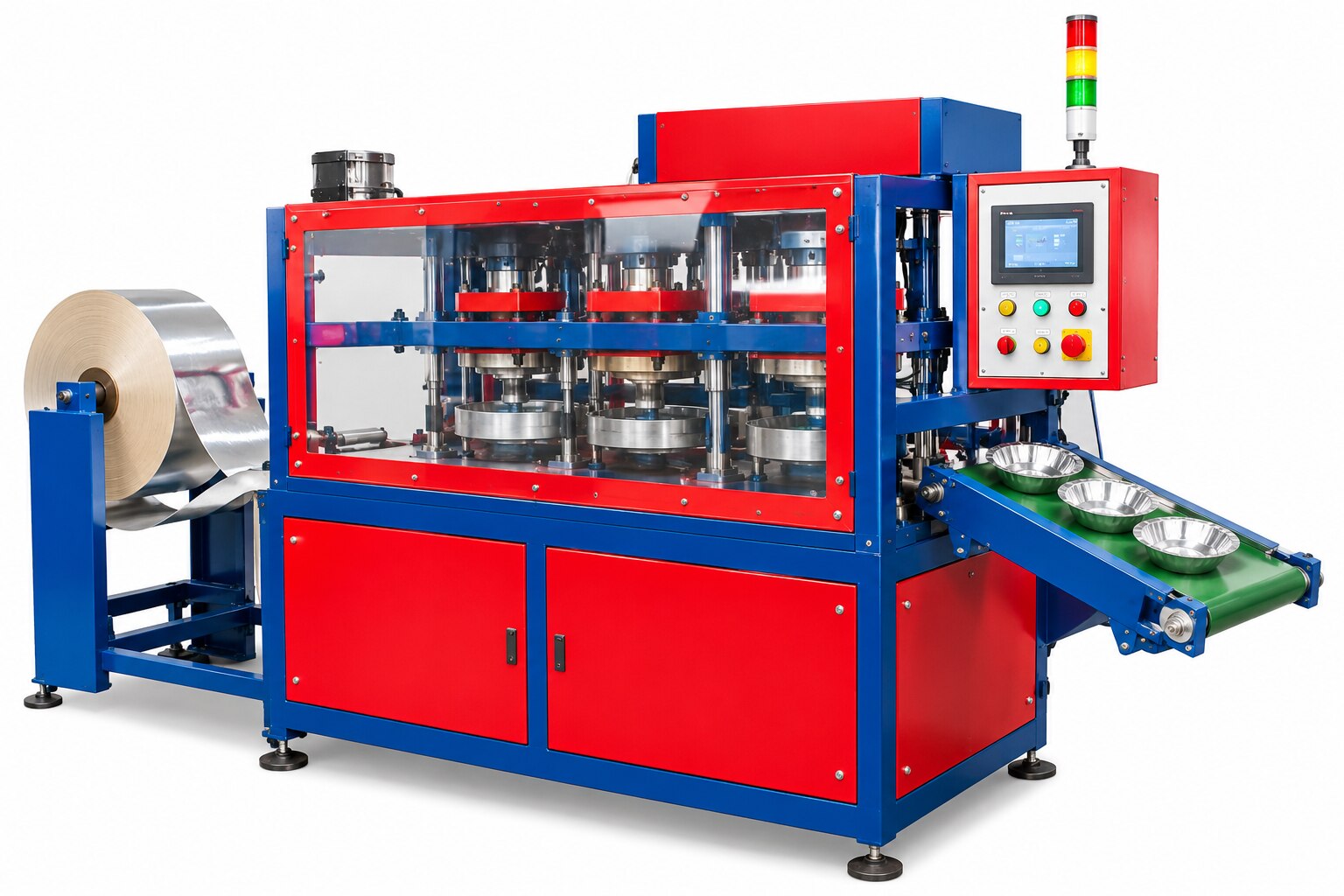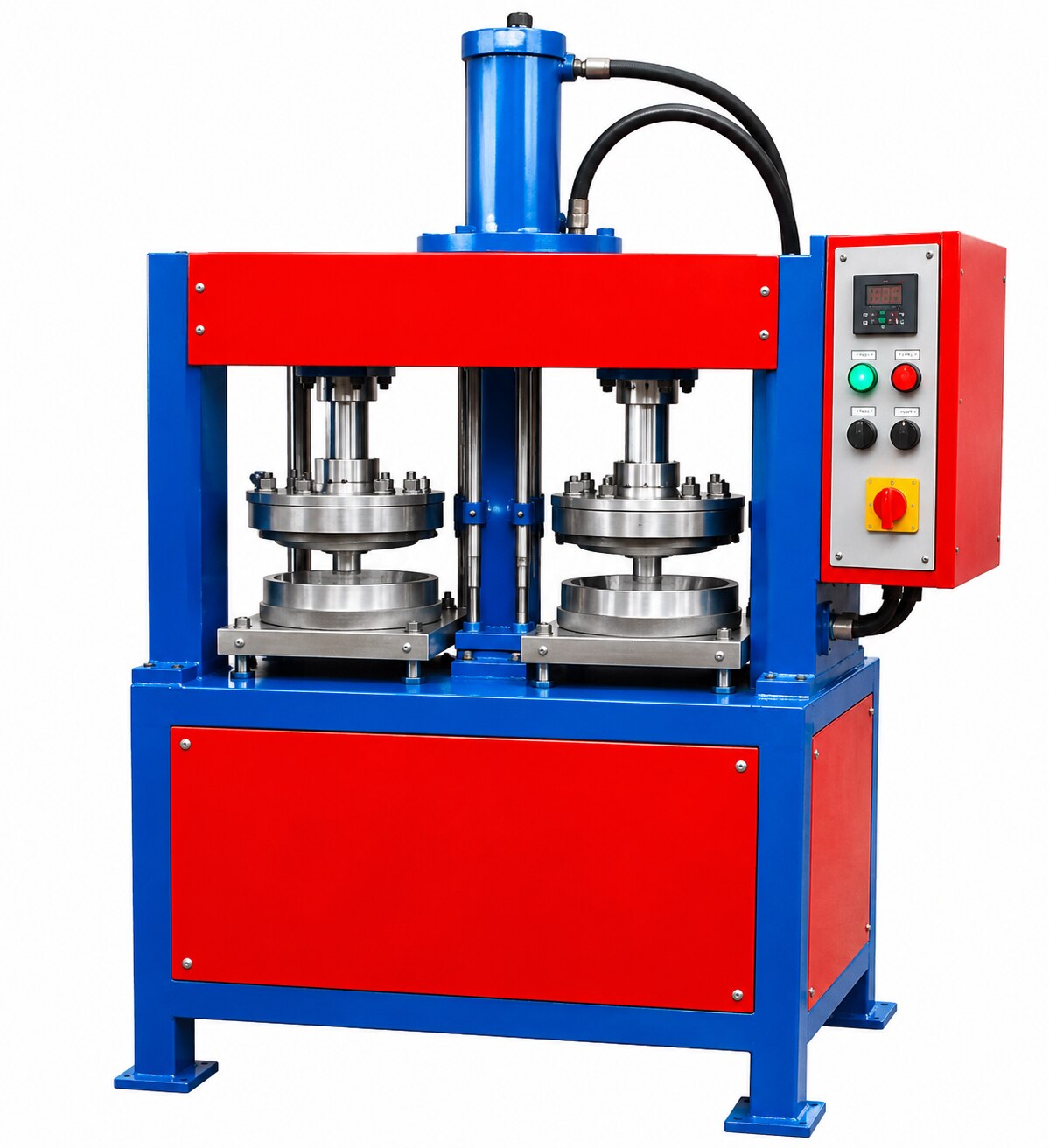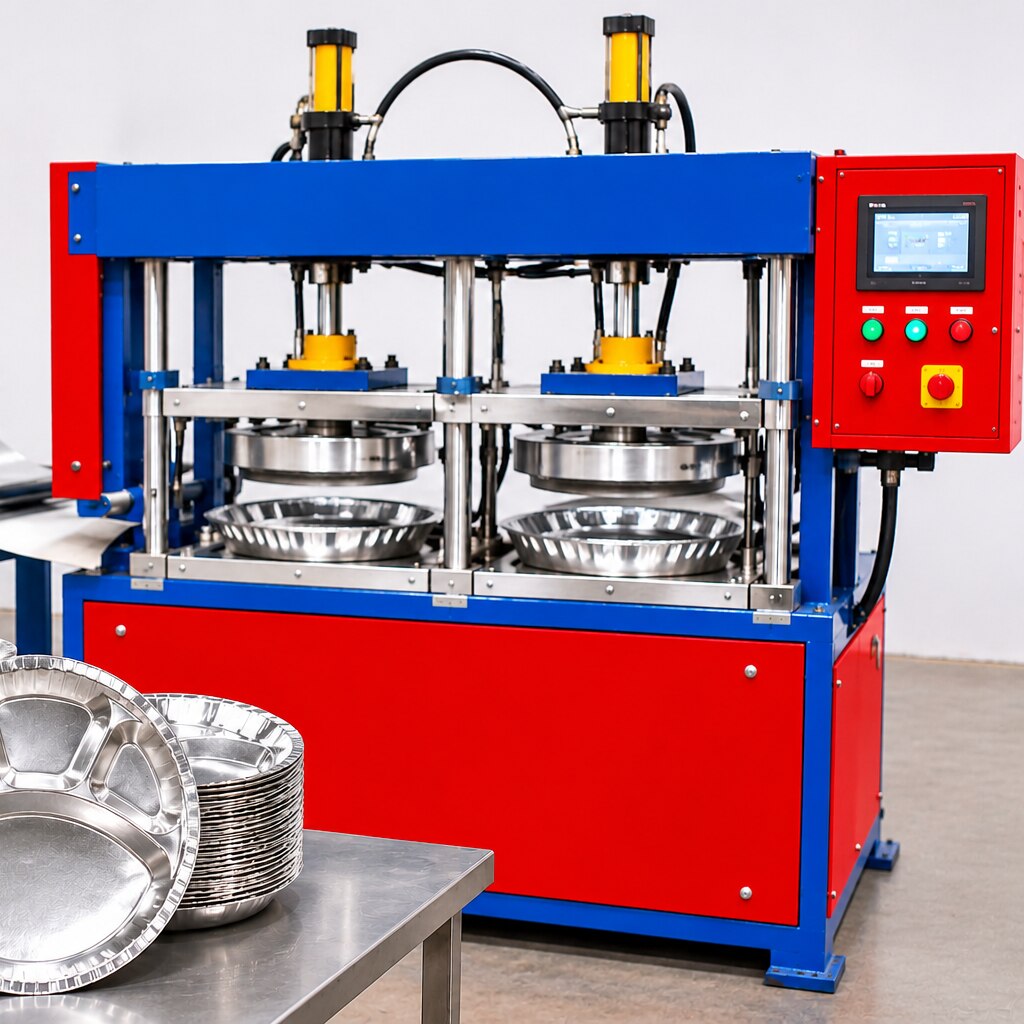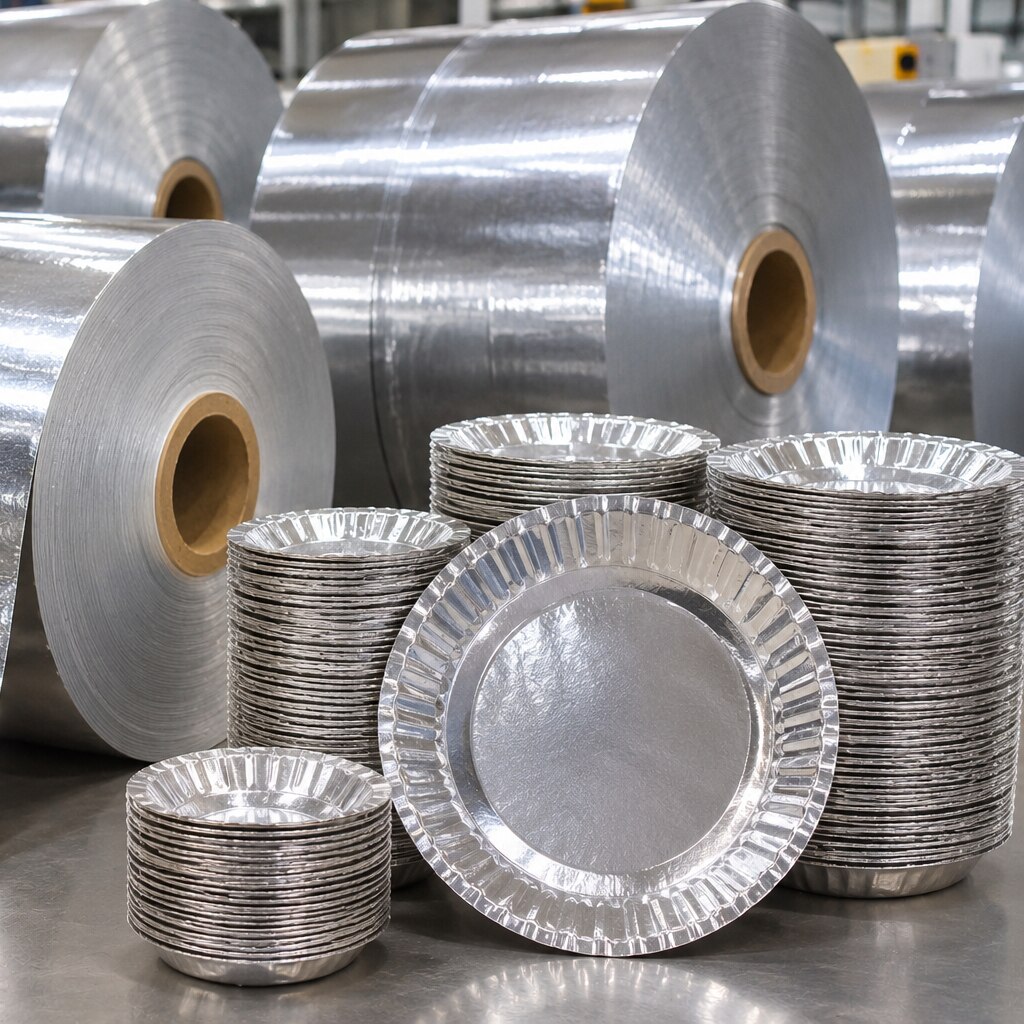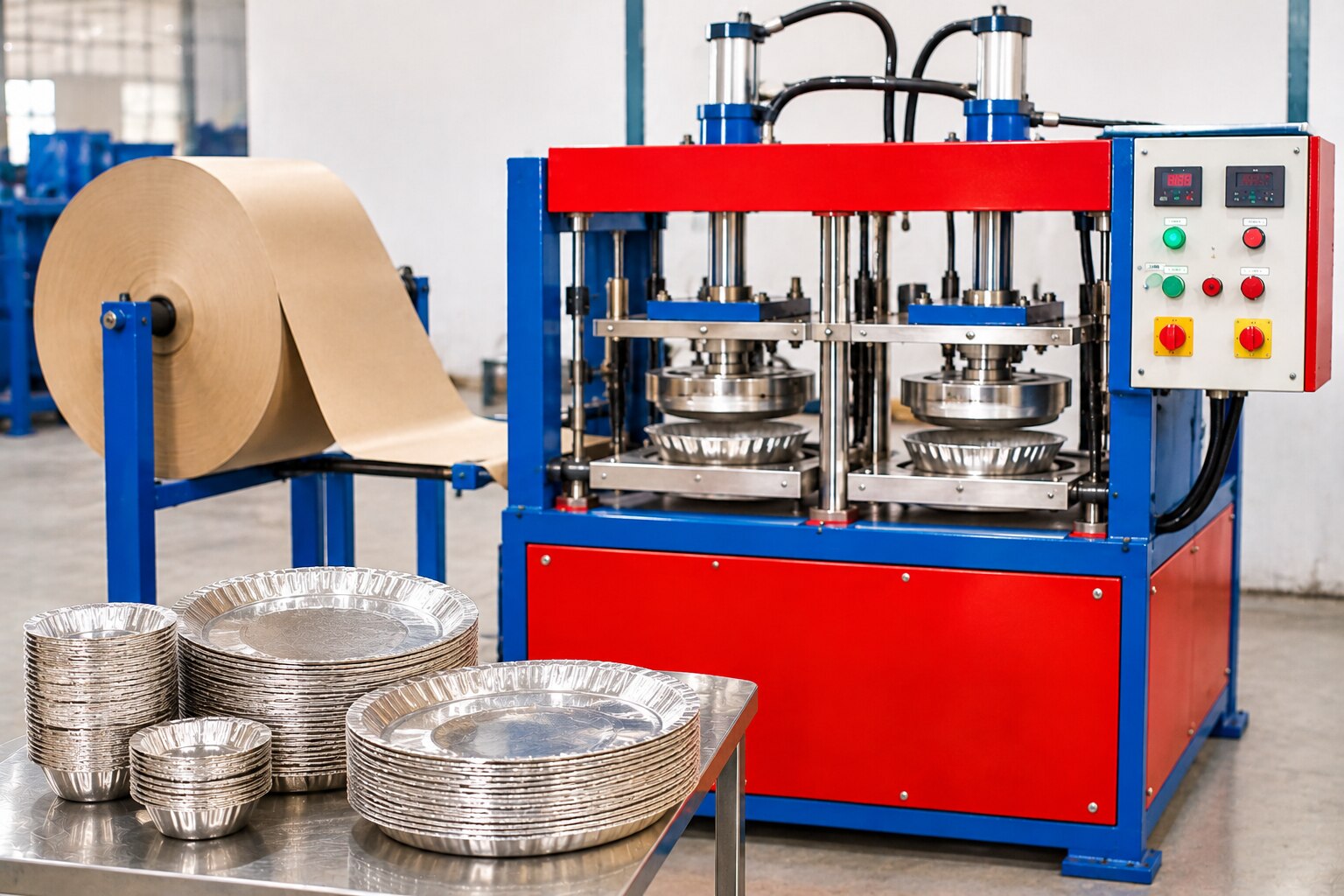
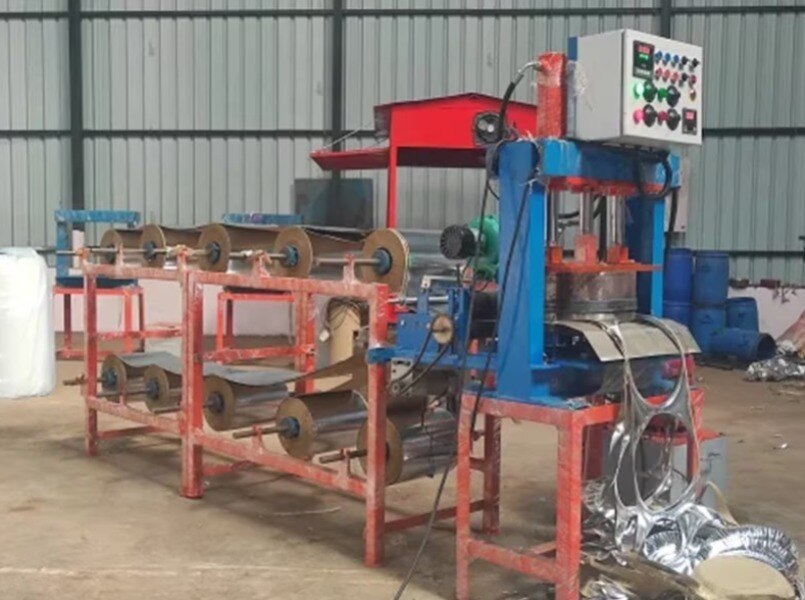
A machine rated at 40 strokes per minute may produce far fewer saleable plates once loading, die changes, rejects, maintenance and operator breaks are counted. By the end, you will have a specification checklist, a calculation for practical capacity and a witnessed trial format that lets you compare quotations on the same production conditions.
Key takeaways
- Calculate saleable plates using speed, cavities, uptime and first-pass yield.
- Match forming force and paper properties to your finished plate geometry.
- Request electrical, pneumatic and factory requirements before comparing quotations.
- Set die-change targets and written sample acceptance criteria before ordering.
Start with saleable output, not the headline production rate
Compare paper plate machine production capacity in acceptable plates per hour, not the highest number printed in a quotation. Calculate saleable output as strokes per minute × usable cavities or plates per stroke × uptime × first-pass yield.
A machine running at 40 strokes per minute can produce less saleable output than one running at 32 if it has more rejects, longer changeovers or frequent paper-loading stops.
| Measure | Machine A | Machine B |
|---|---|---|
| Rated speed | 40 strokes per minute | 32 strokes per minute |
| Usable plates per stroke | 1 | 2 |
| Theoretical plates per hour | 2,400 | 3,840 |
| Uptime during the shift | 78% | 90% |
| First-pass yield | 94% | 98% |
| Saleable output | 1,762 plates/hour | 3,387 plates/hour |
Require the supplier to state whether its figure excludes start-up, size changes, die changes, trimming, rejects, maintenance stops and operator breaks. Then witness a continuous run using your intended plate diameter, paper grammage, coating and tooling, and record plates per hour, reject rate, loading time and run duration.
Compare material efficiency as well. Blank diameter, nesting layout, trim width and reject rate determine the mass of paper per acceptable plate; a faster machine that wastes more blanks can have the higher operating cost. A lower rated speed is the better choice when it delivers more saleable output from the specified paper.
Match forming power, paper properties and finished-product geometry
A machine forms your required plate consistently only when its force, paper range and tooling match the finished geometry. Compare working pressure, not the headline maximum: excessive pressure can damage dies, while insufficient force leaves weak rims, shallow corners or incomplete forming.
| Specification | What to verify | Why it matters |
|---|---|---|
| Hydraulic system | Working hydraulic pressure, motor power HP, pump type and cylinder size | These determine available forming force and cycle stability |
| Paper input | GSM range, paper type, coating or barrier, blank diameter and mass | GSM alone does not show whether the blank will draw cleanly without cracks or excessive trim |
| Finished geometry | Rim profile, depth, corner radius, bottom diameter and nesting height | A nominal diameter cannot prove the machine will form your actual plate |
| Tooling | Separate dies, punches and holders for each size; included tooling and changeover time | A quoted size range may depend on buying several size-specific sets |
Check paper consumption by blank yield and mass per acceptable plate, not plates per hour. Record trim width, nesting layout and reject rate; a cheaper machine can waste more paper. Also verify that the paper, coating, ink, adhesive and processing residues suit the intended food-contact conditions.
The machine supplier’s packaging claim does not establish compliance for your finished plate.
Before comparing offers, ask for:
- A trial using your production-intent paper and blank geometry
- Samples measured for diameter, depth, rim shape, bottom diameter and leak performance
- Minimum and normal hydraulic settings, plus cycle time at each required size
- The exact tooling list and forming results for every plate, dona or thali size
Compare the complete electrical, pneumatic and factory requirements
A motor rating does not tell you whether your factory can run the machine. Compare single phase or three phase supply, voltage and frequency, maximum current, starting current, control-panel protection, and earthing requirements before approving the installation.
| Utility | Request from supplier | Why it matters |
|---|---|---|
| Electrical | Connected load, power factor, and measured kWh per 1,000 acceptable plates at a stated speed | The quoted kW may exclude heaters, pumps, controls, or auxiliaries |
| Pneumatic | Compressed air requirement stated as free-air delivery, minimum and normal inlet pressure, air quality, and receiver size | Horsepower alone does not show whether your compressor can sustain demand |
| Floor space | Machine dimensions plus operator clearance, die-change space, loading area, stack removal, cabinet access, and maintenance clearance | Published length and width can understate the required installation area |
| Documentation | Wiring diagram, protection-device ratings, utility connection points, and foundation or anchoring details | Missing information creates unsafe, delayed installation work |
Ask the supplier to identify whether air is consumed continuously or only during movements such as blank feeding, clamping, or ejection. State the actual pipe size and distance from the receiver; pressure loss in a long or undersized line can cause incomplete movements.
Compare the factory requirements as carefully as the machine itself:
- Confirm the supply capacity after adding other machines, lighting, and compressors.
- Reserve safe access to the electrical cabinet and emergency-stop controls.
- Check whether ventilation or heat removal is needed around hydraulic power units and heaters.
- Get the installation drawing before finalising the floor layout.
Examine automation, dies and changeover time as labour costs
Treat semi automatic versus fully automatic operation as a labour comparison, not a marketing label. A fully automatic machine still creates work if an operator must realign blanks, remove stuck plates, reset sensors or stack finished products by hand.
| Configuration | Labour exposure | Production-loss risk |
|---|---|---|
| Semi automatic | Operator loads, transfers or monitors each cycle | Higher interruption risk during feeding, stacking and minor faults |
| Fully automatic | Automatic feeding, forming, stacking and fault control | Lower labour demand only when these functions run reliably at your paper size and speed |
Ask the supplier to demonstrate the complete die change, not just the removal of a forming tool. Measure die change time from the last acceptable plate of one size to the first acceptable plate of the next, including replacement, adjustment, trial pieces and inspection. A five-minute mechanical exchange can become a twenty-minute production stop.
Confirm that the quoted diameter range matches actual blank geometry and tooling. Require the quotation to identify:
- Working dies supplied with the machine
- Interchangeable dies, punch sets, holders and size-specific tooling required
- Tooling cost and replacement lead time for each plate size
- Written changeover steps and the measured die change time
Inspect the footprint during the demonstration. Include operator space, die-change clearance, raw-material loading, finished-stack removal, cabinet access and maintenance access; a compact machine can still demand a wide aisle. Finally, record operator minutes per hour, stoppages, trial rejects and saleable plates during a sustained run.
Those figures reveal whether automation reduces operating effort or merely moves it.
Use a written sample trial and acceptance test before ordering
Require a witnessed paper plate machine trial and a signed acceptance protocol before you place the order, not a video or a no-load demonstration. Use the same protocol for the machine acceptance test after installation.
1. Run the supplier’s machine with your production-intent blank, paper grammage, coating, plate diameter, rim profile, depth and tooling. Record continuous running time, cycle time, plates per hour, die use and operator interventions.
2. Inspect a defined sample for rim uniformity, bottom flatness, rim continuity, wrinkles, cracks, trim damage, cleanliness and correct nesting or stacking. Set measurable tolerances, such as diameter, depth and rim height, rather than accepting “good quality” as the standard.
3. Weigh blanks and accepted plates, then calculate blank yield and material mass per acceptable plate. Record the reject rate and state the maximum permitted percentage; count misfeeds, alignment faults, incomplete forming and dimensional failures separately.
4. Test leakage or burst performance when the plate will hold liquid or oily food. Require the supplier to identify the paper, coating, ink, adhesive and processing residues used; a machine’s food-packaging claim does not prove finished-article compliance.
5. Time changeover from the last acceptable plate in one size to the first acceptable plate in the next, including die replacement, adjustments, trial pieces and inspection. For a supplier such as Shivansh Engineering, put these results, tolerances, remedies and retest rights in the purchase contract.
Related products
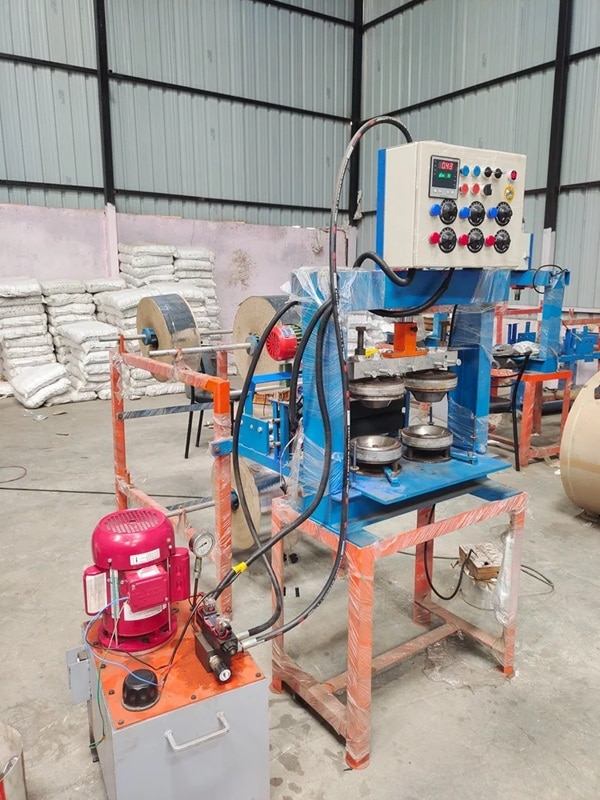 | Paper Plate Making Machine Automatic Hydraulic Double Die Paper Plate Making Machine ₹120000 The Automatic Hydraulic Double Die Paper Plate Making Machine is one of the most reliable and efficient solutions for manufacturers seeking faster... View product → |
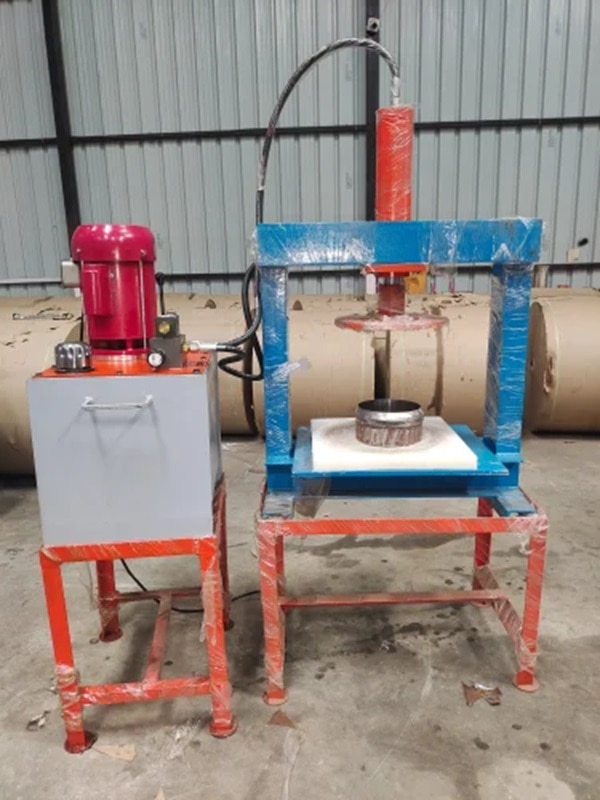 | Paper Plate Circle Cutting Machine Paper Plate Circle Cutting Machine ₹160000 A Paper Plate Circle Cutting Machine is an essential tool for manufacturers producing paper plates, donas, and disposable tableware. View product → |
Frequently asked questions
How should you compare paper plate machine production rates?
Compare saleable plates per hour using strokes per minute, usable cavities, uptime and first-pass yield—not the headline rate.
Which paper and forming specifications must match?
Match forming power and the paper’s properties to the finished plate’s diameter, depth, rim and shape.
What factory requirements should you compare between suppliers?
Compare electrical load, voltage, phase, compressed-air requirements, machine footprint, operating space and installation needs.
Why do automation, dies and changeover time affect machine cost?
They determine labour use and lost production when changing products, so compare controls, included dies and timed changeovers.
What should a paper plate machine acceptance test include?
Write the paper specification, product dimensions, saleable output, first-pass yield and trial conditions into the order acceptance test.
Related products
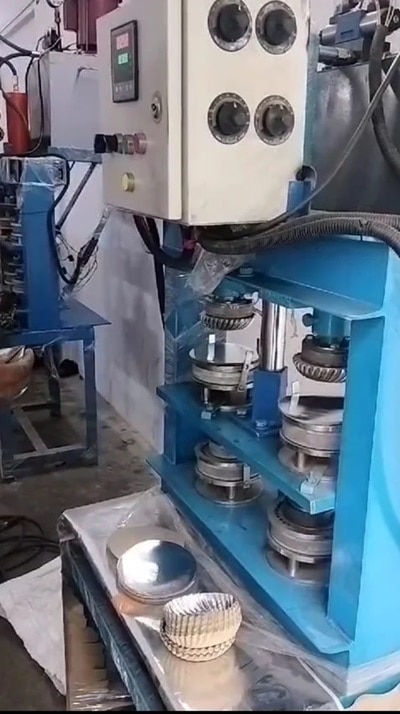 | Automatic Paper Plate Making Machine Semi Automatic Hydraulic 4 Die Wrinkle Paper Plate Machine ₹180000 The Semi Automatic Hydraulic 4 Die Wrinkle Paper Plate Machine is a powerful and efficient production solution designed for manufacturers who want to... View product → |
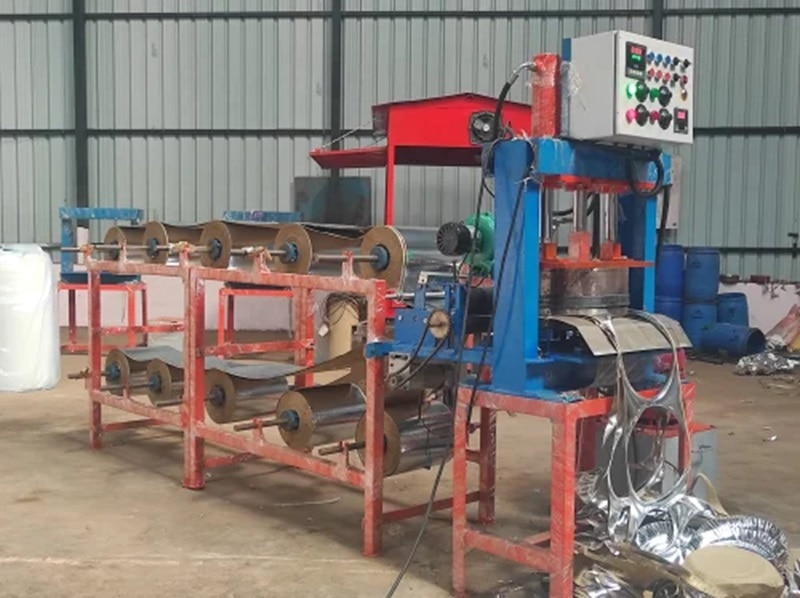 | Automatic Paper Plate Making Machine Fully Automatic All-in-One Paper Plate Machine ₹340000 The Fully Automatic All-in-One Paper Plate Machine is the ultimate choice for entrepreneurs and manufacturers who want a high-performance,... View product → |
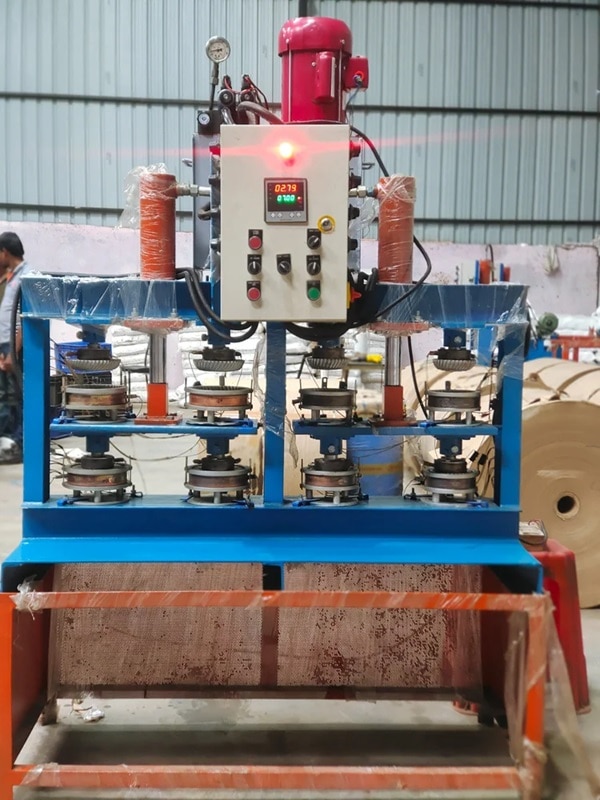 | Automatic Thali Making Machine Semi Automatic Hydraulic 8 Die Wrinkle Paper Plate Machine ₹290000 A Semi Automatic Hydraulic 8 Die Wrinkle Paper Plate Machine is a powerful and efficient manufacturing unit designed for high-volume production of... View product → |
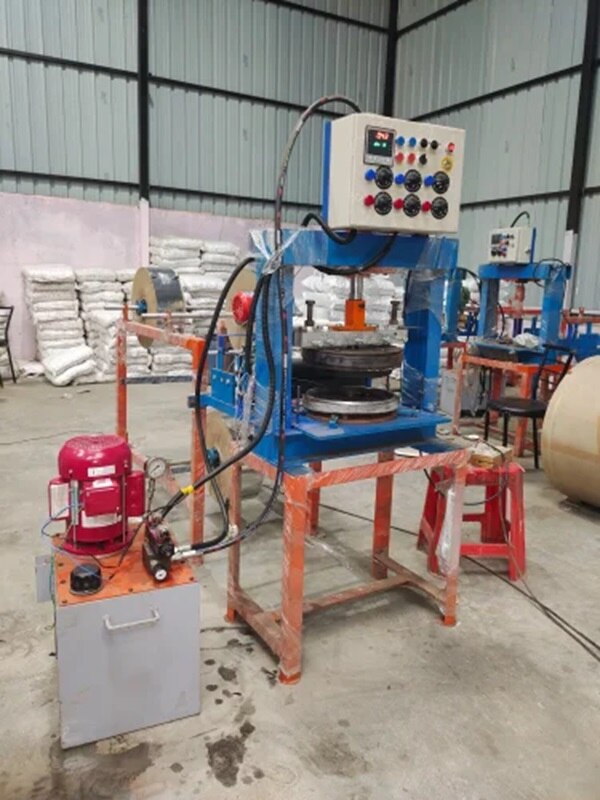 | Paper Plate Thali Making Machine Hydraulic Paper Thali Making Machine ₹110000 SHIVANSH ENGINEERING is engaged in offering a wide range of Hydraulic Paper Plate Making Machine to our clients. View product → |
Keywords